Introduction
Beautiful wedding decoration does not have to mean a long list of purchases. The most memorable settings usually come from a clear theme, good lighting, and a few well-chosen pieces, rather than from filling every surface. This guide focuses on practical ways to decorate thoughtfully while keeping costs under control.
Choose One Clear Theme
Start with one sentence that describes the look you want, for example a warm garden evening, a simple classic celebration, or a relaxed rustic gathering. Use that sentence to decide every decoration. If an item does not fit the sentence, leave it out.
A clear theme also helps you reuse items across the ceremony and the reception. The same flowers, candles, and signage can move from one part of the day to the next, which keeps the look consistent and reduces waste.
Use Light First
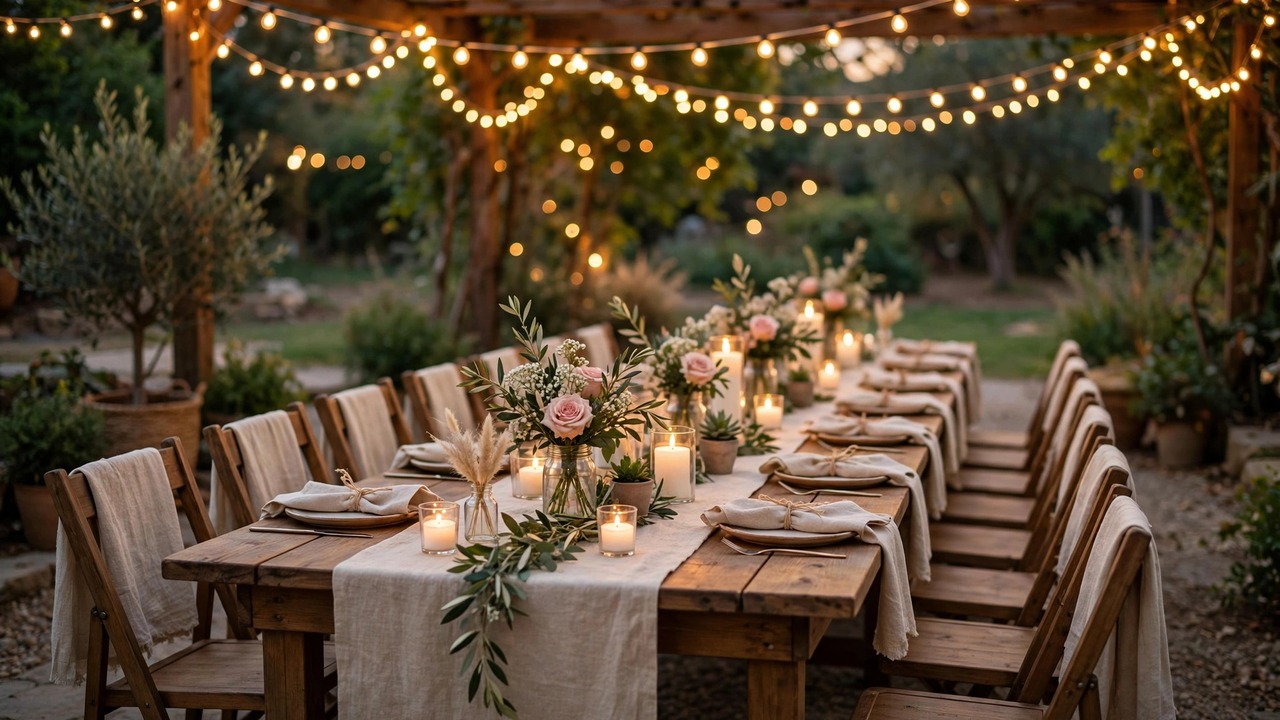
Light changes a space more than almost any other decoration. Warm lamps, candles in safe holders, and string lights can make a plain hall feel welcoming. Use light to highlight the ceremony area, the dining tables, and the entrance, and keep other areas softly lit.
Check the venue lighting in advance. If the room is already bright, you may need less decoration. If it is dark, focus your effort on lighting rather than on many small items.
Focus on the Tables
Guests spend most of the reception at their tables, so this is where decoration matters most. A clean tablecloth, a simple centrepiece, and clear place settings go a long way. Fresh flowers, greenery, or a single candle arrangement can be enough.
Avoid overcrowding the table. Guests need room for plates, glasses, and conversation. A centrepiece that blocks eye contact across the table will feel uncomfortable, however pretty it looks in a photograph.
Decorate the Key Spots Only
Instead of decorating every wall and corner, focus on the places guests will notice and photograph: the entrance, the ceremony backdrop, the cake table, and the main dining area. A well-decorated backdrop for photographs is worth more than scattered decoration elsewhere.
For the ceremony, a simple arch, a floral arrangement, or a fabric drape can frame the moment without needing a large installation. Keep it stable, safe, and easy to move if the weather changes.
Reuse, Borrow, and Repurpose
Look at what you already own before buying anything new. Glass jars, vases, candles, fabric, and picture frames can often be reused with a fresh arrangement. Borrow items from family or friends where appropriate, and return them in good condition.
Natural touches work well and cost little: seasonal greenery, leaves, simple flowers, and wooden elements suit many themes. Choose items that can be reused at home afterwards, rather than single-use decoration that will be thrown away.
DIY With a Realistic Plan
Handmade decoration can add a personal touch, but only if you have time to finish it well. Choose one or two DIY projects, such as place cards, signage, or table numbers, and complete them well in advance. Test one sample first, and check how it looks in the venue light.
Avoid starting many DIY projects in the final week. Rushed handmade items often look unfinished and add stress. A few well-made pieces are better than many hurried ones.
Keep Safety and Practicality in Mind
Check fire safety for candles, stability for tall arrangements, and clear walkways for guests. Avoid decoration that blocks exits, creates trip hazards, or sits too close to food and drink. If you use real flames, keep them away from fabric, paper, and children, and confirm the venue rules first.
Plan who will set up and who will clear away. A simple setup plan, with a list of items and where each one goes, saves time on the day and prevents items being left behind.
Related Finds for Budget-Friendly Decoration
Light and a few thoughtful touches do most of the work in this guide. These finds fit the tables, entrance, and key photo spots described above.
- Cute Mushroom Table Lamp, Touch Control Dimmable Rechargeable
- 10 Pack LED Solar Garden Lights Outdoor
- 1pc Vibrant Front Door Artificial Sunflower Wreath Colorful
As an affiliate, EventBuzz may earn a commission on qualifying purchases at no extra cost to you.
Conclusion
Budget-friendly wedding decoration is about focus, not compromise. Choose one theme, use light well, decorate the tables and key spots, and reuse what you already have. With a realistic DIY plan and attention to safety, you can create a warm, personal setting that feels thoughtful and complete, without an endless shopping list.