Thanksgiving is, at its heart, a holiday about gratitude, and gratitude feels most real when it is shared. Volunteering and giving back turn a private feeling into a public kindness: a meal served, a food parcel packed, a neighbour checked on. The good news is that helping does not require a grand gesture. One planned act, done with care, can mean a great deal to the people who receive it.
Why Giving Back Belongs in Thanksgiving
Thanksgiving began as a harvest celebration, a moment to acknowledge plenty and share it. Giving back keeps that original meaning alive, reminding everyone at the table that abundance is worth more when it reaches beyond one household.
For children, giving back is also a lesson that lasts. A child who helps pack food parcels or serve a meal learns that gratitude is something you do, not just something you feel. That lesson often becomes the part of Thanksgiving they remember best.
Giving back does not compete with your own celebration. A morning spent helping, followed by an afternoon feast, often makes the feast itself feel warmer and more meaningful.
Food Banks and Meal Service
Food banks are busiest in the weeks around Thanksgiving, and they welcome both food and time. Donating tins, dried goods, and essentials is the simplest way to help, and most food banks publish a list of the items they need most, so your donation matches real demand.
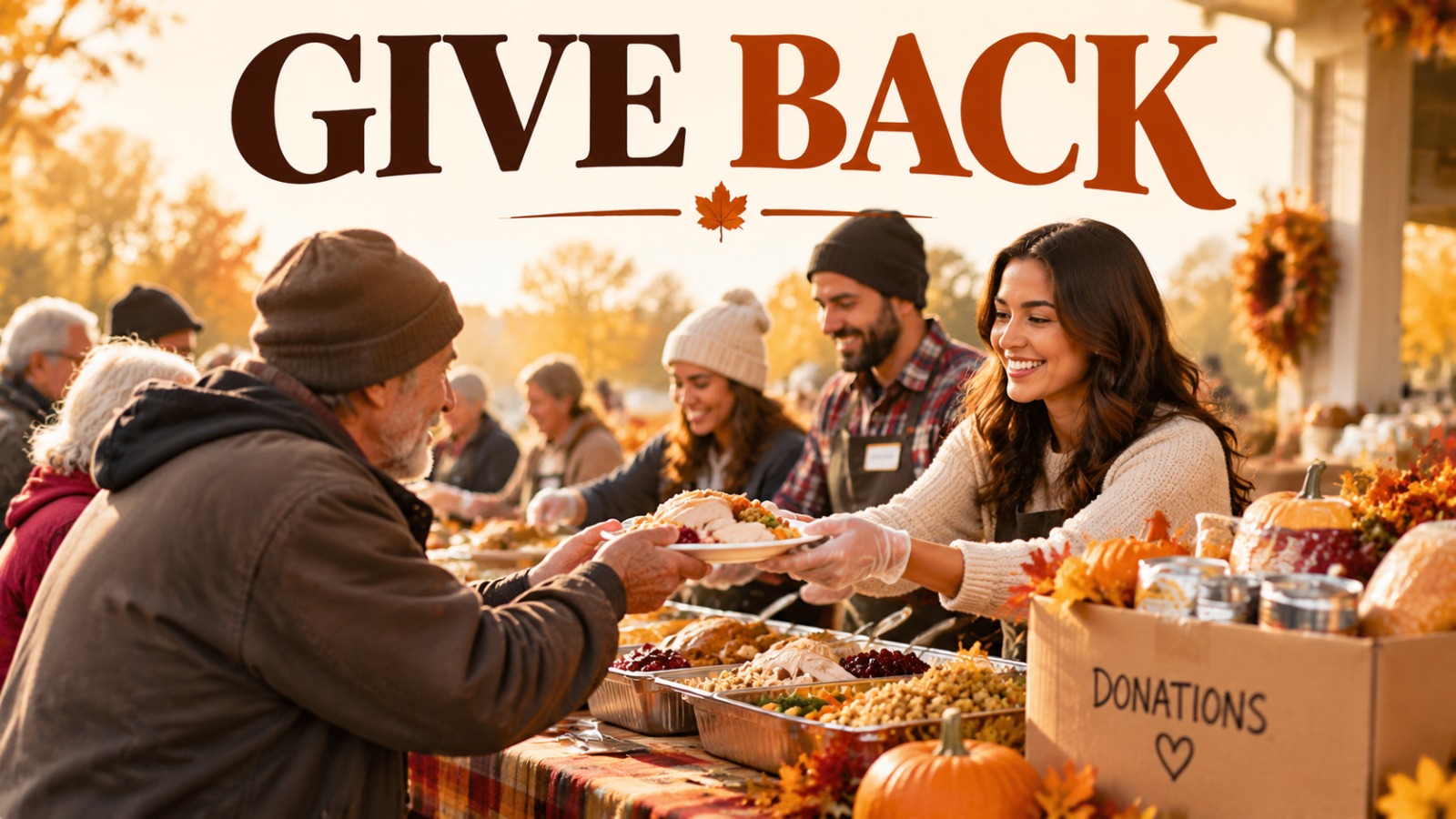
Meal service is the hands-on option: many community kitchens and shelters serve a Thanksgiving meal and need volunteers to cook, serve, and clean up. Shifts are usually a few hours, and organisers provide guidance, so first-time volunteers are welcome.
Contact your local food bank or community kitchen early, because Thanksgiving shifts fill quickly. A short message or phone call a few weeks ahead is enough to reserve a place, and many organisations also accept financial donations that buy food in bulk.
Donating Food and Essentials
A food donation works best when it matches what food banks actually request. Staple foods such as rice, pasta, tinned vegetables, tinned fruit, beans, soup, and cereal are always needed, along with everyday essentials such as cooking oil, tea, and coffee.
Check dates before donating, and avoid opened packets or anything past its best-before date. A donation of fresh, in-date food shows the same care you would want for your own table.
Neighbourhood collection points, schools, workplaces, and places of worship often run Thanksgiving food drives. A single bag of groceries dropped at a collection point joins many others and becomes a substantial gift for families who need it.
Volunteering as a Family With Kids
Volunteering as a family turns giving back into a shared memory. Children old enough to follow simple instructions can sort donations, pack parcels, decorate a community hall, or hand out servings under supervision. Choose a role that matches your children's ages and energy.
Keep the shift short for young children, and talk about the experience on the way home: what they saw, who they helped, and how it felt. Those conversations are where the meaning settles in.
If in-person volunteering does not suit your family this year, a home-based project works too: bake for a neighbour, assemble care parcels together at the kitchen table, or write cards for people spending the holiday alone.
Small Acts for Neighbours
Not all giving back needs an organisation. A plate of food left for an elderly neighbour, an offer to collect groceries for someone who cannot drive, or an invitation to a lonely neighbour to join your table can matter enormously.
Check on neighbours who live alone, especially older people, in the days before Thanksgiving. A short visit, a phone call, or a shared dessert tells them they are remembered, which is often the greatest gift of all.
Small acts also suit busy families: a neighbourly gesture takes minutes, needs no booking, and can be repeated through the holiday season, not just on one day.
Planning It Before the Holiday Week
Good intentions fail without a plan, so put giving back in the calendar early. Choose one act, agree on who is involved, and set a date, just as you would for any other Thanksgiving plan. Early planning also lets you involve children, who enjoy counting down to a day they are looking forward to.
Keep the plan realistic. One food bank visit or one meal shift is plenty, and it leaves the rest of the holiday free for your own celebration. A plan that fits your week is a plan that actually happens.
Afterwards, talk about it at the Thanksgiving table. Sharing the story of who you helped, and what you learned, turns one act of kindness into a family tradition worth repeating every year.
Helpful Finds for Giving Back
Practical pieces support a giving-back plan. - a kitchen apron can keep clothes clean during meal service, - a fleece throw blanket can be a warm donation for someone facing a cold winter, and - a beanie and scarf set can add warmth to a care parcel.
- Kitchen Cooking Apron 100 Polyester Adjustable Neck Strap
- Throw Blanket Fleece
- 2026 Women'S Beanie with Attached Scarf And Three Decorations, Thick And Warm Fleece-Lined Hat
As an affiliate, EventBuzz may earn a commission on qualifying purchases at no extra cost to you.
Conclusion
Giving back at Thanksgiving does not need to be large to be meaningful. A food donation, a meal shift, a family volunteering morning, or a small kindness to a neighbour all carry the holiday's original spirit. Plan one act early, do it together, and let gratitude become something your family practices, not just something it feels.