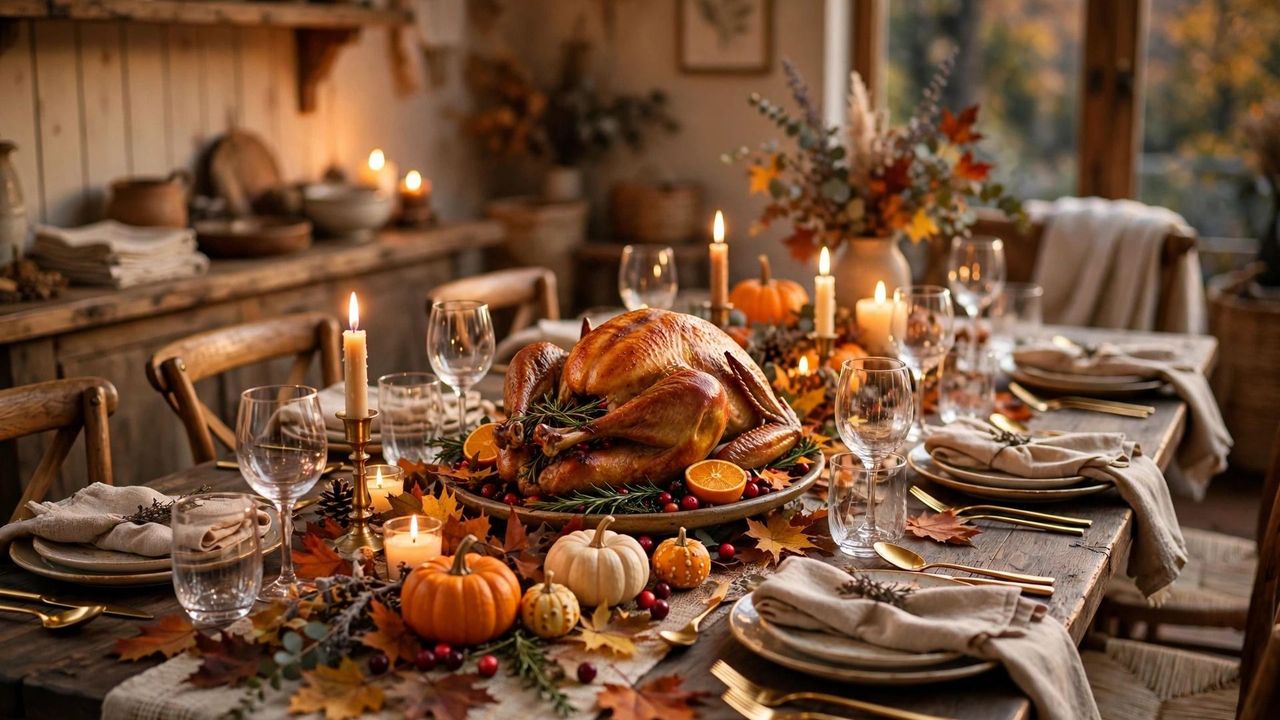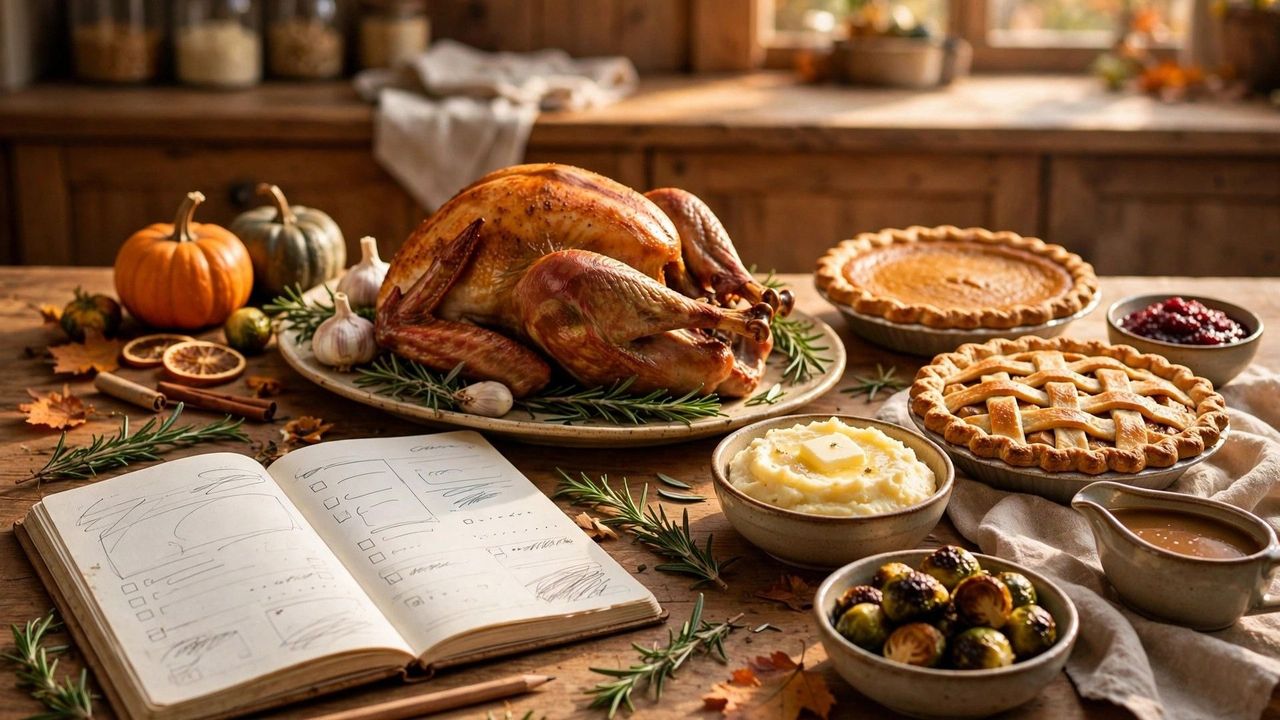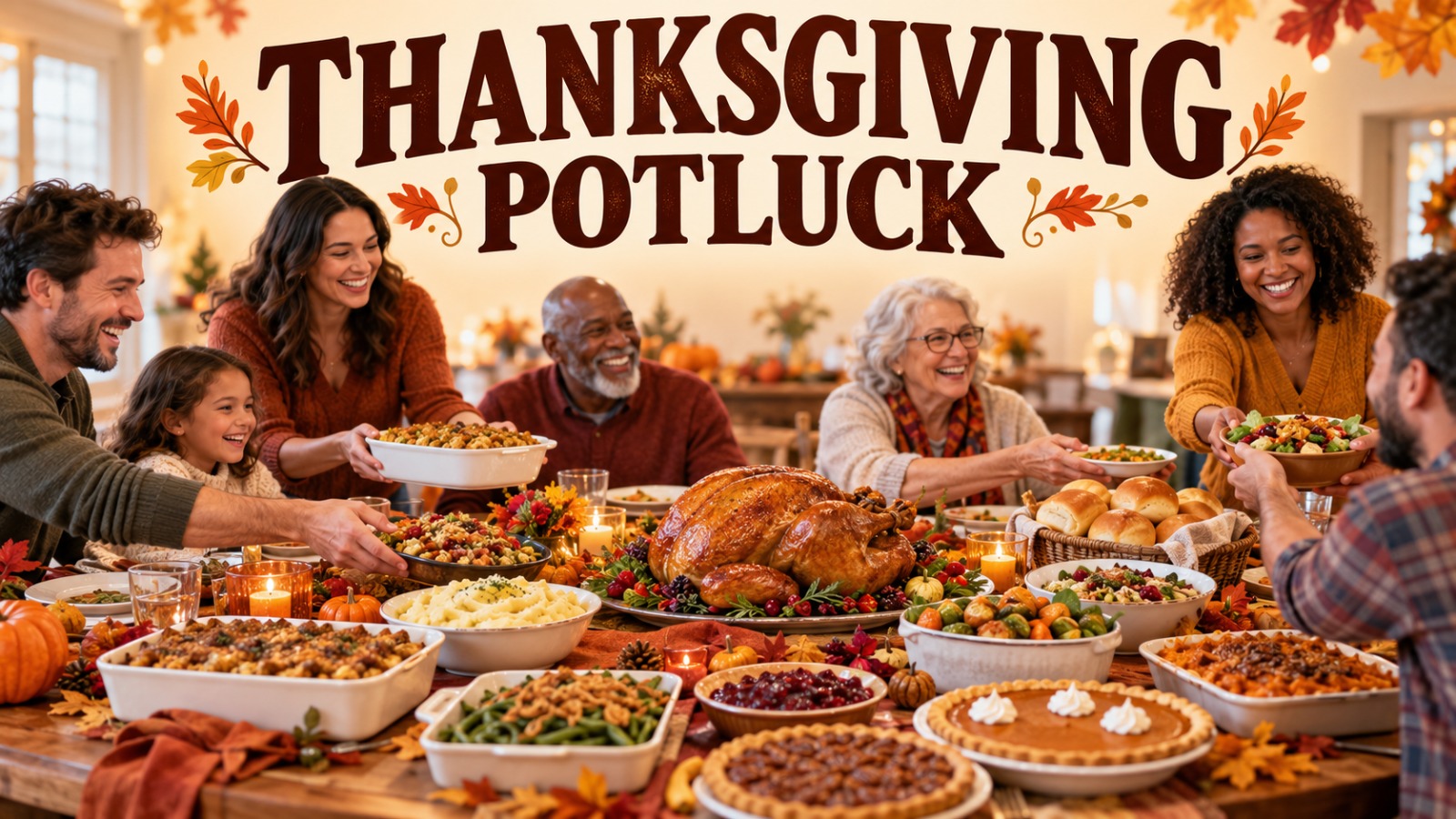
A Thanksgiving potluck is how many families actually celebrate: the host cooks the turkey, and every guest brings a dish to share. Done well, it takes the pressure off one cook, fills the table with variety, and gives every guest a chance to contribute a favourite recipe. Done without a plan, it can mean five bowls of mashed potatoes and no dessert. The difference is a simple sign-up system and a little coordination before the day.
How a Thanksgiving Potluck Works
In a potluck, the host provides the main dish, usually the turkey, along with the home, the table, and the drinks. Guests each bring one dish, chosen from agreed categories, so the full meal comes together from many kitchens. The host sets the time, the guest count, and the categories, and guests choose what they will bring.
The arrangement suits families spread across different homes, friends celebrating together, and anyone who loves to cook but cannot manage a whole feast alone. It also makes the meal more interesting: every dish carries a story, a family recipe, or a new idea worth trying.
Agree on the basics early: the date and arrival time, how many people are coming, whether children are included, and any food allergies or dietary needs. A short group message with these details avoids confusion and gives everyone time to plan.
The Sign-Up Sheet System
A sign-up sheet is the single most useful tool for a potluck. List the categories the meal needs, such as appetizers, salads, side dishes, breads and rolls, desserts, and drinks, and let each guest claim one slot. When a category is full, the next guest picks a different one, which is how you avoid duplicates.
Share the sheet as a simple list in a group chat or on paper at work or church, and keep it visible so everyone can see what is already covered. Ask guests to write the exact dish they plan to bring, not just the category, so two people do not both arrive with the same green bean casserole.
Leave one or two flexible slots for extras, such as a second dessert or a snack board, so last-minute volunteers still have a place. A week before the day, send a gentle reminder with the final list, arrival times, and any oven or fridge space guests can use.
30+ Dishes to Bring, by Category
Appetizers set the tone while the turkey rests. A cheese and cracker board, devilled eggs, stuffed mushrooms, a warm spinach dip, or a simple vegetable platter all travel well and disappear quickly. Keep appetizers light, so guests still have appetite for the main meal.
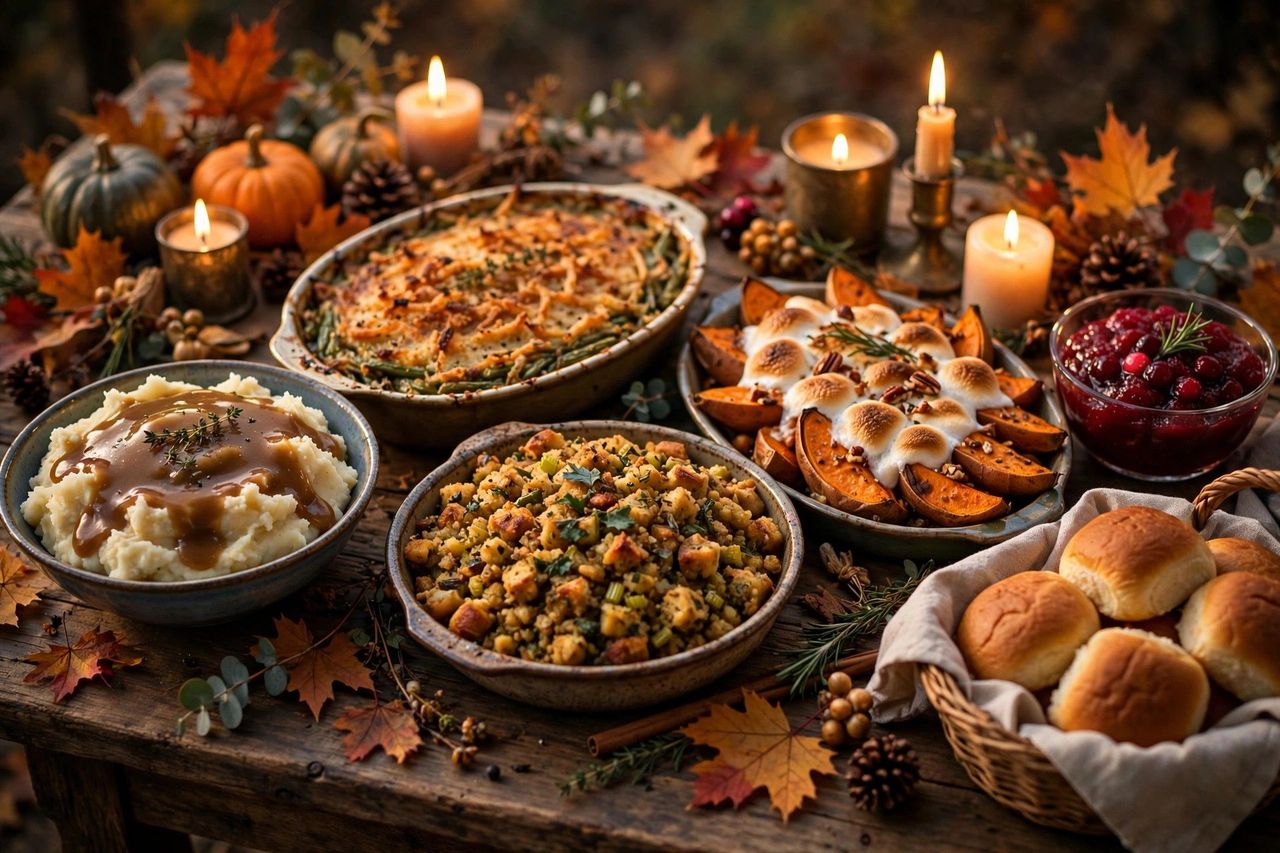
Side dishes are the heart of the potluck. Mashed potatoes, sweet potato casserole, green bean casserole, roasted Brussels sprouts, glazed carrots, macaroni and cheese, cornbread stuffing, cranberry sauce, and a fresh salad give the table colour and variety. Breads and rolls round out the meal: dinner rolls, cornbread, or a crusty loaf, with butter on the side.
Desserts deserve their own moment. Pumpkin pie, apple pie, pecan pie, cheesecake, brownies, and a fruit crisp are all crowd pleasers, and a guest who loves to bake will happily claim this category. For drinks, bring cider, sparkling water, lemonade, or a simple punch, plus coffee and tea for after dessert.
Transporting Food Safely
Getting food to the host's home in good condition takes a little care. Use containers with tight lids, and place them in a box or laundry basket so they cannot slide around in the car. Hot dishes travel best wrapped in towels inside an insulated bag or cooler, which keeps them warm for the journey.
Cold dishes should stay cold: pack them with ice packs in a cooler, and move them into the host's fridge as soon as you arrive. Label every container with your name and the dish, so serving and leftovers stay organised at the end of the evening.
Arrive a little before the meal if your dish needs oven time, and check with the host about oven space in advance. Dishes that can be served at room temperature, such as salads, breads, and pies, are the easiest contributions, because they need no reheating at all.
Food Safety Rules Worth Knowing
Food safety keeps a happy gathering from turning uncomfortable. Hot food should be kept hot and cold food kept cold, and perishable dishes should not sit at room temperature for more than two hours. If the table will be out for a long afternoon, return leftovers to the fridge between servings.
Reheat leftovers until they are steaming hot all the way through, and refrigerate them within two hours of the meal ending. When in doubt about a dish that has sat out too long, it is kinder to let it go than to risk it.
Ask about allergies before the day, and label dishes that contain common allergens such as nuts, dairy, or gluten. A small card beside each dish with its name and main ingredients helps every guest serve themselves with confidence.
Hosting a Potluck as the Turkey Host
As the host, your main job is the turkey and the welcome. Plan oven space carefully: the turkey occupies the oven for most of the day, so ask guests to bring dishes that are ready to serve, or that need only a short warming. A slow cooker, borrowed if needed, can keep a side dish warm without oven space.
Set up a serving area with space for every dish, plus serving spoons, plates, and labels. A long table or a kitchen counter cleared for the meal works well, with drinks set up separately so guests are not crowding the food table.
Thank every contributor by name during the meal, and send a short thank-you message afterwards. A potluck runs on generosity, and gratitude is what turns a shared meal into a tradition guests want to repeat next year.
Helpful Finds for Potluck Day
A few practical pieces make potluck day easier. - a pumpkin tablecloth can dress the table for the feast, - a round placemat set can protect the table under serving dishes, and - a stainless steel food storage container set can carry dishes safely and store leftovers afterwards.
- 1pc tablecloth pumpkin
- 4 stylish round placemats featuring a
- 20 Stainless Steel Food Storage Containers with Airtight Lids (10 Containers + 10 Lids), Stainless Steel for Lunch and Freezer Storage, Suitable for Home, Restaurant, Picnic, Camping, School, and Office Use
As an affiliate, EventBuzz may earn a commission on qualifying purchases at no extra cost to you.
Conclusion
A Thanksgiving potluck succeeds on coordination, not complexity. A clear sign-up sheet, dishes spread across categories, careful transport, and simple food safety rules give every guest a part to play and the host room to breathe. Share the cooking, share the table, and the feast takes care of itself.