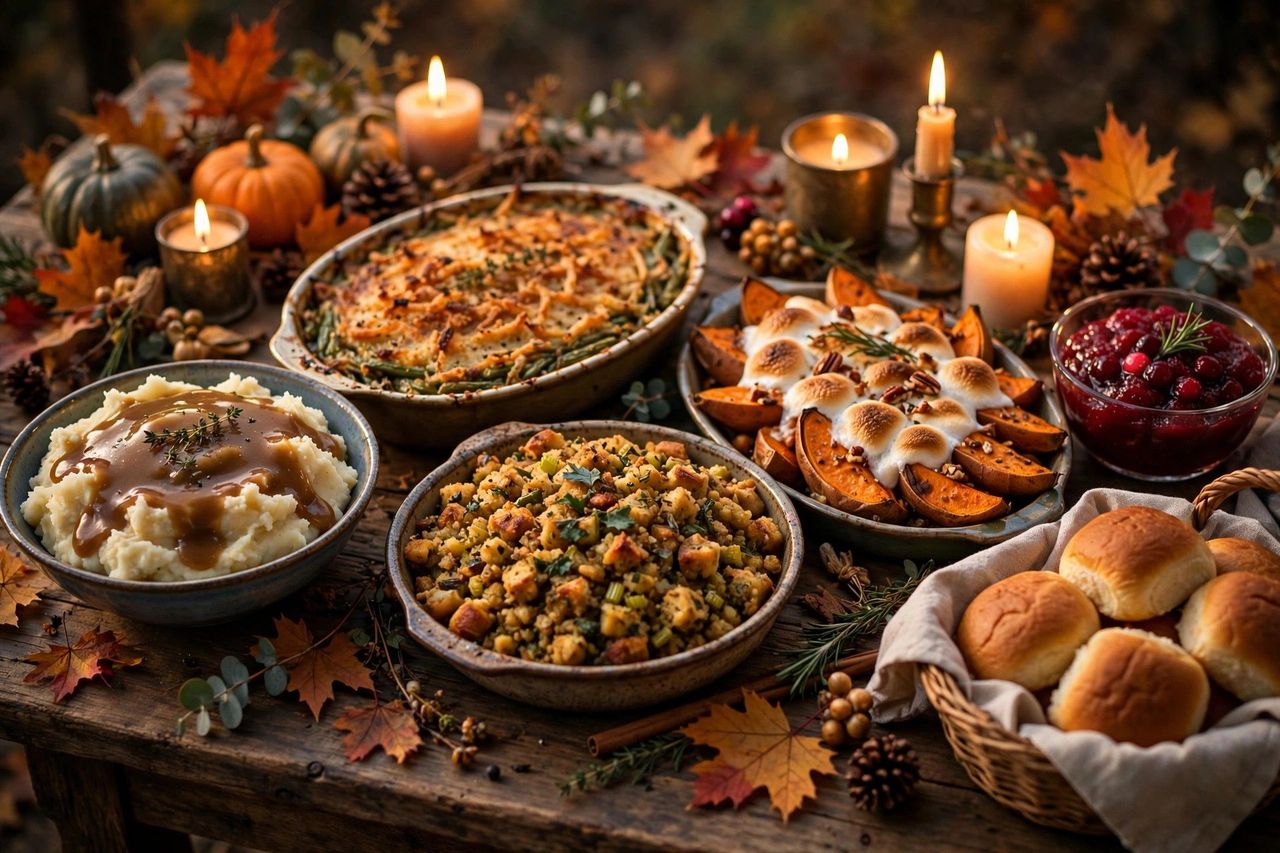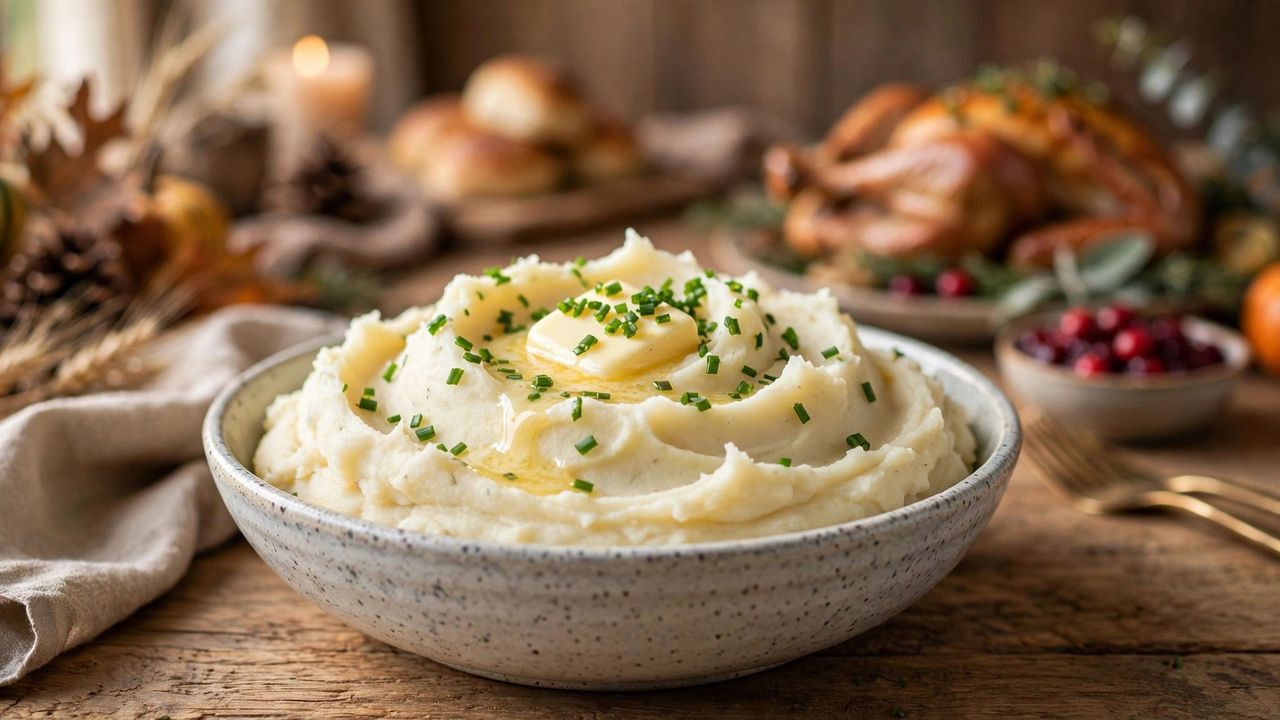
Mashed potatoes seem simple until they are gummy, lumpy, or bland on the biggest dinner of the year. The difference between forgettable and unforgettable mashed potatoes comes down to a handful of specific choices: the right potato, properly salted water, warm dairy, and a light hand. Get those right and you get clouds on a plate. Here is the ultimate recipe plus every pro trick for making them ahead without the glue.
Pick the Right Potato
Yukon Gold potatoes are the Thanksgiving champion. They are naturally buttery, hold their shape without going waxy, and mash into a creamy texture with less added fat. Russets are the runner-up: fluffier and starchier, they absorb butter and cream beautifully but can turn gummy if overworked. A 50/50 mix of the two gives you the best of both worlds and is what many restaurant kitchens actually do.
Avoid red potatoes and other waxy varieties for mashing. Their low starch content means they never get truly fluffy; they mash into a dense, paste-like texture no matter how much butter you add. Save waxy potatoes for roasting and potato salad, where their firmness is an asset. Whatever you choose, cut the potatoes into even 1.5-inch chunks so they cook at the same rate, and peel them for the silkiest result.
The Creamy Technique, Step by Step
Start the potatoes in cold, generously salted water. Cold starts cook the potatoes evenly from edge to center; dropping them into boiling water cooks the outsides to mush before the centers soften. Salt the water like pasta water, about a tablespoon per 2 quarts. It is the only chance to season the potatoes from within, and under-salted water is the number one cause of bland mashed potatoes.
Simmer, never hard-boil, for 15 to 20 minutes until a knife slides through with no resistance. Drain thoroughly and return the pot to low heat for a minute to steam off excess moisture; watery potatoes make watery mash. Warm your dairy before adding it. Cold milk or cream shocks the hot potatoes and they absorb it poorly. Heat a cup of milk or half-and-half with 6 tablespoons of butter until the butter melts and the mixture steams.
Mash gently and stop early. A ricer or food mill gives the smoothest, fluffiest result with almost no risk of gumminess. A hand masher is fine for a rustic texture. Never use a food processor or blender: the high-speed blades rupture starch cells and turn potatoes into wallpaper paste in seconds. Add the warm dairy gradually, mashing just until combined, then season boldly with salt and white or black pepper.
Flavor Upgrades Worth Trying
Roasted garlic mashed potatoes are the easiest crowd-pleaser: roast a whole head of garlic at 400°F for 40 minutes until caramelized and squeeze the soft cloves into the mash. Brown butter adds a nutty depth that regular melted butter cannot match; cook it until it foams, smells nutty, and turns amber, then pour it in. Cream cheese (4 ounces per 3 pounds of potatoes) makes the mash tangy, rich, and incredibly stable for reheating.
Buttermilk gives a pleasant tang and lighter texture, while sour cream or creme fraiche stirred in at the end adds richness without heaviness. For an herbed version, fold in chopped chives, parsley, and a little thyme just before serving. A spoonful of prepared horseradish wakes everything up and pairs brilliantly with roast beef if your table serves both meats. Keep add-ins modest; the potato should still be the star.
Make-Ahead Without the Glue
Mashed potatoes have a bad make-ahead reputation, but the method below works beautifully. Cook and mash them fully up to 2 days ahead, using the cream cheese version for maximum stability:
- Cool quickly and refrigerate in an airtight container. The mash will firm up; that is normal.
- Reheat in a slow cooker on low for 2 to 3 hours, stirring every 45 minutes, with a few tablespoons of warm milk or cream.
- Oven method: transfer to a buttered baking dish, dot with butter, cover with foil, and bake at 350°F for 30 to 40 minutes.
- Refresh at the end: whisk in warm milk a splash at a time until the texture loosens back to creamy, then re-season with salt.
- Never microwave a big batch. It heats unevenly and encourages gumminess. The stovetop over low heat works for smaller amounts.
Serving a Crowd
Plan on half a pound of raw potatoes per person, which cooks down to a generous serving each. For 12 guests, that is 6 pounds, about 18 medium Yukon Golds. Always make extra; mashed potatoes are the backbone of leftover shepherd's pie, potato cakes, and next-day turkey bowls. Serve in a warmed bowl with a well swirled on top for a pat of melting butter, and put the gravy boat right beside it. This is not the dish for restraint.