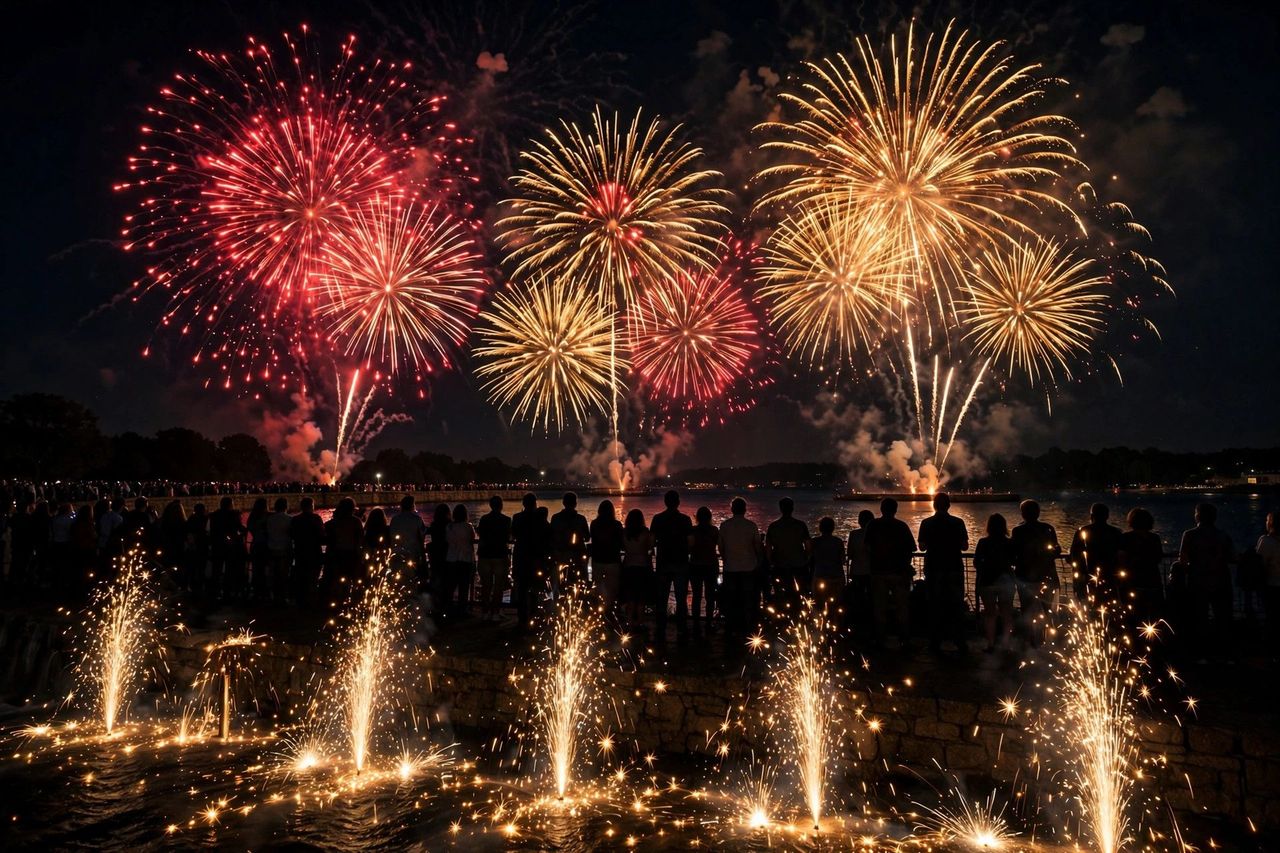
Fireworks are the signature of New Year's Eve — and also the most common cause of celebration-night injuries. The good news: nearly every fireworks injury is preventable with basic precautions. Before you buy a single sparkler for December 31, 2026, read this guide. Celebrating safely is not about fear; it is about making sure the night ends with memories, not an emergency room visit.
Know the Law First
Fireworks laws vary enormously by country, state, and even city. Some places ban all consumer fireworks; others allow only sparklers and fountains; some require permits for anything that leaves the ground.
- Check local rules: Look up your city or county's fireworks regulations before buying anything. Ignorance of the law is not a defense, and fines can be steep.
- Buy from licensed sellers: Licensed retailers sell tested, labeled products. Avoid unlabeled fireworks from informal sellers — they are the most dangerous and often illegal.
- Respect quiet hours and dry conditions: Many areas restrict fireworks to specific dates and hours, and ban them entirely during fire-risk conditions.
- Consider a public display instead: Professional shows are bigger, safer, and free to watch. For many families, this is the best option.
The Core Safety Rules
These rules come from fire safety authorities worldwide and apply to every type of consumer firework, from sparklers to fountains.
- Keep your distance: Spectators should stay well back from the launch area — at least the distance printed on the product label, and farther for larger fireworks.
- Never relight a dud: If a firework fails to ignite, wait at least 20 minutes, then soak it in water. Never try to light it again — delayed ignition causes serious injuries.
- Light one at a time: Never light multiple fireworks at once, and never carry fireworks in your pockets.
- Use a stable, flat surface: Set ground-based fireworks on a hard, level surface away from buildings, dry grass, and overhead wires.
- Keep water nearby: Have a bucket of water or a hose ready before you start, and soak all used fireworks before disposing of them.
- Never point or throw: Never aim fireworks at people, animals, houses, or cars — including "just for fun."
- Stay sober while handling: Alcohol and fireworks are a dangerous combination. Designate a sober person to handle all lighting.
Sparklers: Small but Dangerous
Sparklers cause a large share of fireworks injuries because people treat them as toys. A sparkler burns at temperatures hot enough to melt glass — hot enough to cause third-degree burns instantly.
- Age matters: Do not give sparklers to children under five, and supervise older children closely.
- One per child: Give children one sparkler at a time, and keep them at arm's length from others.
- Hold at arm's length: Never wave sparklers near faces, hair, or clothing.
- Dispose properly: Drop used sparklers into a bucket of water immediately — the wire stays hot long after the sparks stop.
Protect Kids and Pets
Children and animals are the most vulnerable on fireworks night. Keep young children at a safe viewing distance, and never let them handle fireworks unsupervised. For pets, the loud bangs are genuinely distressing: keep dogs and cats indoors with windows closed, play calming background noise, and make sure collars and ID tags are on in case a panicked animal bolts. Walk dogs earlier in the evening before the noise starts, and never bring pets to a launch area.
If Something Goes Wrong
For burns, cool the area with running water for at least 10 minutes and cover loosely with a clean cloth — do not apply ice, butter, or ointments. For eye injuries, do not rub or rinse; cover the eye and seek emergency care immediately. For any fire that spreads beyond control, move everyone away and call emergency services rather than trying to fight it yourself. Keep your phone charged and the local emergency number handy before the first firework is lit. A safe New Year's Eve is a planned one.