Introduction
Planning family costumes for Halloween can be a fun part of the season, or it can become stressful if left to the last minute. The key is to start early, keep choices simple, and make sure every costume is comfortable, safe, and easy to wear for the whole evening. This guide offers a practical approach for families planning costumes together.
Start with Comfort
Comfort comes first, especially for children. A costume that is too tight, too hot, too long, or difficult to move in will not be enjoyed for long, no matter how good it looks. Choose breathable fabrics, check that shoes are comfortable for walking, and make sure the costume allows easy movement, sitting, and eating.
Try costumes on well before the event. Walk around the house in them, sit down, and check that nothing slips, pinches, or blocks vision. A short trial at home reveals problems that are easy to fix early and difficult to fix on the evening itself.
Plan Around the Weather and the Setting
Think about where the costume will be worn. An indoor party, a walk around the neighbourhood, and a garden gathering all call for different choices. Layers help in cooler weather, and a costume that works over warm clothing is more practical than one that leaves a child cold. For outdoor plans, choose footwear that works on pavements and grass, not just indoors.
Visibility matters after dark. Light colours, reflective details, or a small torch can help others see the wearer, especially for children. Avoid masks that limit vision or breathing, and consider face paint as an alternative where a mask would be uncomfortable.
Coordinate Without Matching Exactly
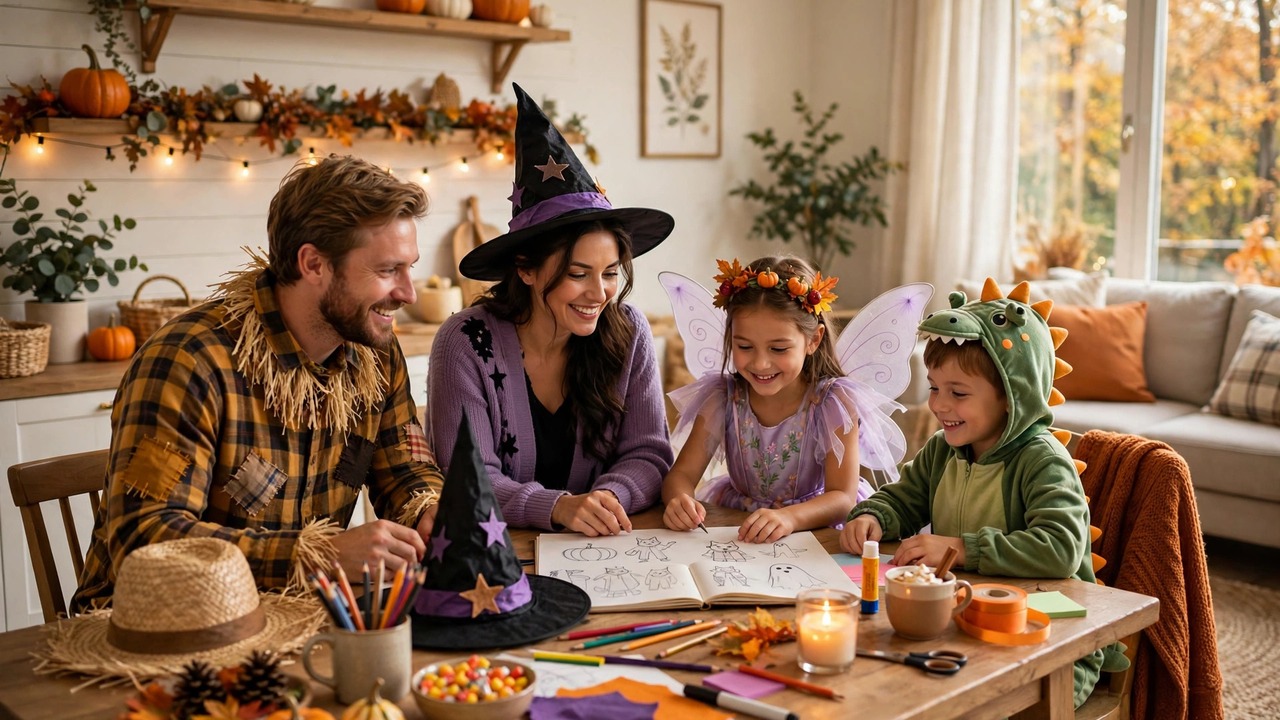
Family costumes do not need to match exactly to look coordinated. A shared colour, a shared theme, or a simple shared accessory can tie a family group together without requiring identical outfits. For example, a family could share an autumn colour palette, a story theme, or a simple prop that each person adapts in their own way.
Let each family member choose something they enjoy within the shared theme. Children are more likely to enjoy the evening if they had a say in their costume, rather than being given an outfit they did not choose. A simple family discussion early in planning avoids disagreements later.
Make It Yourself, Simply
Simple homemade costumes often work best. A few basic items, such as a plain outfit in the right colour, a simple accessory, and face paint, can create a clear character without a complicated build. Focus on one recognisable feature, such as a hat, a cape, or a distinctive colour, rather than trying to recreate every detail.
Keep a small repair kit ready: safety pins, tape, and a spare button or strap can fix most costume problems quickly. Pack the kit before leaving home, especially for outdoor plans.
Check Safety Before You Go
Before the event, check each costume for safety. Trim any parts that drag on the ground, secure loose accessories, and make sure nothing covers the eyes, nose, or mouth in a way that limits breathing or vision. Avoid sharp props, and choose soft, lightweight accessories instead.
For children, agree on a simple plan: stay together, stay in well-lit areas, and know who to find if separated. A costume should never make a child harder to find or harder to hear.
Helpful Finds for This Gathering
These finds match the ideas in this article. They are listed here so readers can see a relevant option without changing the plan.
- 2pcs Halloween Witch Costume — Velvet Cape & Feather Shawl Set — A velvet cape and feather shawl set that fits the simple, recognisable-feature approach to family costumes.
- Medium-long Straight Hair Gradient Tea-brown Women's Costume Wig, Suitable for Cosplay Hairstyle Outfits, Role-playing Wig Costume Matching, Halloween and Christmas Costume Wigs | Shop Trends — A costume wig that fits a simple accessory-led costume built around one clear character feature.
- 1920s Handmade Sequin Halloween Party Cape Shawl Womens — A sequin cape shawl that fits a shared accessory idea for coordinating family costumes without identical outfits.
As an affiliate, EventBuzz may earn a commission on qualifying purchases at no extra cost to you.
Conclusion
Family costume planning works best when it starts early, prioritises comfort and safety, and leaves room for each person to enjoy their choice. A shared theme, simple homemade touches, and a trial run at home will make the evening smoother and more enjoyable for everyone.