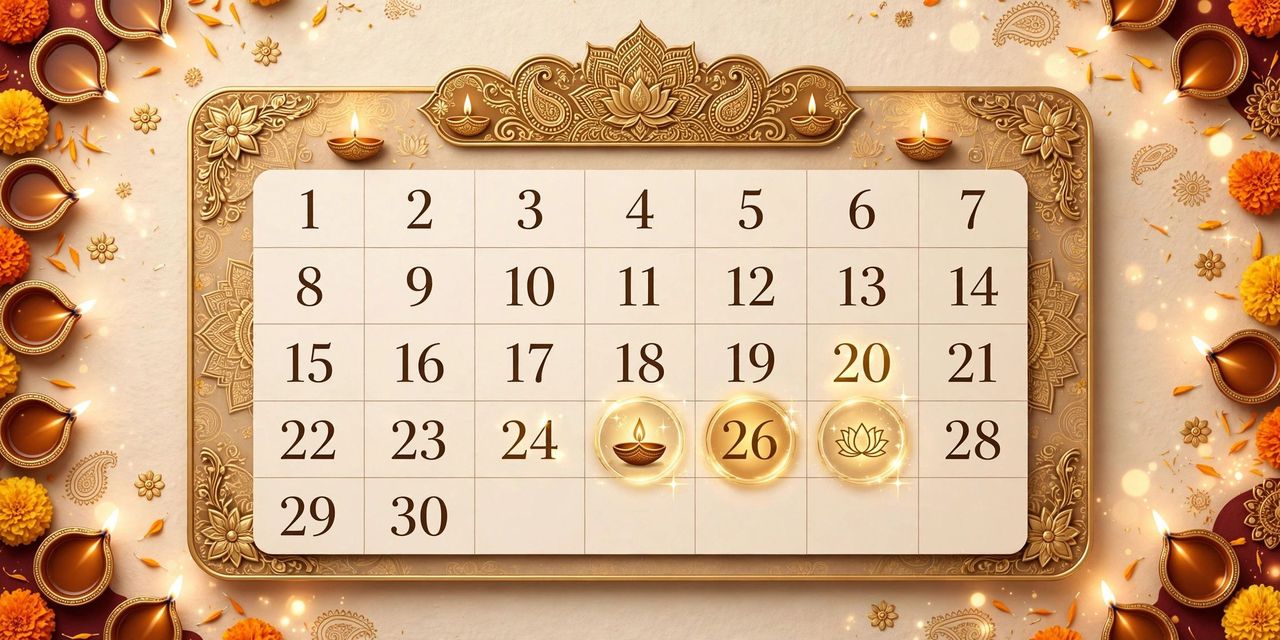
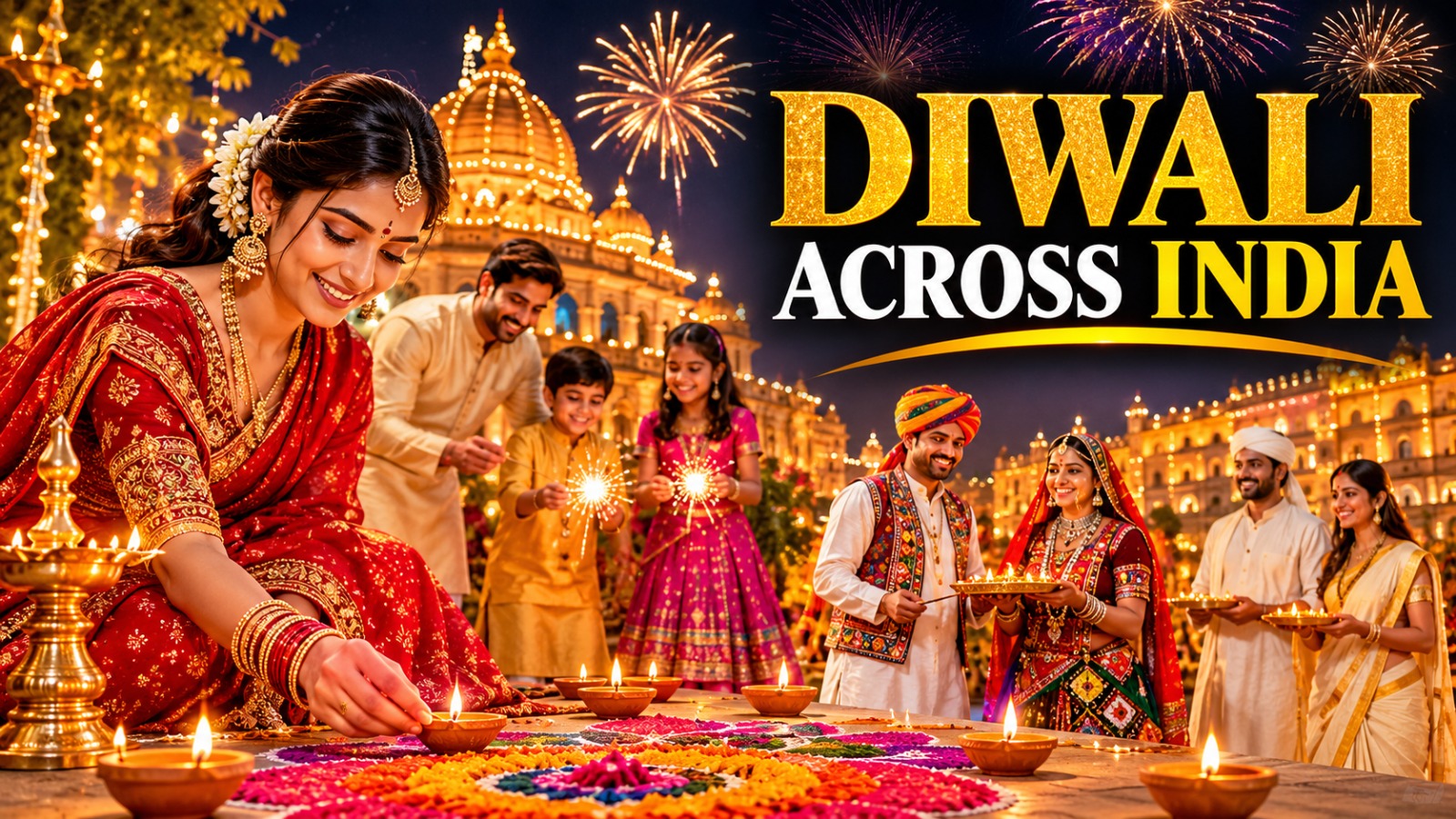
Diwali is often called the festival of lights, but it is really many festivals sharing one name. Across India, the same five days are celebrated with different stories, different gods, different foods, and different customs, and each region's Diwali has its own character. Diwali falls on Sunday, 8 November 2026, with the festival running from Dhanteras on Friday, 6 November to Bhai Dooj on Tuesday, 10 November. This guide travels across India to see how the festival is celebrated in the North, South, East, and West, and what traditions they share.
Understanding these differences matters, because it shows that Diwali is not one story but a family of stories, all pointing to the same idea: light triumphing over darkness, and good over evil. Whether you celebrate in Delhi, Chennai, Kolkata, or Mumbai, the lamps you light join millions of others across the country.
The Five Days: A Shared Framework
Almost everywhere in India, Diwali is a five-day festival, and the days follow the same broad pattern. Dhanteras, on Friday, 6 November 2026, opens the festival with the worship of Dhanvantari, the god of health, and the buying of gold, silver, or new utensils for good fortune. Choti Diwali, on Saturday, 7 November, is a quieter day of preparation and small celebrations. The main Diwali day, Sunday, 8 November, is the night of the Lakshmi puja and the brightest display of diyas and fireworks.
Govardhan Puja, on Monday, 9 November, honours Lord Krishna's lifting of Govardhan Hill and, in many places, the worship of cattle and the land. Bhai Dooj, on Tuesday, 10 November, closes the festival with the bond between brothers and sisters, as sisters pray for their brothers' long life and brothers give gifts in return. For the full calendar and timings, see our Diwali 2026 date and Lakshmi puja calendar and the guide to Choti Diwali, Govardhan and Bhai Dooj 2026.
Within this shared framework, every region adds its own emphasis. In some places the main day is the brightest, in others a different day takes the spotlight, and the stories told around the diyas change from state to state.
North India: Rama's Return and Ayodhya's Lights
In North India, Diwali is most closely tied to the Ramayana. The story tells of Lord Rama's return to Ayodhya after fourteen years of exile and his victory over Ravana, and the people of Ayodhya lighting rows of lamps to guide him home. This is why the festival is called Deepavali, a row of lamps, and why lighting diyas remains the central ritual across the North.
Ayodhya itself hosts one of the grandest celebrations in the country, with lakhs of diyas lit along the banks of the Sarayu river in an event known as Deepotsav. Families across Uttar Pradesh, Delhi, Punjab, Haryana, and Rajasthan follow a similar pattern: cleaning and decorating the home, drawing rangoli at the entrance, performing the Lakshmi puja in the evening, and then lighting fireworks with family and neighbours.
The food of a North Indian Diwali is rich and generous: kachoris, samosas, paneer dishes, and sweets like ladoo, barfi, and gulab jamun. Gifts of dry fruits and sweets are exchanged between families, and the evening ends with the whole neighbourhood glowing. The emphasis is on the home as the centre of the festival, and on welcoming prosperity in through a clean, bright doorway.
South India: Naraka Chaturdashi and the Early Morning Oil Bath
In South India, Diwali is often celebrated a day earlier, and its central story is different. The festival marks Lord Krishna's victory over the demon Narakasura, and the main day is Naraka Chaturdashi, which falls on Choti Diwali, Saturday, 7 November 2026. In Tamil Nadu, Karnataka, Andhra Pradesh, and Telangana, the celebration begins before dawn with an oil bath, new clothes, and the bursting of crackers in the early morning.
The oil bath is the signature ritual of a South Indian Diwali. Family members apply sesame oil, bathe, and dress in new clothes before sunrise, then gather for a festive breakfast of sweets and savouries. The sweets differ from the North: mysore pak, badam halwa, and murukku are among the favourites, and the meal often includes a full festive lunch served on a banana leaf.
Diyas and fireworks are part of the celebration here too, but the mood is shaped by the early start and the emphasis on the morning rituals. In Tamil Nadu, the festival is called Deepavali as well, and the lighting of lamps in the evening connects the South's celebration to the rest of the country. The difference in timing is a reminder that India follows more than one calendar, and that the same festival can begin at dawn in one state and at dusk in another.
East India: Kali Puja in Bengal and the Festival of the Goddess
In West Bengal, Diwali night coincides with Kali Puja, the worship of Goddess Kali, and the festival takes on a distinct character. Temples and homes are lit with lamps, and the goddess is worshipped through the night with offerings, music, and devotion. The celebration is intense and spiritual, with the darkness of the new moon night set against the fierce, protective light of the goddess.
Bengali homes mark the festival with alpona, the white rice-paste designs drawn on floors and doorsteps, which play a similar role to rangoli in other regions. Sweets like sandesh and rasgulla are shared, and families visit temples and pandals late into the night. In Odisha and Assam, the festival is celebrated with diyas and fireworks as well, and with local customs such as lighting lamps in memory of ancestors.
The Eastern celebration shows how Diwali absorbs the local goddess traditions of each region. The lamps are the same, but the deity honoured and the mood of the night change with the place, and that variety is part of the festival's richness.
Helpful Finds for a Traditional Celebration
A few festive pieces suit every regional tradition. - warm white fairy lights brighten any entrance or balcony, - soy wax candles add a gentle glow to the puja area, and - a bohemian table runner dresses the festive table for guests from every region.
- 1pc 30 Warm White Led Fairy Lights Glowing Shaped
- Mindful Relaxation Scented Candles Natural Soy Wax
- Burgundy Ethnic Print Maxi Dress
- 1pc bohemian linen table runner ivory hollow
As an affiliate, EventBuzz may earn a commission on qualifying purchases at no extra cost to you.
Conclusion
Diwali across India is one festival with many faces. The North lights lamps for Rama's return, the South rises before dawn to celebrate Krishna's victory, Bengal worships Kali through the night, and Gujarat welcomes a new year. The stories differ, the sweets differ, and the timings differ, but the lamps are the same, and so is the hope they carry. Wherever you celebrate, and whatever your family's tradition, the light you kindle joins millions of others across the country, and that shared glow is the real meaning of Diwali.
To plan your own celebration, see the Diwali 2026 date and Lakshmi puja calendar, and for greetings to share across regions, our Happy Diwali wishes for 2026 has messages in English and Hindi.