The pooja room is the heart of Diwali. It is where the family gathers for Lakshmi Puja on Sunday 8 November 2026, where the diyas are lit first, and where the festival feels most sacred. Decorating the pooja room is not about filling it with things. It is about creating a calm, clean, beautiful space where prayer feels natural and the light of the diyas can do its work.
This guide covers practical pooja room decoration ideas for Diwali 2026, from the days of cleaning and preparation through to the final touches on Diwali evening. Whether your pooja room is a dedicated room, a corner of the living room, or a wall-mounted mandir, these ideas will help you style it with care.
Start with a Deep Clean
Every good pooja room decoration starts with cleaning. In the days before Diwali, empty the pooja space completely, dust every shelf, and wash the idols and brass items with care. Polish brass diyas, lamps, and plates until they shine, because polished brass reflects the diya flames and doubles the light in the room.
Clean the walls and the floor around the pooja space as well.
Sort through the items in the pooja room and remove anything broken, faded, or unused. A sacred space feels calm when it holds only what is needed and loved. Keep the essentials, the idols, the diyas, the incense holder, the bell, and the prayer books, and store everything else elsewhere for the festival.
Marigold Garlands and Torans
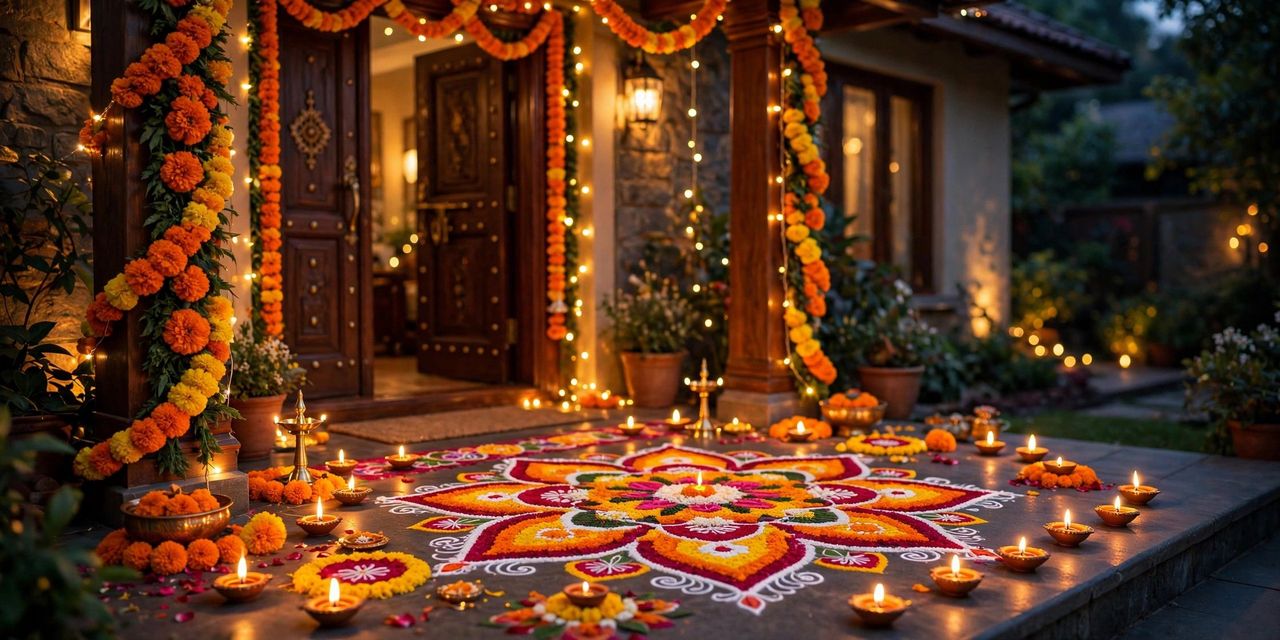
Marigold is the flower of Diwali, and it belongs in the pooja room first. A toran of marigold flowers and mango leaves across the entrance of the pooja room is the traditional welcome, and it sets the tone for the whole space. Fresh marigolds last two to three days, so buy them on Saturday 7 November, Choti Diwali, for the main celebration on Sunday.
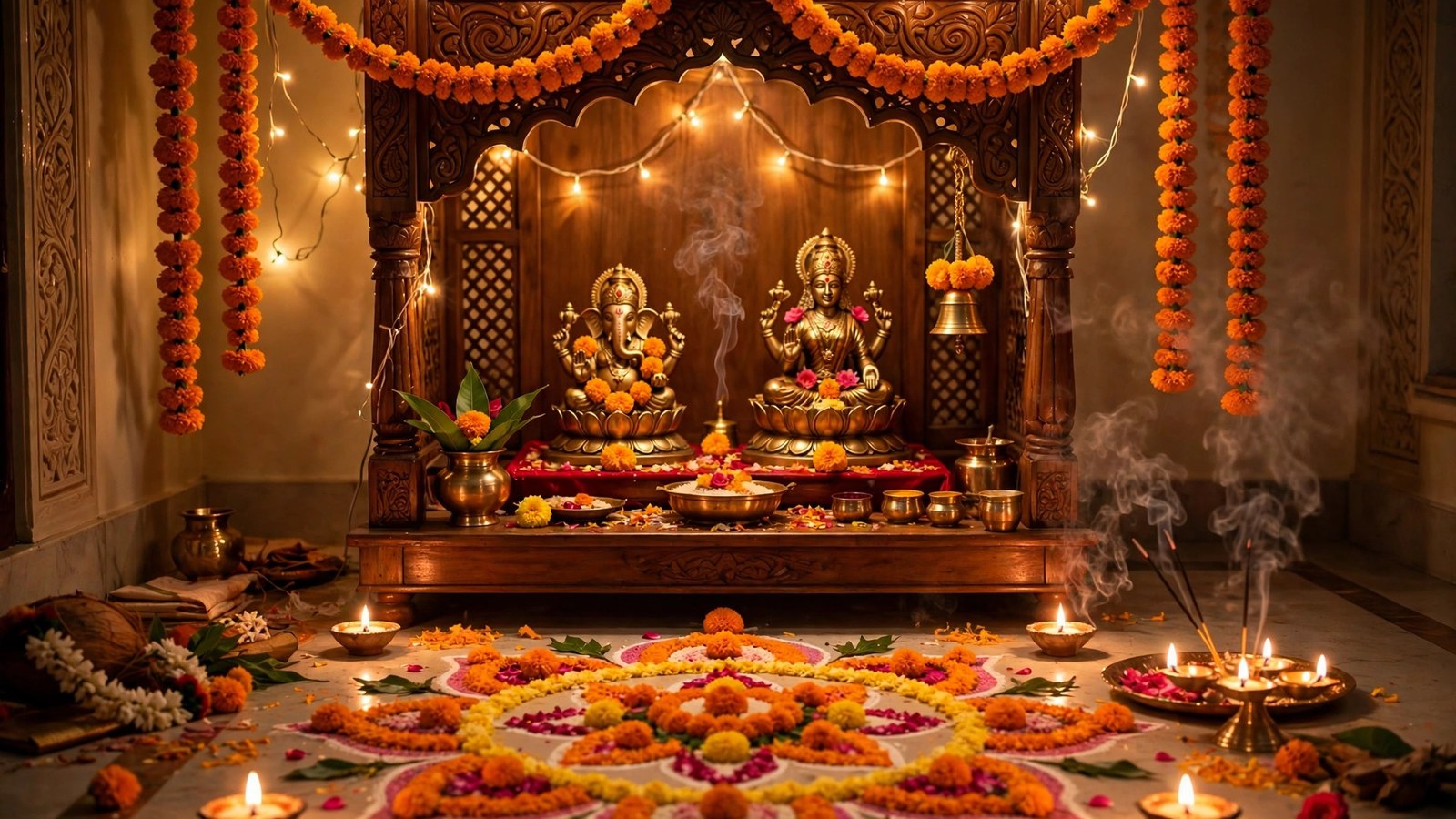
Drape marigold garlands around the frame of the mandir, along the shelves, and around the base of the idols. Keep the garlands neat and symmetrical, because a tidy garland looks intentional while a tangled one looks rushed. Small marigold flowers scattered on the floor in front of the mandir, in a simple pattern or a loose circle, add a soft, natural touch.
If fresh flowers are hard to find, good-quality artificial marigold garlands are a practical alternative. They look convincing from a short distance, they last the whole five-day festival from Dhanteras on Friday 6 November to Bhai Dooj on Tuesday 10 November, and they can be reused next year. Mix a few fresh flowers with artificial garlands for the best of both.
Diyas, Candles and Warm Light
Light is the whole point of Diwali, and the pooja room is where it should shine brightest. Place a row of small clay diyas along the base of the mandir, one on each side of the idols, and a larger diya in the centre. The flames should be at different heights, because varied heights look more natural and more beautiful than a single flat row.
Brass diyas and lamps add a warm golden glow that clay diyas cannot match. A traditional brass deepam, lit for the puja, becomes the centrepiece of the room. Keep a few battery-operated candles as a safe backup for shelves and corners where a real flame would be risky, especially if children are present.
Scented candles in soft floral scents add warmth to the room, but keep them away from the idols and the fabric. A single scented candle on a side shelf is enough.
A Simple Pooja Room Layout for Diwali Night
- Centre: the idols, freshly dressed, with a marigold garland around each.
- Front: a row of clay diyas and a small rangoli at the entrance.
- Sides: brass lamps, incense holder, and bell within easy reach.
- Above: a marigold toran across the entrance, with fairy lights along the frame.
- Floor: a clean mat or a cotton cloth for sitting during the puja.
Keep the space in front of the mandir clear. The family needs room to sit, to place the puja thali, and to move comfortably during the aarti. A crowded pooja room is hard to pray in, no matter how beautiful it looks.
Rangoli at the Pooja Room Entrance
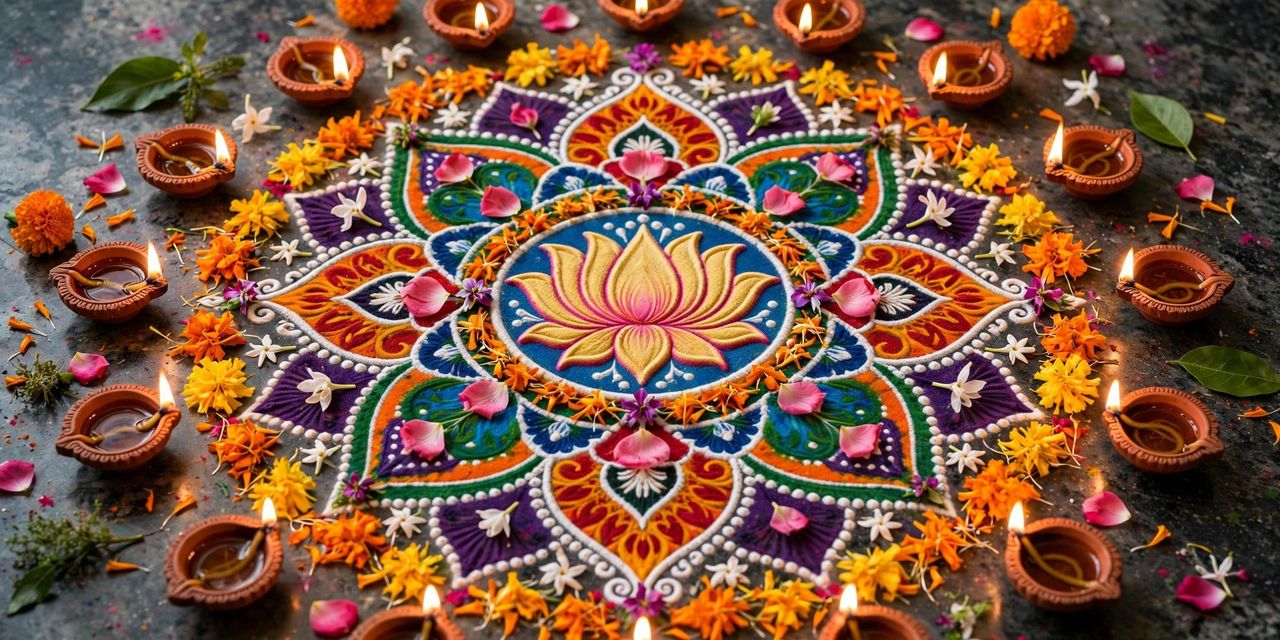
A small rangoli at the entrance to the pooja room welcomes everyone who enters. It does not need to be large or complicated. A simple lotus, a diya shape, or a circle of dots in festive colours is enough, and it takes less than half an hour to make. Use rice flour or rangoli powder in red, yellow, and white, and add a small diya in the centre for Diwali night.
Flower rangoli is another beautiful option for the pooja room. Petals in orange, yellow, and pink, arranged in a simple pattern on the floor, look fresh and smell wonderful. Flower rangoli is also safer than powder rangoli in a room where people walk barefoot, because there is nothing to slip on.
Fairy Lights and Soft Glow
Fairy lights add a gentle glow to the pooja room without overwhelming it. A single string of warm white lights along the top of the mandir frame, or around the door, is enough. Avoid coloured flashing lights in the pooja room, because they distract from the calm of the space. Warm white is the right choice for a sacred room.
Keep all wires hidden behind the mandir or along the wall, and keep lights away from fabric, flowers, and diya flames. Battery-operated fairy lights are the safest option for a pooja room, because they have no mains wire and no heat. Check the batteries before Diwali night, and keep spares nearby.
A small table lamp with a warm bulb on a side shelf adds a steady, soft light that makes the room feel welcoming even when the diyas are not lit. It is also useful in the mornings, when the family visits the pooja room for a quiet prayer before the day begins.
Helpful Finds for Your Pooja Room
A beautiful pooja room needs only a few good pieces. Scented candles in a gift box, battery-operated floral candles for safe corners, relaxing soy wax candles, and an elegant bedside lamp for warm light all help create a calm sacred space.
- 4pcs Peony Shaped Rose Scented Candle Gift Box Valentines
- Floral Battery Operated Candle Set Remote Timer Perfect
- Mindful Relaxation Scented Candles Natural Soy Wax
- Elegant Control Bedside Lamp - Adjustable Led Light With Rechargeable Battery, Dimmable, Usb Charging, Indoor
As an affiliate, EventBuzz may earn a commission on qualifying purchases at no extra cost to you.
Conclusion
A beautifully decorated pooja room for Diwali is a clean room, a few fresh marigolds, rows of glowing diyas, a small rangoli at the door, and warm soft light. Start with a deep clean, add decorations one layer at a time, and keep the space in front of the mandir clear for prayer. The result is a sacred space that feels calm, bright, and welcoming through all five days of the festival. For more festive home ideas, see our Diwali decoration ideas at home and our Diwali mandir decoration ideas, and plan your festival with the Diwali 2026 date and Lakshmi Puja calendar.