Mehndi is one of the most loved Diwali traditions, and the hands are where it shows best. When the diyas are lit and the family gathers for Lakshmi Puja on Sunday 8 November 2026, henna-stained hands carry the whole festive feeling.
This guide covers the full hand mehndi designs that suit Diwali 2026, from detailed bridal-inspired patterns to simpler styles you can finish in under an hour. Whether you are applying mehndi yourself, sitting with a professional artist, or helping a younger sister with her first design, you will find a pattern here that fits your time, your outfit, and your comfort level.
Why Full Hand Mehndi Suits Diwali
Diwali is a festival of detail. The rangoli at the door, the diyas along the windowsill, the embroidery on a new saree, everything is layered and deliberate. Full hand mehndi fits that spirit perfectly. A design that runs from the fingertips to the wrist, or even to the forearm, mirrors the richness of the rest of the celebration and looks complete in photographs, especially when hands are folded in prayer or holding a diya.
There is also a practical reason. Diwali hands are busy hands. You will be lighting diyas, serving sweets, greeting guests, and taking photos all evening. A full hand design stays visible through all of it, while a small motif on one palm can get lost. If you are wearing bangles, the mehndi fills the space between the bangles and the fingers beautifully, and the two together look far better than either one alone.
Full Hand Mehndi Patterns to Try in 2026
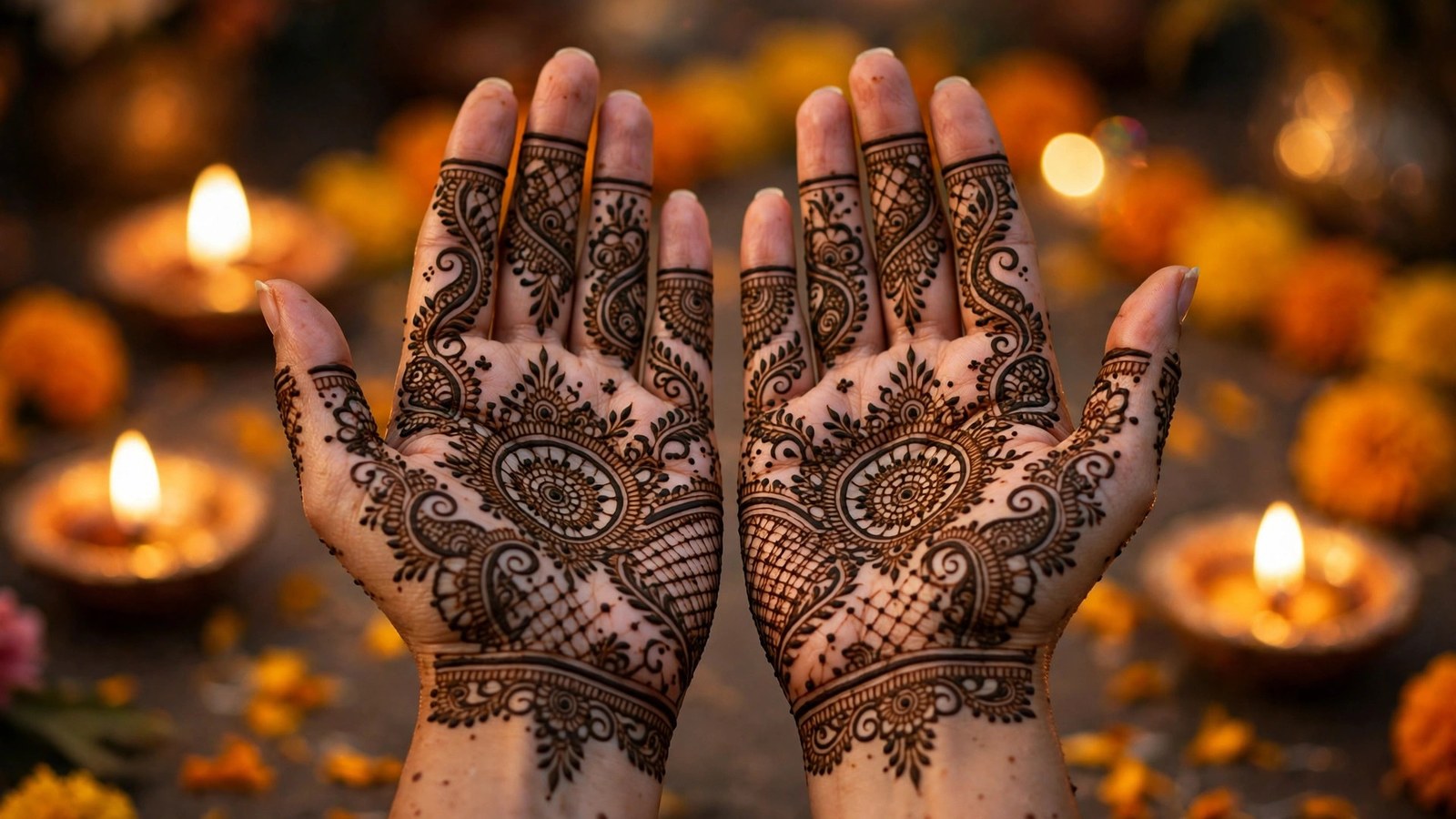
The classic full hand pattern remains the favourite. It starts with a dense mandala or paisley on the palm, flows into fine jaali work across the fingers, and finishes with a band at the wrist. Floral vines, peacocks, and lotus buds are the motifs most artists reach for, because they read clearly even in a photograph taken from a distance.
Arabic-style full hand mehndi is the faster alternative, and it has grown more popular every year. The patterns are bolder, with large flowers, sweeping leaves, and open spaces that let the skin show through. An Arabic design covers the whole hand but takes about half the time of a traditional Indian pattern, which makes it ideal if you are doing mehndi for several family members on the same day.
For something more modern, many women are choosing minimal full hand designs. These use clean lines, a single mandala on each palm, and fine finger detailing, leaving plenty of empty space. The look is elegant rather than busy, and it suits contemporary outfits such as Indo-western gowns and shararas. If your Diwali outfit is heavily embroidered, a minimal design keeps the overall look balanced instead of competing with the fabric.
Matching the Design to Your Outfit
- Red or maroon saree: a dense traditional pattern with paisley and peacock motifs.
- Pastel lehenga: a lighter Arabic design with large flowers and open spaces.
- Silk kurti or Anarkali: a minimal mandala design with fine finger work.
- Indo-western gown: a single bold motif per hand, with clean lines and no wrist band.
Take a photo of your outfit to the mehndi artist, or keep it open on your phone. A good artist will adjust the density of the design to match the outfit in seconds, and the result always looks more intentional than a pattern chosen at random.
When to Apply Mehndi for Diwali 2026
Timing matters more than most people realise. Fresh mehndi starts as a light orange stain and deepens over 24 to 48 hours. For the darkest colour on Diwali night, apply your mehndi on Friday 6 November, which is Dhanteras, or on Saturday 7 November, Choti Diwali. Both days are already part of the celebration, and the mehndi becomes part of the preparations rather than a last-minute rush.
If you can only manage one day, choose Saturday 7 November. The stain will be rich by Sunday evening, and you will still have the whole day free for cleaning, cooking, and decorating. Avoid applying mehndi on Diwali morning itself. The paste needs several hours to dry, and water, cooking, and diya lighting all fade the colour before it has set.
Keep the paste on for at least six hours, and overnight if you can manage it. Once you scrape it off, avoid water on your hands for the next few hours.
Tips for a Dark, Long-Lasting Stain
The quality of the henna matters most. Fresh, natural henna gives the deepest colour. Avoid cones that promise instant black colour, because those often contain chemicals that can irritate the skin. A good natural cone smells earthy and gives a reddish-brown stain that deepens over a day.
Warmth helps the stain develop. After the paste dries, wrap your hands loosely in a soft cloth and keep them warm. A gentle steam from a pot of hot water, held at a safe distance, is an old trick that many families still use. Sugar and lemon juice dabbed lightly over the dried paste also help it stick longer and stain darker.
After removing the paste, do not wash your hands with soap for at least twelve hours. Water and soap are the fastest way to lighten a fresh stain. If you need to cook or clean, wear thin gloves for the first day.
Simple Full Hand Designs for Beginners
You do not need a professional artist to get a beautiful result. A simple full hand design can be built from just three elements: a mandala in the centre of the palm, a vine running up one finger, and a band around the wrist. Practise the mandala on paper first, then transfer it to the hand.
Stencil cones and ready-made mehndi stickers are useful for beginners and for children. They give a clean outline in minutes, and you can add a few freehand dots and lines around the edges to make the design your own. For young girls, a simple flower on the back of the hand with dotted fingers is enough, and it lets them join in the tradition without sitting still for an hour.
Helpful Finds for Your Mehndi Look
A few finishing touches make your mehndi look even better in photos. Jewellery that frames the hands, a good makeup brush set for the festive look, and a long-lasting fragrance complete the Diwali outfit without any extra effort.
- Sophisticated Jewelry Set — Rhinestone Necklace & Earrings, Vintage Luxe Style
- 3-Piece Layered Golden Necklace Set
- Complete 17pcs Makeup Brush Set with Storage Bag and Sponge
- 3.4fl.oz Women's Luxury Perfume - Long-Lasting Floral Scent, Golden Heart-Shaped Accent Bottle
As an affiliate, EventBuzz may earn a commission on qualifying purchases at no extra cost to you.
Conclusion
Diwali mehndi designs for hands are at their best when they match the person wearing them. A dense traditional pattern suits a classic saree, an Arabic design suits a busy day with many hands to decorate, and a minimal mandala suits a modern outfit. Apply your mehndi on Dhanteras or Choti Diwali, keep the paste on overnight, and protect the stain from water for the first day. Do that, and your hands will carry the colour of the festival from the first diya on Sunday 8 November 2026 right through to Bhai Dooj. For more festive ideas, see our Diwali outfits guide and our rangoli designs for Diwali, and plan your five days with our Diwali 2026 date and Lakshmi Puja calendar.