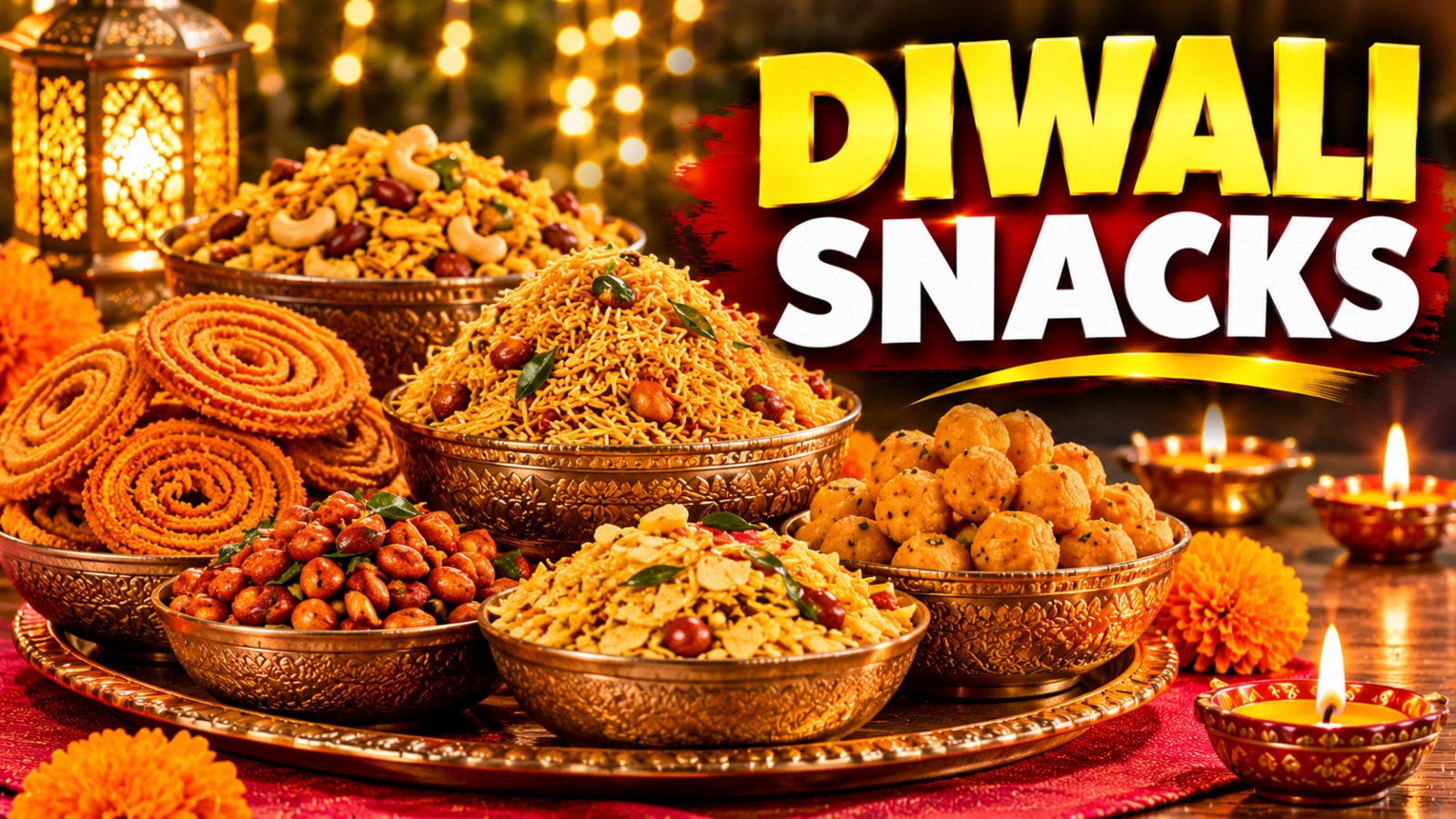
Sweets get most of the attention at Diwali, but ask any family what they actually eat all day and the answer is faral. The crunchy, salty, spicy snacks, chakli, chivda, namkeen, sev, shankarpali, are the food of the festival: made in big batches, stored in steel dabbas, offered to every guest who walks in, and eaten at all hours from morning tea to midnight.
Faral is a Maharashtrian tradition that has spread across India, and the word itself means the snacks prepared for the festival. Unlike sweets, which are often bought, faral is usually homemade, and the making of it is a family event in itself. Grandmothers supervise, children steal the first chakli from the tray, and the kitchen smells of cumin, asafoetida and hot oil for days.
This year Diwali falls on Sunday 8 November 2026, with Dhanteras on Friday 6 November, Choti Diwali on Saturday 7 November, Govardhan Puja on Monday 9 November and Bhai Dooj on Tuesday 10 November. The best time to make faral is two or three days before Diwali, so it is fresh for the main night and keeps well through Bhai Dooj. This guide covers the classic Diwali snacks, how to make them, how to store them, and how to serve them.
What Is Diwali Faral?
Faral is a collection of savoury snacks prepared in advance for Diwali, served to guests and eaten through the five days of the festival. A typical faral platter includes something crunchy, such as chakli or sev, something light, such as chivda or poha namkeen, something sweet and salty, such as shankarpali, and something rich, such as karanji or besan ladoo. The balance of flavours is the point: no single snack dominates, and every guest finds something they love.
Faral also solves a practical problem. During Diwali, the house is full of guests at unpredictable hours, and the kitchen is busy with the main meal. A tray of faral on the table means there is always something to offer, with no cooking required. It is hospitality that is ready before the guest arrives.
Classic Diwali Faral Snacks
These are the snacks that define a Diwali faral platter. You do not need to make all of them. Three or four, chosen well, make a complete faral.
Chakli
Chakli is the queen of Diwali snacks: a spiral of spiced rice and lentil flour, deep fried until crisp and golden. The dough is pressed through a chakli maker into spirals, which need a steady hand and a little practice. The flavour comes from cumin, sesame, asafoetida and a touch of chilli. A good chakli is crisp all the way through, never soft in the middle, and it keeps for two weeks in an airtight container.
Chivda
Chivda is a light, crunchy mix of flattened rice, peanuts, roasted chana dal, curry leaves and spices. It is the easiest faral snack to make, because it is mostly roasted rather than fried, and it is the one guests eat by the handful. Make it mild for children and spicy for adults, or make one batch and add extra chilli flakes to half of it.
Namkeen and Sev
Namkeen is the general name for savoury fried snacks, and sev is the most loved of them: thin, crisp strands of gram flour, seasoned with salt, turmeric and chilli. Sev is also the base for chaat, so a batch made for Diwali can be used for weeks afterwards. Keep the strands thin and fry them quickly, because they burn in seconds if the oil is too hot.
Shankarpali
Shankarpali are small diamond-shaped biscuits, made from a dough of flour, sugar, ghee and milk, then fried until golden. They sit between sweet and savoury, and they are the snack children reach for first. A savoury version, made with cumin and salt instead of sugar, is equally popular and pairs beautifully with tea.
How to Plan Your Faral Making
Faral making goes wrong when it is left to the last day. Plan it like a small project, and it becomes one of the best parts of Diwali preparation.
- Three days before Diwali: make the snacks that keep longest, such as chakli, sev and shankarpali. Let them cool completely before storing.
- Two days before: make chivda and any fresh namkeen. These stay crisp for a week if stored properly.
- One day before: make karanji and any sweet items, and pack small gift boxes of faral for neighbours and family.
Storing Faral So It Stays Crisp
Faral is only as good as its storage. A chakli that has gone soft is a disappointment, and the cause is almost always moisture. Let every snack cool completely on a wire rack or on paper before it goes into a container. Even a little warmth creates steam, and steam is the enemy of crunch.
Use airtight containers, preferably steel or glass, and store each snack separately. Chakli and sev absorb the smell of other snacks, and a mixed container makes everything taste the same. Keep the containers in a cool, dry place, away from the stove and the sink. Properly stored, chakli and shankarpali keep for two weeks, chivda for ten days, and sev for two weeks. Glass storage containers with airtight lids are ideal, and clear pantry bins help you see what is running low without opening every dabba.
Serving Faral to Guests
Serve faral on a large platter or in small brass bowls, with a little of each snack arranged side by side. Add a small bowl of green chutney or tamarind chutney for dipping, and a few pieces of sweet, such as a ladoo or a piece of barfi, to balance the salt. Offer tea or masala chai alongside, because faral and chai are one of the great pairings of the festival.
Faral also makes a wonderful gift: pack a small box with a mix of chakli, chivda and shankarpali, tie it with a ribbon, and give it to neighbours and friends. For more festive food, see our Diwali sweets and recipes and our Diwali party ideas and hosting guide.
Helpful Finds for Your Faral Kitchen
Good storage keeps faral crisp for the whole festival. - airtight food storage containers keep chakli and sev crunchy for two weeks, - glass food storage containers suit serving and storing in one, - clear pantry bins help you see what is running low without opening every dabba, and - collapsible storage containers with handles are handy for packing gift boxes of faral.
- 24pcs Airtight Food Storage Containers with Hinged Lids, Microwave & Freezer Safe, Transparent Plastic Pantry Organizer
- [Glass Food Storage] 16pcs Glass Container
- 4/8/12pcs Clear Plastic Storage Bins, Pantry Organizers
- Set of 2 Large 6.82-Gallon Collapsible Storage Containers with Handles, Sturdy Plastic Organizer
As an affiliate, EventBuzz may earn a commission on qualifying purchases at no extra cost to you.
Conclusion
Diwali faral is the quiet heart of the festival: chakli, chivda, namkeen, sev and shankarpali, made with care, stored in airtight containers, and shared with everyone who walks through the door. Make your faral two or three days before Diwali, Sunday 8 November 2026, store each snack separately, and serve a little of each with tea and a sweet. The sweets will be eaten and forgotten, but the crunch of a good chakli and the smell of a kitchen full of faral are the memories your family will carry into next Diwali.
For more festive food, try our Diwali sweets and recipes, Diwali party ideas and hosting guide, and Diwali cleaning and home preparation checklist.