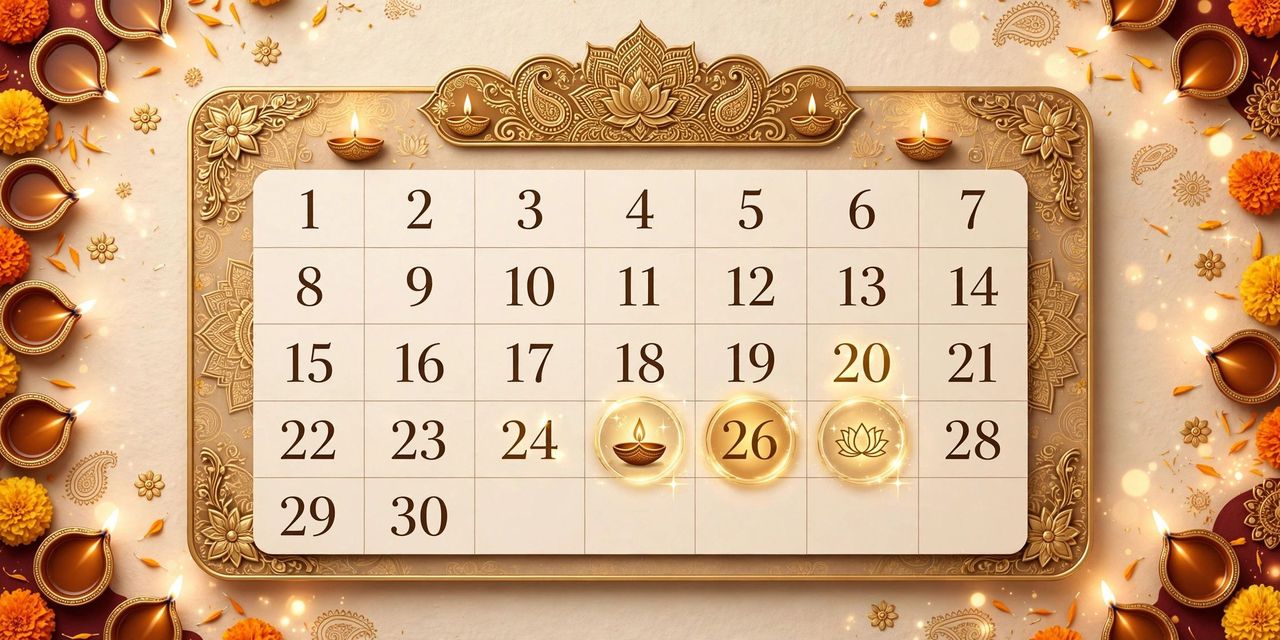
Diwali dinner is the meal the whole festival builds toward. After days of cleaning, shopping, and decorating, and after the lamps are lit and the Lakshmi puja is complete, the family finally sits down together. Diwali falls on Sunday, 8 November 2026, with the festival running from Dhanteras on Friday, 6 November to Bhai Dooj on Tuesday, 10 November, and the dinner on the main night carries the most meaning. It should feel special without keeping the cook in the kitchen all evening.
A good Diwali dinner menu balances richness with freshness, and tradition with practicality. This guide gives a complete festive menu that works for a family dinner or a gathering of guests, with ideas for each course, a cooking timeline, and options for different tastes. Use it as a whole, or pick the courses that suit your household and leave the rest.
How to Build the Menu
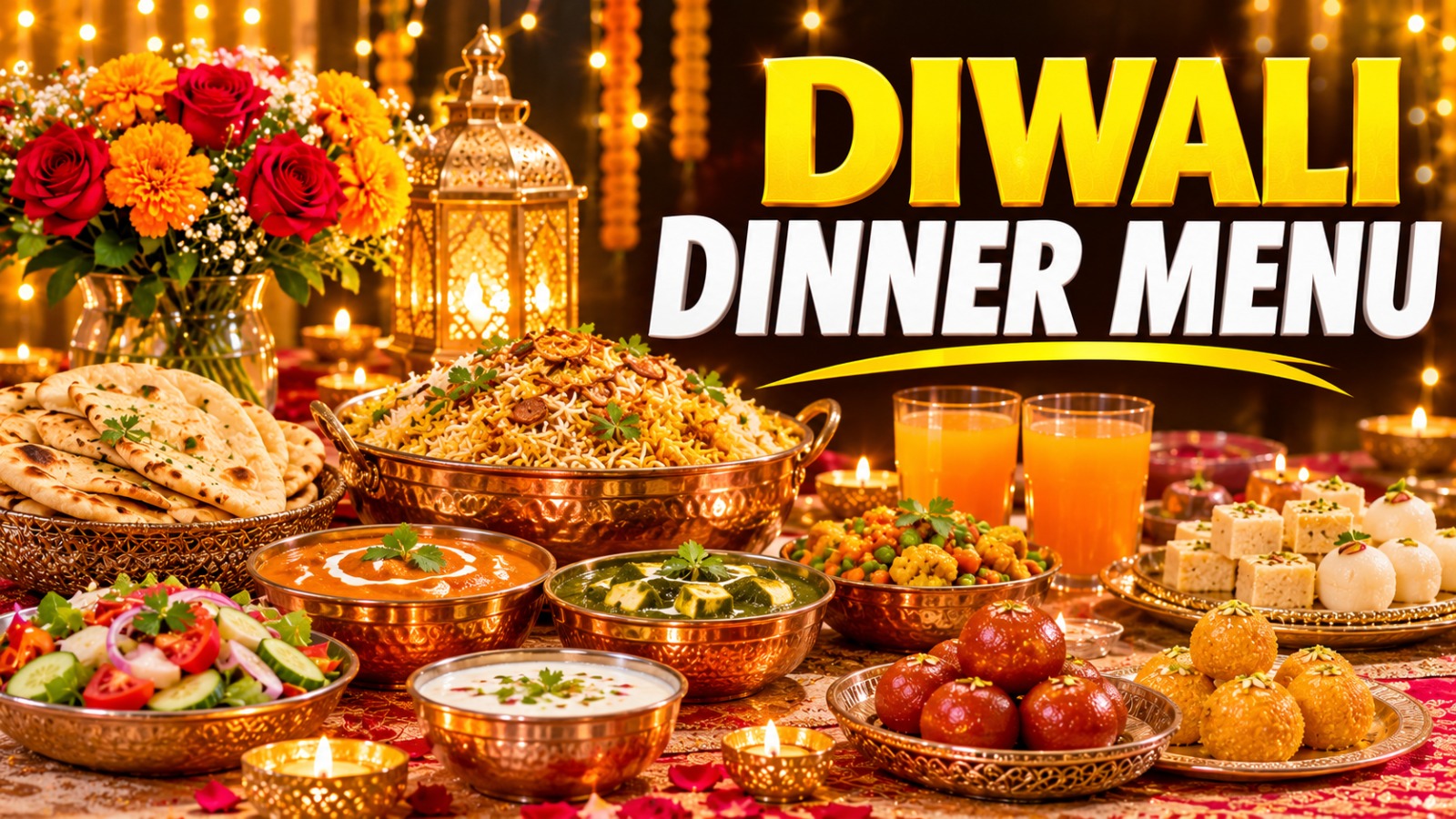
Start with the shape of the meal: a welcome drink, two starters, two mains, a dal, breads, a rice dish, a salad and raita, and two desserts. That sounds like a lot, but several dishes are simple, and many can be prepared ahead. The aim is a table that looks abundant, not a kitchen that feels like a restaurant service.
Choose dishes that complement each other. If one main is rich and creamy, make the other lighter and tomato-based. If the rice dish is fragrant and spiced, keep the dal mild. Offer one dish that children love, such as paneer butter masala or a mild vegetable pulao, so the youngest guests eat happily. And remember that most Diwali dinners are vegetarian, which is both traditional and practical for mixed groups.
Write out quantities the day before. As a guide, plan about 150 grams of each main dish per person, two breads per person, and one cup of rice per person. It is better to have a little extra of the most popular dish than to run out of it halfway through the meal.
Welcome Drink and Starters
Begin with a welcome drink served as guests arrive. A chilled rose sharbat or a mango lassi is festive and refreshing, and it gives people something to hold while they admire the decorations. For a warmer option later in the evening, masala chai is always welcome after dinner.
For starters, choose one grilled and one fried dish. Paneer tikka is the classic grilled starter: marinated paneer, peppers, and onions cooked until lightly charred, served with mint chutney and onion rings. It can be prepared ahead and grilled just before serving. For the fried option, vegetable samosas or hara bhara kebabs work well, and both can be made earlier in the day and reheated in the oven.
Serve the starters on a shared platter rather than individual plates, so the meal begins with the feeling of sharing that defines Diwali. Keep the portions small, because the main course is the star, and guests should arrive at it hungry rather than full.
Main Dishes: The Heart of the Dinner
Two main dishes give the table variety without doubling the work. Paneer butter masala is the most loved Diwali main across India: soft paneer in a rich tomato and cream gravy, finished with butter and a pinch of kasuri methi. It pairs with almost every bread and rice, and even picky eaters enjoy it.
For the second main, choose something with a different character. A mixed vegetable kurma, a chana masala, or a dum aloo all bring their own flavour and texture. Chana masala is a good choice because it is hearty, keeps well, and tastes even better the next day, which makes it perfect for cooking ahead. If your family prefers a lighter option, a palak paneer or a simple seasonal vegetable sabzi balances the richness of the other dishes.
Add a dal to round out the meal. A dal makhani, slow-cooked and finished with cream and butter, is the traditional festive choice, and it can simmer gently while you finish other dishes. A simpler yellow dal tadka is equally comforting and takes far less time. Either way, the dal gives the meal its homely, grounding note.
Desserts to End the Evening
Dessert on Diwali night should feel celebratory but not heavy after a rich meal. Offer two choices: one traditional sweet and one creamy dessert. Gulab jamun served warm with a scoop of vanilla ice cream is a favourite that suits all ages, and it can be made or bought ahead and gently reheated. Kheer, made with rice, milk, cardamom, and saffron, is the classic festive dessert, and it can be served warm or chilled.
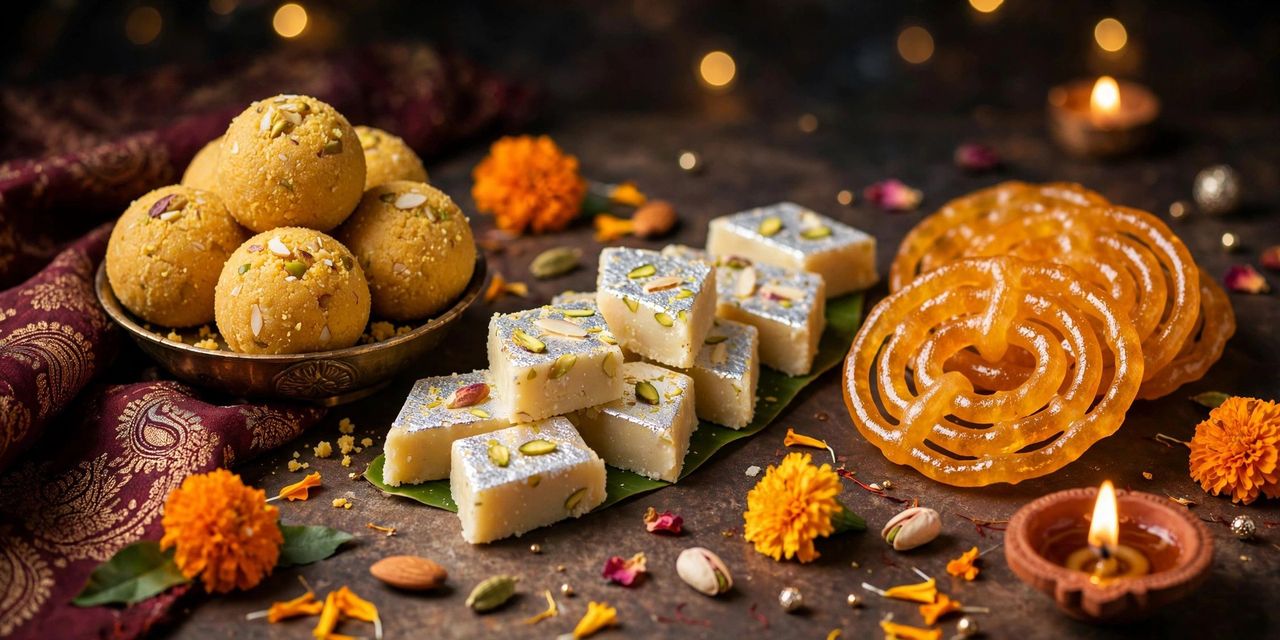
If you prefer a lighter finish, rasmalai or a small plate of kaju katli and motichoor ladoo lets guests take just a little sweetness. A bowl of fresh fruit with a honey drizzle is a kind option for guests who have eaten lightly. Whatever you choose, serve dessert after a short pause, once the main plates are cleared and everyone has had a moment to breathe.
Helpful Finds for the Dinner Table
A well-dressed table and organised kitchen make the dinner run smoothly. - an elegant table runner sets the festive tone before a single dish arrives, - battery candles add a safe glow to the table without open flames near food, and - a crystal table lamp brings warm light to a sideboard or serving area.
- Elegant 36 Gray Lace Table Runner 90cm Exquisite Embroidered
- 1pc Modern Minimalist Table Runner Elegant Dining Decor
- Floral Battery Operated Candle Set Remote Timer Perfect
- Led Acrylic Touch Crystal Table Lamp Plant Decorative Light
As an affiliate, EventBuzz may earn a commission on qualifying purchases at no extra cost to you.
Conclusion
A complete Diwali dinner menu is not about cooking the most dishes, but about cooking the right ones and enjoying them together. A welcome drink, two starters, two mains, a dal, fresh breads, a fragrant rice, and two desserts will satisfy any table, and preparing the slow dishes a day ahead leaves the evening free for puja, fireworks, and family. Light the diyas, serve the food while it is hot, and sit down to eat with the people you love. That is the real feast of Diwali.
For the full festival calendar, see the Diwali 2026 date and Lakshmi puja calendar, and for traditional sweets to finish the meal, our Diwali sweets and recipes guide has recipes for every taste.