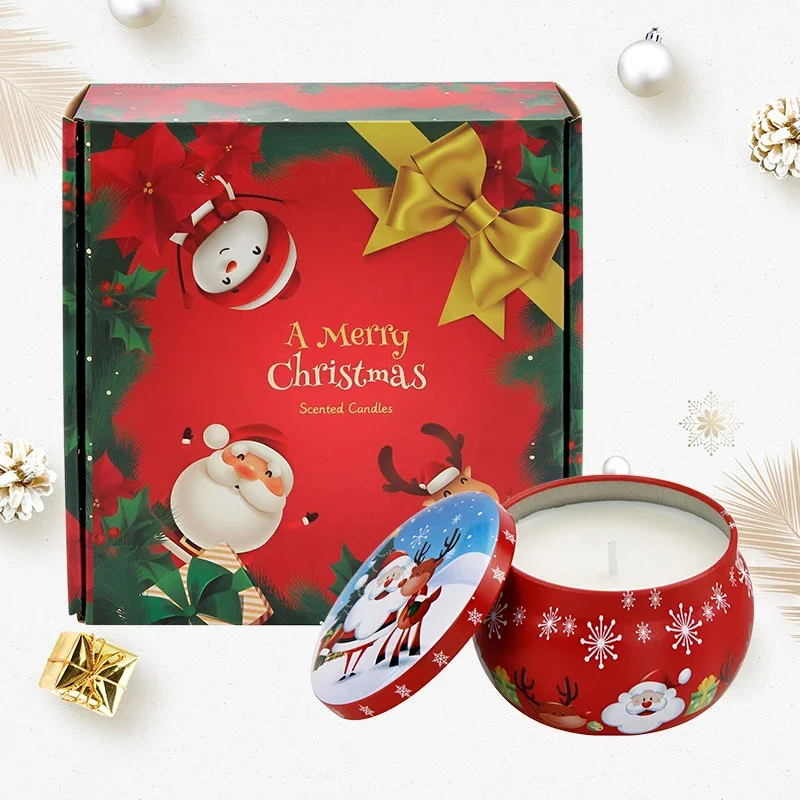
Corporate Christmas gifts live under rules personal gifts never face: they must feel warm without feeling inappropriate, personal without feeling intrusive, generous without looking like an attempt to buy favor, and they must do all of that at scale, for dozens or hundreds of people at once. This guide to corporate christmas gifts for 2026 is built for the people who actually carry that task: how to choose for clients versus employees, what scales gracefully, where the compliance lines sit, and two office safe picks in the corporate picks section below.
This is a different world from peer to peer office giving. If you are buying for the colleague whose name you drew, our coworker gifts guide and the gift exchange ideas guide are your pages. Here the giver is the business, the recipients are its clients and its team, and the gift is a message about the company itself.
Clients and Employees Are Two Different Gifts
The most common corporate gifting error is sending everyone the same box. Client gifts are relationship maintenance: they thank, they remind, and they position your company as thoughtful and competent. Employee gifts are recognition: they say the year’s work was seen, by name, by humans. A client gift can be elegant and brand adjacent; an employee gift must feel like it came from people who know them, which is why the message inside matters more for staff than the object itself.
Budgets and sourcing differ too. Client gifting usually runs in tiers by relationship value, while employee gifting must be scrupulously even: nothing corrodes morale faster than visibly unequal gifts inside one team. Plan the two programs separately, order them separately, and write their cards in different voices, business warm for clients, genuinely personal for employees, ideally signed by their actual manager.
What Scales: Categories That Work at Ten or Ten Thousand
Not every lovely gift survives multiplication. Use this comparison to choose categories whose quality, logistics and message hold up at volume.
| Category | Scales because | Best for | Watch out for |
|---|---|---|---|
| Candle sets | Uniform quality, easy packing, no sizes or tastes to match | Clients and employees alike | Choose mild, premium feeling scents |
| Gourmet food and hampers | Shareable in offices, festive by nature | Client offices, teams | Dietary range; always include a non food element |
| Quality drinkware | Daily visibility, unisex, durable | Employees, conference clients | Branding should be subtle or absent |
| Charitable donations in their name | Zero logistics, strong values signal | Clients with gift refusal policies | Choose broadly supported causes |
| Gift cards | Perfectly even, universally usable | Large employee groups | Needs a personal note to avoid feeling like payroll |
The candle set is the quiet champion of this table, which is why two candle options anchor our picks below: a twelve pack that can be presented whole or divided across a team’s desks, and a festive four piece set sized for client boxes.
Candle Sets: The Corporate Workhorse, Done Well
Candles succeed corporately for reasons that compound. They are consumable, so they never clutter a client’s office. They are unisex and age neutral. They carry no size, no dietary question and no technology compatibility. A set format adds the perception of abundance, and a twelve pack in particular gives a client office a gift that can be shared around a team, multiplying your goodwill across people you have never met. Presented with a handwritten card, a candle set reads as considered rather than bulk bought.
The quality bar is presentation. Choose sets in gift worthy packaging, avoid novelty scents and joke labeling entirely, and keep any company branding to the card and perhaps a tasteful outer sleeve, never stamped across the product itself. A client should be able to regift or display the set without becoming your billboard. That restraint is itself the brand message: confidence.
Personal Touches That Survive Scale
Personal at scale is a system, not a hope. The touches that survive volume are a handwritten or genuinely hand signed card, a line in that card specific to the relationship, one shared memory, one project, one thank you that could not be sent to anyone else, and a gift chosen by tier rather than by database value alone. For employees, the manager’s own sentence outperforms any printed message the company can buy, and collecting those sentences is a two week task worth starting in November.
What does not scale is individual gift selection for hundreds of people, elaborate custom packaging with names on products, and anything perishable with a narrow delivery window across many addresses. Build the personal layer into words and tiers, and let the object layer stay beautifully uniform. Recipients experience the words as the gift’s personality; the object just has to be worthy of carrying them, a standard the guides in our best gifts flagship apply to every category.
Compliance, Policies and the Appropriateness Line
Many client organizations, especially in finance, healthcare, government and large corporates, operate gift policies that cap or prohibit what their staff may accept. A professional giver respects those policies visibly: keep client gifts modest and broadly acceptable, offer a charitable donation alternative in the card for policy bound recipients, and never send alcohol without confirming it is welcome, appropriate and permitted, a check that fails often enough that many companies skip alcohol entirely.
Inside your own company, even handedness is the compliance that matters. Same gift, same tier rules, applied to remote staff with the same care as headquarters, shipped early enough to arrive inside the season. Contractors and support staff are a judgment call many teams get wrong by omission; if people contributed to the year, the generous and reputationally wise answer is to include them. Nothing in this section is legal advice; it is the etiquette that keeps a kindness from becoming a problem.
Timing and Logistics: The November Discipline
Corporate gifting fails in the calendar more often than in the catalog. Work backward from the last reliable delivery days of December: cards and sentences collected in November, orders placed with buffer for the inevitable address errors and returns, client gifts arriving in the first half of December, when they are noticed, rather than in the final week’s flood. Employee gifts should land before holiday leave begins, or they greet people in January as an afterthought.
Keep a simple register: who, which tier, what was sent, address used, and delivery confirmed. That register becomes next year’s starting point and prevents the two classic embarrassments, the client gifted twice by two departments, and the client missed entirely. For the personal side of timing, our gifts for your boss guide covers the upward gift’s own etiquette, which individuals should read before the office exchange season begins.
Employee Gifts That Actually Feel Like Thanks
Employees can tell the difference between recognition and merchandise. The gifts that land as thanks pair a quality, even handed object, the candle set, the good drinkware, the proper hamper, with evidence of specific attention: the manager’s sentence, a note about the year’s real achievement, or a small extra tied to the person’s known interest. Time is also a gift employees rank above objects in survey after survey: an early finish, an extra day, a team meal with no agenda. The strongest programs combine one object, one sentence and one hour of grace.
Avoid the known morale killers: merchandise covered in company logos presented as a gift, which reads as marketing; gifts of wildly uneven value inside a team; and anything that comments on health, appearance or personal life. If budget forces a choice between a grander object and a personal note plus time, choose the note and the time. People remember being seen long after they forget being supplied, a truth the peer level guides like teacher gifts demonstrate from the other side of the desk.
Honest Pros and Cons of Corporate Gifting Programs
Pros: done well, corporate gifts strengthen client loyalty, recognize employees in a season built for it, and express the company’s character more credibly than any advertisement. Cons: done carelessly, they waste budget at scale, breach client policies, expose uneven treatment inside teams, and read as obligation rather than thanks. The difference is never the spend. It is tiering honestly, writing personally, respecting policies and starting in November, the four habits this entire guide reduces to.
Conclusion
Corporate Christmas gifts succeed when they are run as two programs, not one: elegant, policy aware thanks for clients, and even handed, personally worded recognition for employees. Choose categories that scale, candles first among them, keep branding on the card where it belongs, collect the personal sentences early, and ship into early December. A company that gifts like that is remembered the way it wants to be: competent, generous and human.