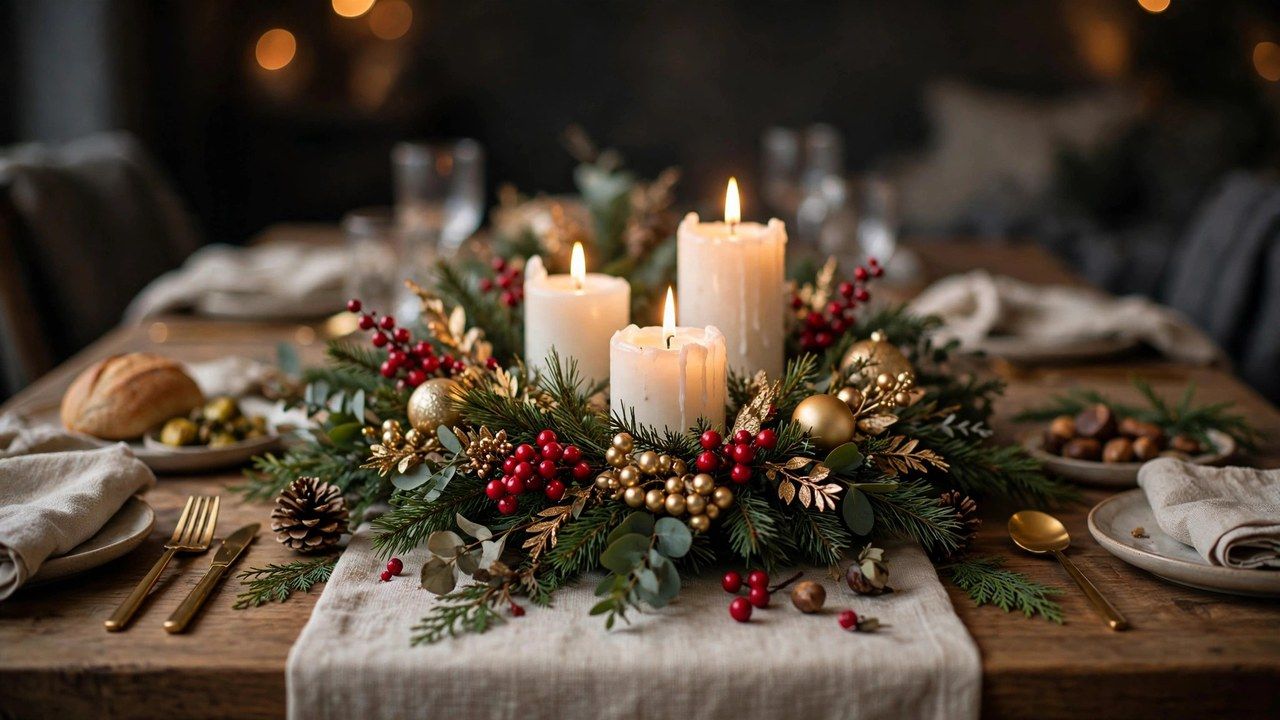
A centerpiece has one job: make the table feel like an occasion without making dinner harder. The best christmas centerpiece ideas respect the realities of a working meal, sightlines across the table, elbows, serving dishes and candle safety, while still delivering that hush when guests sit down. This guide works through the height rule, candlelit designs, greenery builds and style variations, and finishes with candle picks in the centerpiece picks section that suit the table’s most classic arrangement.
Build your centerpiece as the middle layer of the whole setting; our Christmas table settings guide covers plates, glassware and place cards around it, and the mantel logic in our mantel decor guide transfers directly, because a centerpiece is really a mantel that people eat around.
The Height Rule and the Sightline Test
Every centerpiece decision starts with height. Guests must see each other’s faces without leaning, so the working rule is simple: keep the arrangement’s solid mass below about a foot, or lift a slim arrangement high enough on a stand that faces pass underneath it, with nothing bulky in the band between. Candle flames and slim branches may rise higher because eyes pass through them; solid vases of flowers may not. Sit in a chair and check from both sides of the table before the day itself.
Length matters too. A centerpiece should occupy roughly the middle third of the table’s length, leaving the ends for serving dishes, water pitchers and the carving board. On a round table, think in a circle of similar proportion. Crowding the full length looks lavish in a photo and becomes a furniture-moving exercise the moment real food arrives, so build in the serving gaps from the start rather than dismantling your work mid-meal.
Candle Centerpieces: The Classic That Always Works
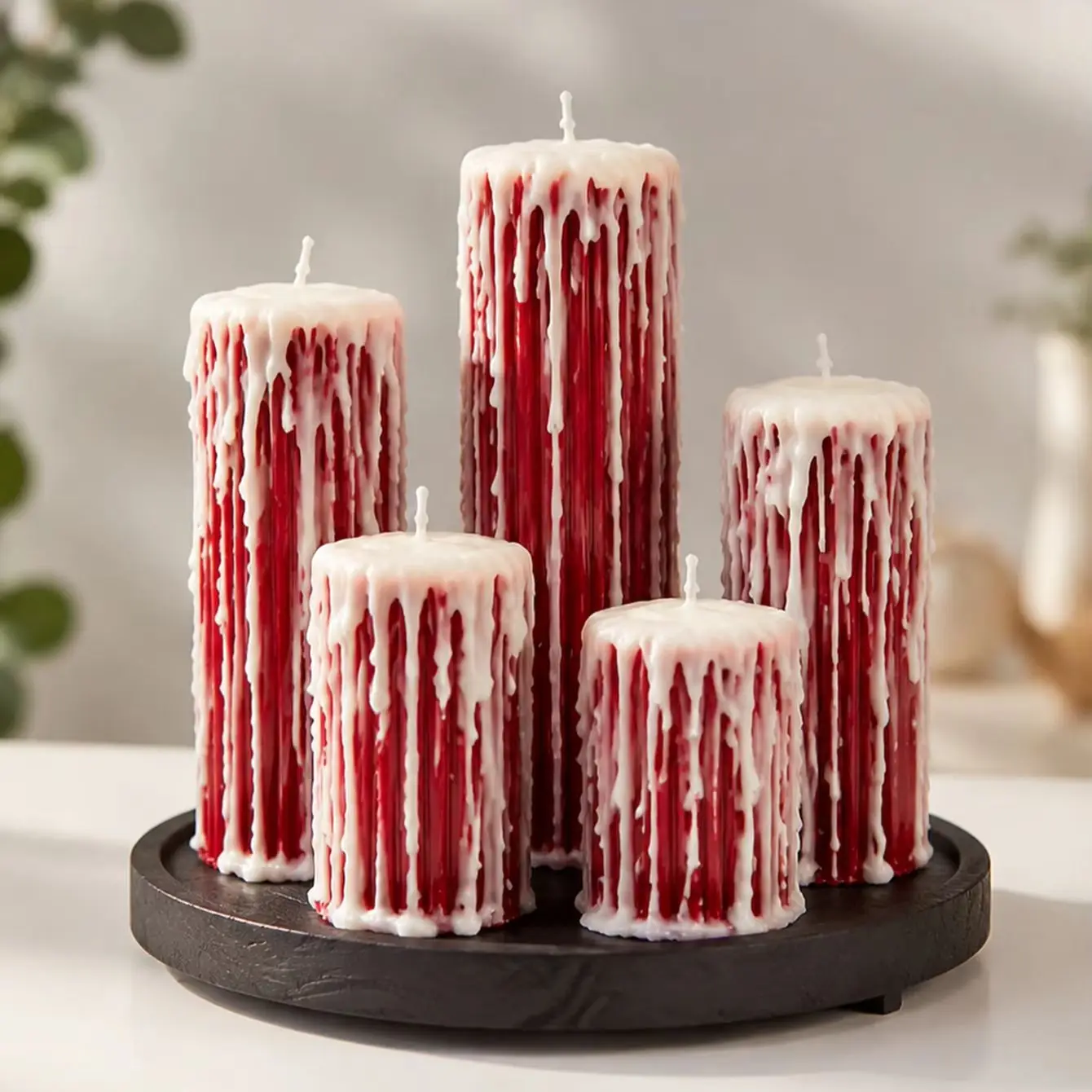
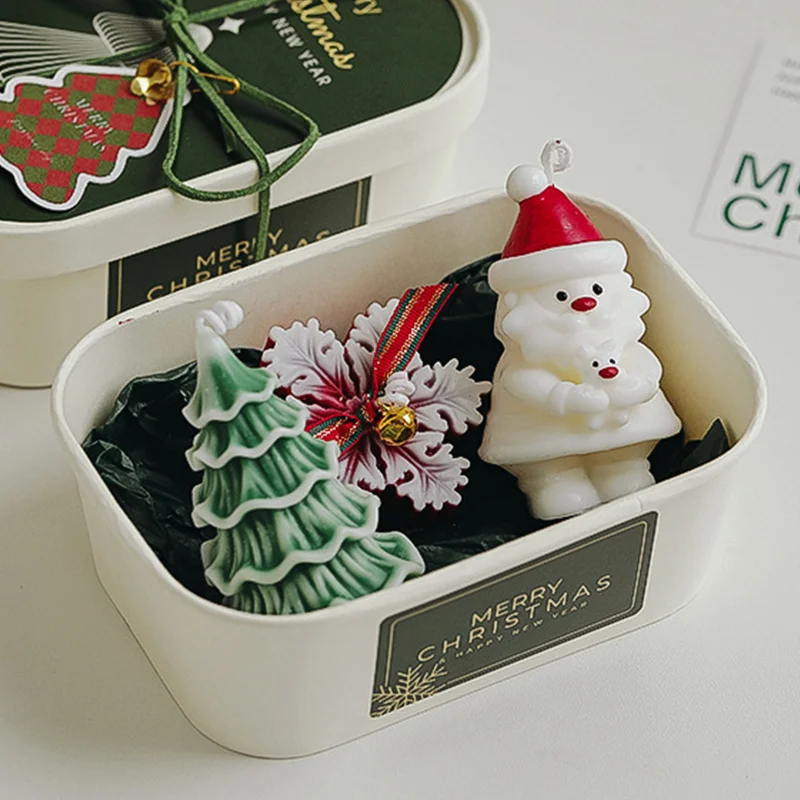
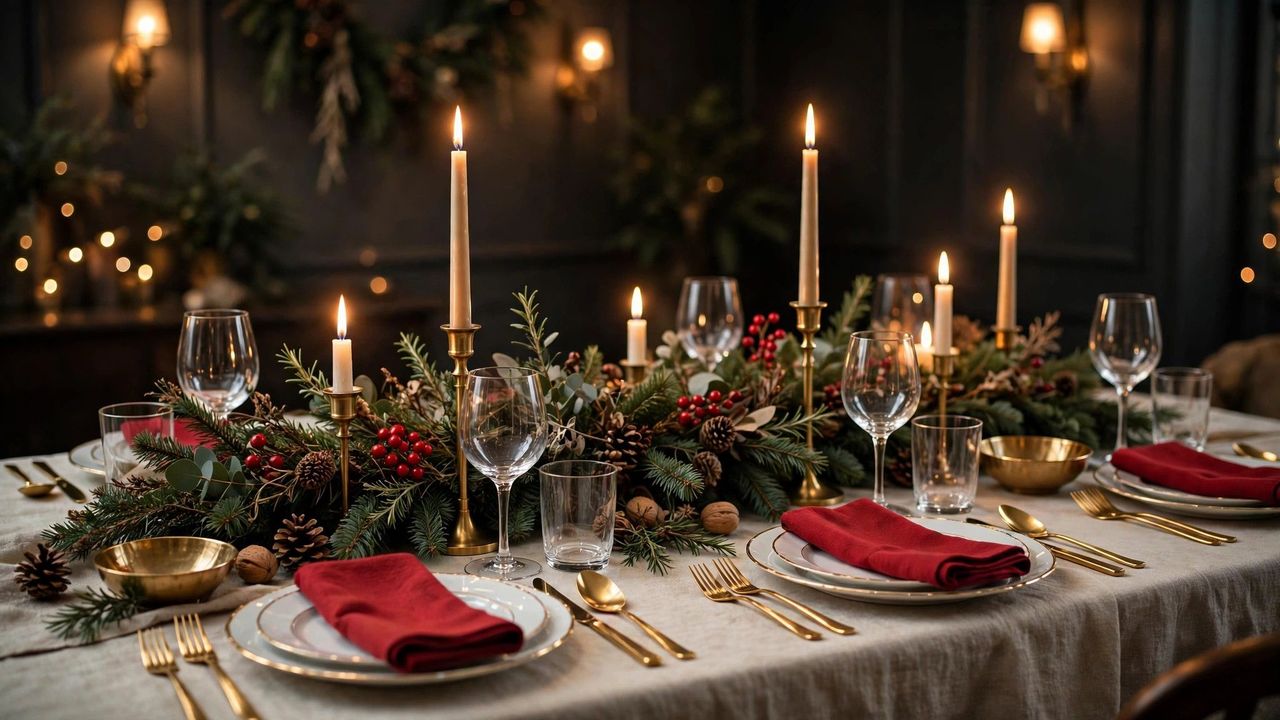
Candles are the oldest centerpiece for a reason: moving light flatters faces, food and every material around it. The classic build is a greenery base, a trio or row of pillar candles in varied heights, and small accents of berries, pinecones or ornaments tucked into the green. Taper candles in holders give height without mass and suit formal tables; pillars and hurricanes suit family tables where small hands and passing dishes make tapers risky. The candle sets in our picks section cover both moods, from a clean white set for formal styling to scented and shaped sets for festive family tables.
Safety shapes the design more than taste does. Keep flames clear of greenery that can dry and droop into them over a long evening, use stable holders that cannot tip when a dish passes, and never leave the table’s candles burning in an empty room. Flameless candles have become convincing enough to use in the greenery itself, reserving real flame for hurricanes and holders where it is contained and watched.
Greenery, Fruit and Natural Builds
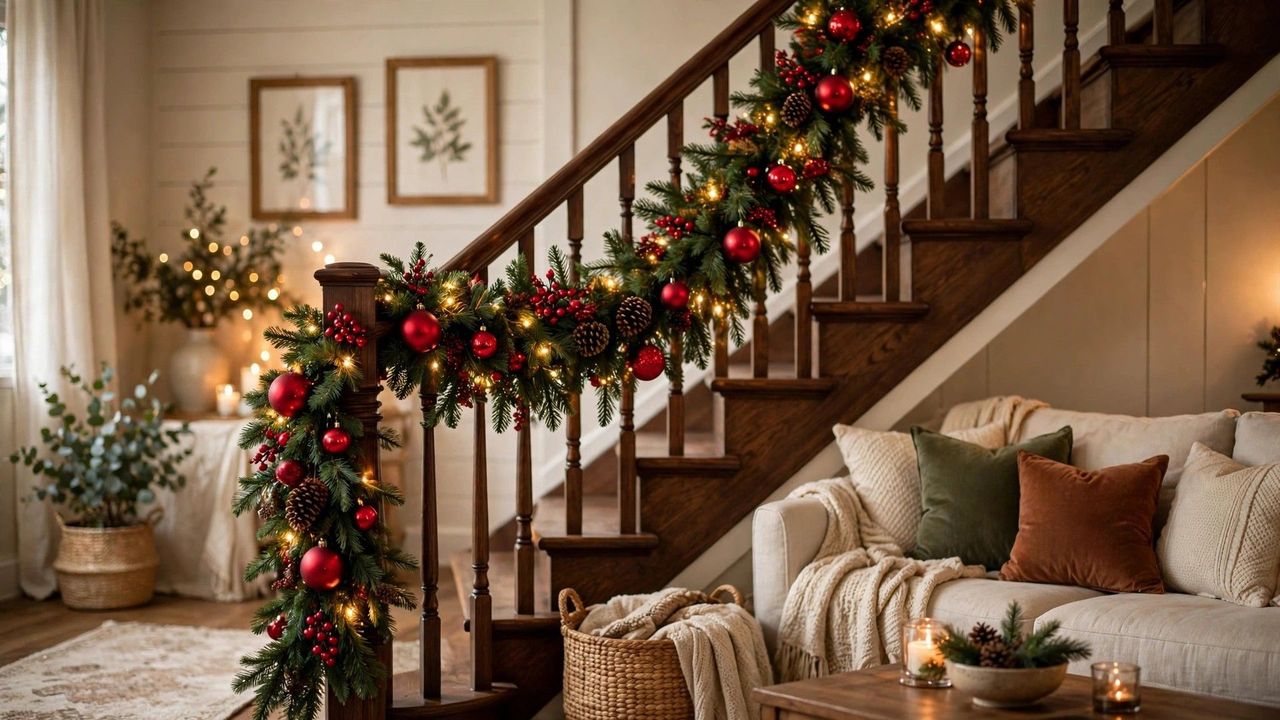
A greenery runner is the most forgiving centerpiece: lay a faux or fresh garland down the table’s center, tuck in pinecones, dried orange slices, cinnamon sticks, whole nuts and a few baubles, then add candlelight. It has almost no height problem, it flexes around serving dishes, and it can be built the day before. Fresh greenery smells wonderful and dries out; faux looks perfect and stores for next year. Many stylists mix both, fresh for scent near the candles, faux for the long base.
Fruit and natural abundance give a traditional table its richness: pomegranates, clementines, artichokes and sprigs of rosemary read festive without a single themed object, and most of it is edible or compostable afterward. Keep produce washed, keep it off direct contact with candle wax, and accept that a natural centerpiece is a one-evening performance. For the greenery techniques themselves, our garland ideas guide is the useful companion.
Choosing by Table Shape and Meal Type
| Table and meal | Centerpiece that works | Why |
|---|---|---|
| Long table, family style | Greenery runner with pillars and serving gaps | Dishes pass and land inside the arrangement’s rhythm |
| Round table, plated dinner | One low circular arrangement or a single statement vase kept low | Every seat faces the center; symmetry reads best |
| Small table, two to four | Single hurricane or a trio of small candles | Scale down or the centerpiece becomes a fifth guest |
| Buffet or drinks table | Taller arrangement pushed to the back third | No sightlines to protect; height can perform |
Kids’ tables deserve their own logic: no real flame, nothing breakable, and a centerpiece children can touch, like a paper tree or a bowl of ornaments they arranged. The main table’s elegance improves when small hands have a sanctioned festive project of their own at their own table.
Style Variations: Classic, Rustic, Modern and Glam
Classic: greenery, red berries, gold or white candles, and symmetry. Rustic: a wooden board or slice base, pinecones, burlap or linen, pillar candles in jars, and fruit instead of baubles. Modern: a single repeated element, all-white candles in a row, one branch arrangement, and generous empty space doing the styling. Glam: mercury glass, metallics, taper candles in crystal or brass, and a restrained palette of two metals at most. Each style succeeds by the same method: one base, one light source, one accent, repeated calmly.
Match the centerpiece to the room as well as the table. A rustic build under a formal chandelier looks lost, and a glam arrangement fights a farmhouse room. Pull one material or color from the room’s own decor, a metal from the mantel, the red from the tree, so the table feels like the same house celebrating, not a stage set wheeled in for dinner.
The Foundation: Runners, Boards and Trays
Under every good centerpiece is a foundation that defines its footprint and protects the table. A linen runner gives softness and a clear border; a wooden board or marble slab gives structure and catches wax; a tray makes the whole arrangement movable, which matters when the table must convert from decorating project to dinner service in ten minutes. Build on the foundation at a counter, carry it in complete, and the table styles itself.
Foundations also solve the heat and wax problem in advance. Candle drips land on the board, not the table finish, and hot serving dishes can join the arrangement’s edges without scorching linen. Choose the foundation first when you shop or gather, because its size dictates how much greenery and how many candles the design honestly needs.
Timing: What to Build Ahead and What to Do Last
Build the base two days out: foundation, greenery, and all non-perishable accents store happily in a cool room. Add fresh fruit, fresh flowers and real greenery’s final sprigs the morning of the dinner. Place candles early but light them only as guests sit, both for safety and because a candle lit at six is half gone by dessert. Photograph last year’s table if you loved it; rebuilding a proven design is smarter than inventing under deadline.
Have a downsizing plan. If the meal grows, guests squeeze in, or serving dishes multiply, know which elements lift out first: usually the accent baubles and one candle pair. A centerpiece that can gracefully shrink by a third without looking raided is a design that understands dinner is the point and decoration is the frame.
Honest Pros and Cons of the Big Centerpiece
Pros: a real centerpiece transforms an ordinary table into an event, anchors the room’s whole scheme, and gives guests a shared focal point that makes a meal feel celebrated. Cons: oversized arrangements block conversation, eat serving space and add deadline stress on the busiest cooking day of the year. The verdict most experienced hosts reach is a confident middle: one well-built, low, candlelit arrangement with serving gaps planned in, made early, beats a towering showpiece assembled in a panic every time.
Centerpieces Beyond the Dining Table
The same building method travels well. A coffee table takes a lower, smaller version built on a tray, safe from passing knees and designed to be lifted away for games and drinks. A kitchen island wants height discipline of a different kind, nothing in the prep zone and one hurricane at the far end where it glows without competing with dinner being made. An entry console centerpiece can be the boldest in the house because nobody eats around it, so let it carry the tall branches the dining table forbids.
Repeating one element across all three, the same candle style, the same greenery, the same accent fruit, ties the rooms together the way a repeated color ties a wardrobe. Guests feel the coherence without naming it. Build the dining version first and let the others be its echoes at different scales, and the whole ground floor reads as one celebration rather than three separate attempts.
Conclusion
Build low, light it warmly, leave room for the food, and let one idea repeat calmly down the table. A centerpiece that respects the meal will be remembered as beautiful; one that fights the meal will be remembered as an obstacle. Start with the foundation, add greenery, finish with candlelight, and sit down at your own table with time to enjoy it.