Chinese New Year 2027 falls on Tuesday, February 9, ushering in the Year of the Goat (also called the Year of the Sheep or Ram). Also known as Lunar New Year or Spring Festival, it is the most important traditional holiday in Chinese culture — a 15-day celebration of family reunion, fresh beginnings, and good fortune. Whether you are celebrating or simply curious, this guide explains the traditions, foods, and customs of the season.
The Year of the Goat: What It Means
The Chinese zodiac runs on a 12-year cycle, and 2027 belongs to the Goat — the eighth animal in the cycle. In zodiac tradition, Goat years are associated with gentleness, creativity, compassion, and a love of harmony. People born in Goat years (including 2015, 2003, 1991, and 1979) are said to share these calm, artistic traits. The zodiac animal appears everywhere during the festival — on red envelopes, decorations, and New Year greetings — and many families pay special attention to the year's animal when choosing gifts and decor.
Key Traditions of the 15 Days
The celebration officially runs from New Year's Eve to the Lantern Festival on the 15th day, with each day carrying its own customs.
- Reunion dinner (New Year's Eve): The most important meal of the year — families gather, often traveling long distances, for a feast on the eve of the new year.
- Red envelopes (hongbao): Elders give children and younger relatives red envelopes containing money, symbolizing good luck and protection.
- Firecrackers and lion dances: Noise and the color red traditionally ward off evil spirits; lion and dragon dances bring blessings to streets and shops.
- New clothes: Wearing new clothes, especially in red, symbolizes a fresh start.
- Visiting relatives: The first days are for family visits and exchanging greetings; later days honor friends, neighbors, and business partners.
- Lantern Festival (day 15): The celebration closes with glowing lanterns, lantern riddles, and sweet glutinous rice balls (tangyuan).
Lucky Foods and Their Meanings
Nearly every dish on the New Year table carries a symbolic wish — the food is the blessing.
- Dumplings (jiaozi): Shaped like old gold ingots, symbolizing wealth. Families often make them together on New Year's Eve.
- Whole fish: The word for fish sounds like "surplus" — serving a whole fish wishes abundance for the year.
- Spring rolls: Golden and crisp, they resemble gold bars and symbolize wealth.
- Longevity noodles: Long uncut noodles represent a long life — never cut them.
- Nian gao (New Year cake): A sticky rice cake whose name sounds like "higher year" — a wish for progress and promotion.
- Tangerines and oranges: Their round golden shape and lucky-sounding names make them the classic New Year fruit.
Decorations: Red and Gold Everywhere
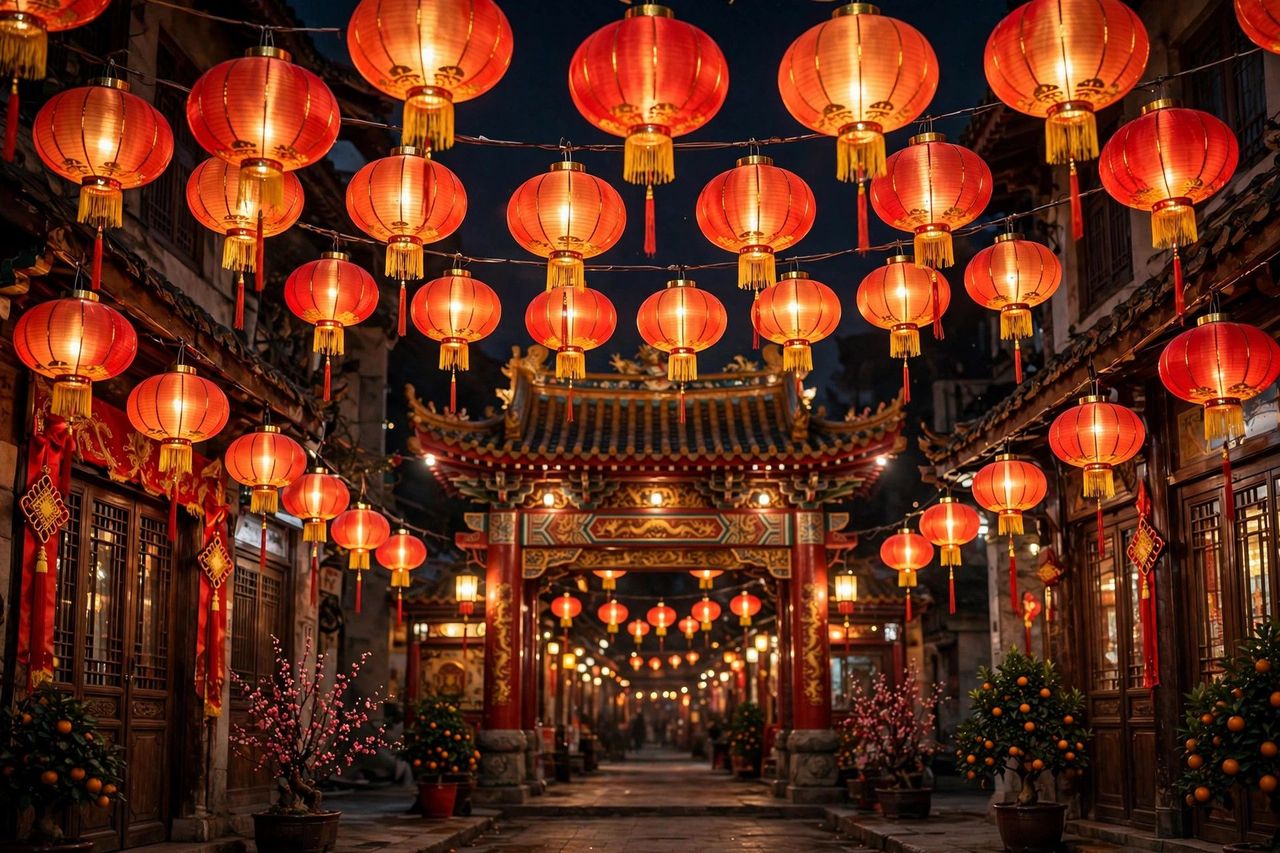
Homes are cleaned thoroughly before the new year to sweep away bad luck — but never on New Year's Day itself, when sweeping could sweep fortune away. Then the red goes up: red lanterns hang at doorways, red paper couplets with poetic wishes frame the front door, and paper cuttings of the zodiac animal decorate windows. Kumquat trees and blooming flowers (especially plum blossom and orchids) symbolize growth and prosperity. If you are decorating, the rule is simple: red for luck and joy, gold for wealth, and the Goat motif for 2027.
Greetings and Etiquette
The most common Mandarin greeting is "Xīnnián kuàilè" (Happy New Year), while the Cantonese "Gōng xǐ fā cái" wishes prosperity — the phrase you will hear most in Hong Kong and southern China. When giving or receiving red envelopes, use both hands as a sign of respect, and never open the envelope in front of the giver. Avoid unlucky associations during the festival: do not give clocks (the word sounds like "farewell"), sharp objects, or anything in sets of four. And if you are invited to a reunion dinner, bring tangerines or a festive gift — and arrive ready to eat, because the table will be full.