A wreath is the handshake of your Thanksgiving home: the first thing guests see on November 26, 2026, and the easiest decoration to make yourself. A store-bought fall wreath runs $30 to $60, but a DIY version costs $8 to $15 in materials and takes under an hour. The secret is that wreath-making is assembly, not artistry: pick a base, attach greenery, add focal pieces, and hang. Here are 12 designs, the base guide, and a full tutorial for the mini-pumpkin wreath everyone loves.
Choose Your Base
Every wreath starts with one of three bases. A grapevine wreath ($5 to $8) is the most forgiving: its twiggy texture hides wire and glue, and you can tuck stems straight into it without fasteners. A foam wreath form ($3 to $5) gives a perfect circle and works best wrapped in burlap or ribbon first, with pieces hot-glued on. A wire frame ($2 to $4) is the cheapest and lightest, ideal for heavy items like pumpkins because you can wire everything firmly. For your first wreath, choose grapevine: it looks rustic on its own, so even a sparse design reads as intentional. Buy one size up from what you think you need; wreaths look small on a door, and an 18-inch base is the sweet spot for a standard front door.
12 DIY Wreath Designs
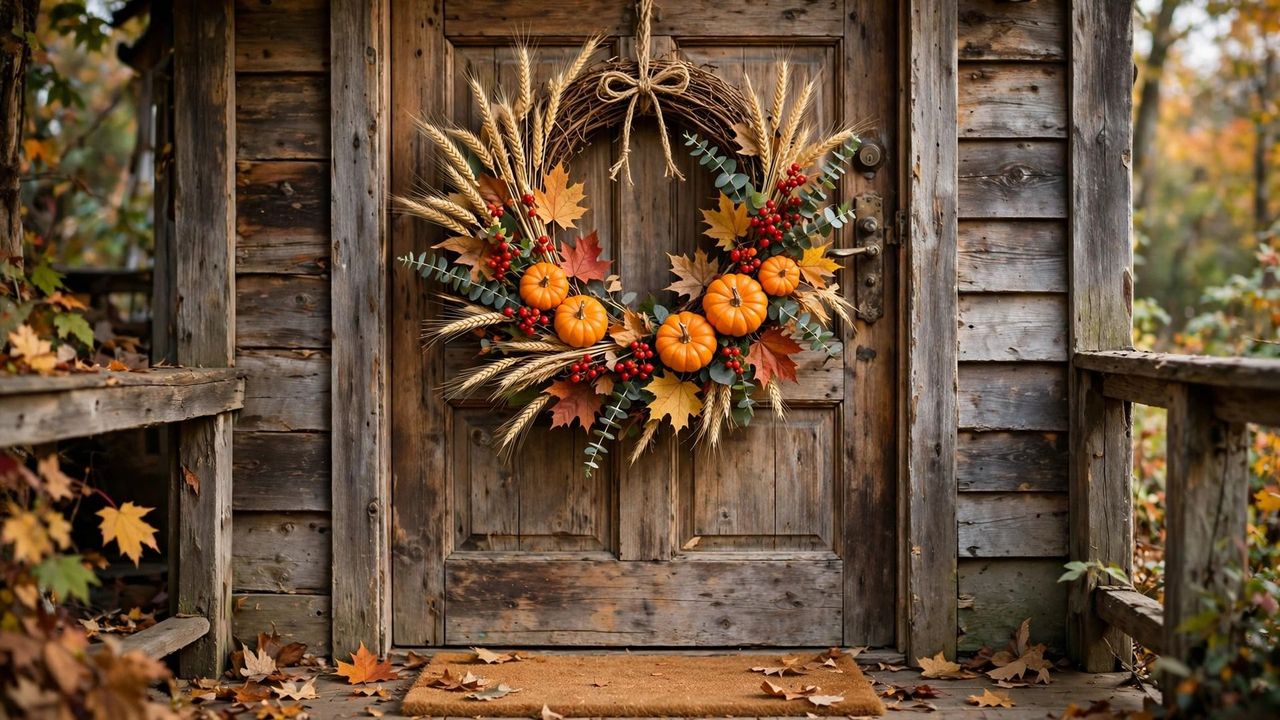
- 1. Mini pumpkin harvest: hot-glue mini pumpkins and gourds around a grapevine base with tucked eucalyptus.
- 2. Dried wheat sheaf: bundle dried wheat stalks in a full circle on a wire frame, tie with burlap ribbon.
- 3. Eucalyptus and berries: preserved eucalyptus spirals with clusters of faux red berries.
- 4. Pinecone and acorn: natural pinecones wired to grapevine with acorns hot-glued in the gaps.
- 5. Maple leaf cascade: faux maple leaves in ombre shades from gold to burgundy, layered densely.
- 6. Corn husk wreath: dried corn husks folded over a foam form for a golden, textured ring.
- 7. Apple and cinnamon: faux red apples with cinnamon stick bundles tied with twine, smells amazing.
- 8. Sunflower hello: faux sunflowers around the base with a small "Give Thanks" wooden sign centered.
- 9. Neutral dried grasses: pampas grass, bunny tails, and wheat in cream tones for a modern farmhouse look.
- 10. Cranberry and pine: faux cranberry garlands wound with pine sprigs on a wire frame.
- 11. Plaid bow statement: simple greenery wreath finished with one oversized buffalo-check bow.
- 12. Succulent pumpkin wreath: small succulents glued onto mini pumpkins arranged in a ring, mist weekly.
Tutorial: The Mini-Pumpkin Wreath
This is the crowd favorite, and it takes about 45 minutes. You need an 18-inch grapevine wreath, 8 to 10 mini pumpkins and gourds, a bunch of eucalyptus or preserved boxwood, a hot glue gun, and floral wire. First, tuck the greenery into the grapevine all the way around, working in one direction so the stems overlap like shingles. Secure any loose stems with short pieces of floral wire. Next, arrange the mini pumpkins in a loose ring, mixing colors and sizes, and set them in place before gluing anything. Once you like the layout, hot-glue each pumpkin at its contact point with the wreath, holding 10 seconds each. Fill remaining gaps with small gourds, pinecones, or berry picks. Let the glue cool fully, hang, and step back. The key is the dry-fit step: gluing without arranging first is how wreaths end up lopsided.
Hanging, Weather, and Storage
Hang with an over-the-door wreath hook ($5) or a wide ribbon looped over the top of the door and secured inside with a thumbtack; both avoid damaging the finish. If your door has a storm door, make sure the wreath is shallow enough that the outer door closes without crushing it. For weather, dried and faux materials handle rain and sun far better than fresh; a fresh-greenery wreath lasts 1 to 2 weeks outdoors, while a dried one lasts the whole season. When the holidays end, store the wreath in a wreath storage bag or a large box with tissue, hung or laid flat, never crushed under other decor. A well-stored grapevine wreath returns for five or more Thanksgivings, making your $12 investment about $2 a year.