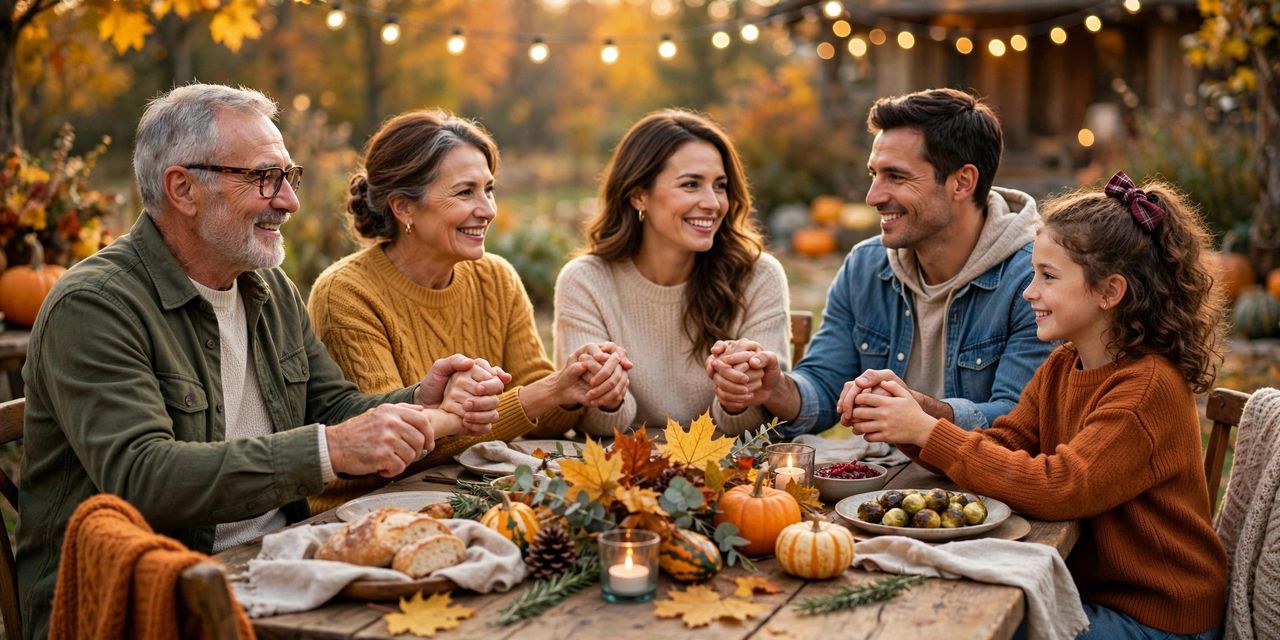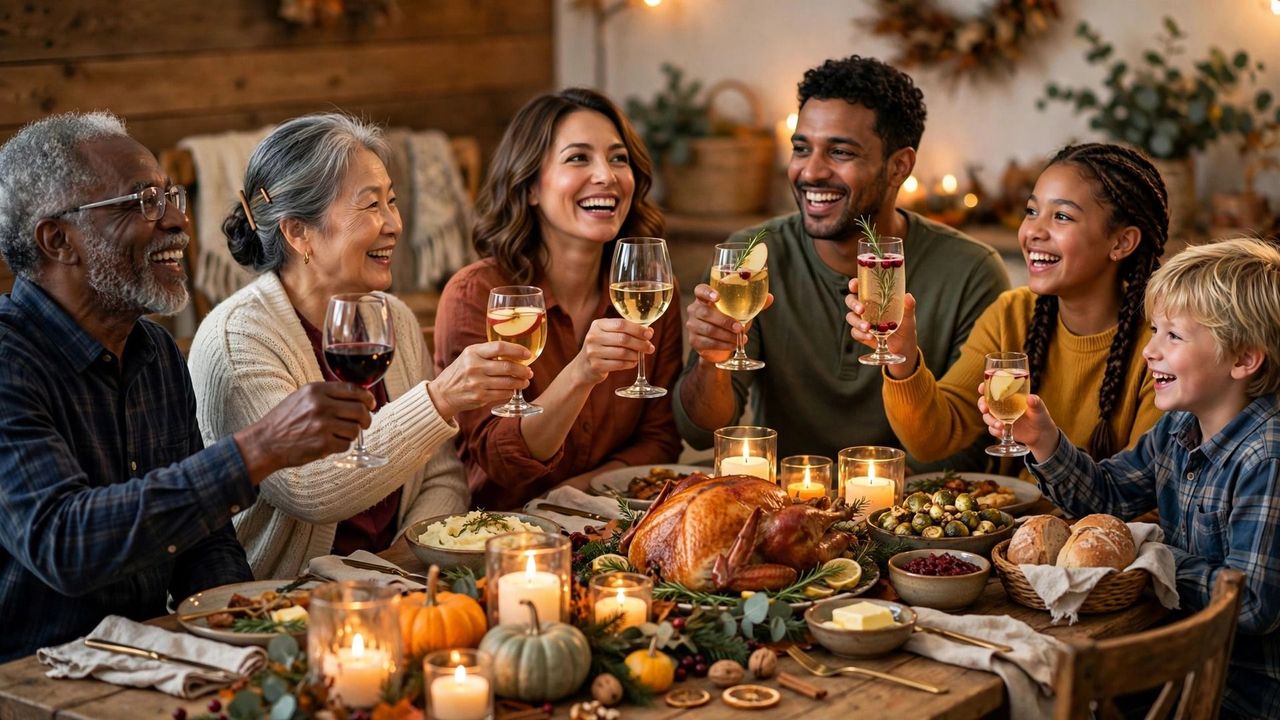
Every Thanksgiving table has a moment when the chatter quiets, glasses rise, and someone says the words that make the day feel like the holiday it is. On November 26, 2026, that someone could be you, and you do not need to be a poet to get it right. A great Thanksgiving toast is short, specific, and honest: 60 seconds of genuine gratitude beats five minutes of rambling every time. Here are ready-to-use toasts for every role at the table, plus the etiquette that keeps the moment graceful.
The Anatomy of a 60-Second Toast
The best toasts follow a simple three-part structure. Open with the moment: "Before we eat, I want to say something." Name one specific thing you are grateful for, not a generic list: "I am grateful Mom still insists on making the rolls from scratch, and that Dad pretends he does not eat three of them before dinner." Close with the raise: "To family, to health, and to this table." That is it. Specificity is what makes people feel something; "I am thankful for all of you" is nice, but "I am thankful Sarah drove six hours with a toddler to be here" is unforgettable. Write two or three bullet points on your phone beforehand. Reading notes is completely fine; nobody ever complained that a toast was too prepared.
Sample Toasts for the Host
As the host, your toast welcomes everyone and sets the tone. Keep it warm and brief: "Thank you all for being here. I spent two days cooking, and I would do it all again tomorrow for this table. I am grateful for full plates, for the people who helped in the kitchen, and for the fact that we are all in the same room, which gets harder every year. Please eat too much. That is the whole point of today. To Thanksgiving." If guests brought dishes, name them: "Thank you, Lisa, for the pie, and Marcus for the wine." Public credit costs nothing and means everything to the people who helped.
Sample Toasts for Parents and Grandparents
The elder's toast carries the most weight at the table, so lean into memory: "When I was your age, we ate at a table half this size, and your grandmother made the same gravy you are eating now. I am thankful that the recipes survived, that the family grew, and that I get to watch the next generation argue about politics the way we used to. To the ones who taught us how to do this, and the ones who will do it after us." A grandparent can also toast the future: "My wish for this table is simple: that you always have somewhere to come home to, and someone to cook for. That is the whole secret. To family."
Funny Toasts and One-Liners
Humor works best when it is affectionate, never at someone's expense. Use these as openers or full toasts:
- "I am thankful for elastic waistbands, stretchy pants, and a family that judges no one."
- "To the turkey: you gave your all, and we appreciate your sacrifice. To the cook: same."
- "May your turkey be moist, your gravy lump-free, and your in-laws only mildly opinionated."
- "I am grateful we only do this once a year, because my oven could not survive twice."
- "To family: we put the 'fun' in 'dysfunctional,' and I would not trade it."
- "Here is to the only day of the year when 'I am stuffed' is a compliment to the chef."
- "I toasted the bread, I roasted the bird, and I deserve this glass. To me, and to all of you."
One funny toast per table is plenty. If someone already went the comedy route, follow with sincerity; the contrast makes both land harder.
Toast Etiquette: Who, When, and How
A few rules keep the moment smooth. The host toasts first, before anyone eats, and it should take under two minutes. After that, anyone moved to speak may do so between courses; keep each toast to about a minute so the food stays hot. Everyone raises a glass, whatever is in it: wine, cider, water, and soda all count, and no one should feel awkward about not drinking alcohol. Stand if you are the host or giving the main toast; guests may stay seated. Clink glasses gently or simply raise them toward the center; aggressive clinking breaks stemware. End every toast with eye contact and a smile, not a gulp: sip, set the glass down, and let the conversation resume. If children want to toast, let them: a six-year-old saying "I am thankful for my dog and pie" is the highlight of the meal.
What to Avoid
A few things turn a toast sour. Do not roast individuals, even lovingly; the table is not the place for inside jokes that embarrass. Do not bring up politics, family disputes, or anyone's personal struggles. Do not ramble past two minutes; if you have more to say, save it for a card. Do not propose marriage or announce big news at someone else's Thanksgiving table unless you cleared it with the host first. And do not toast with an empty glass; fill it with something, even water. The toast is a gift of attention to everyone at the table. Keep it short, keep it kind, and it will be remembered longer than the meal.