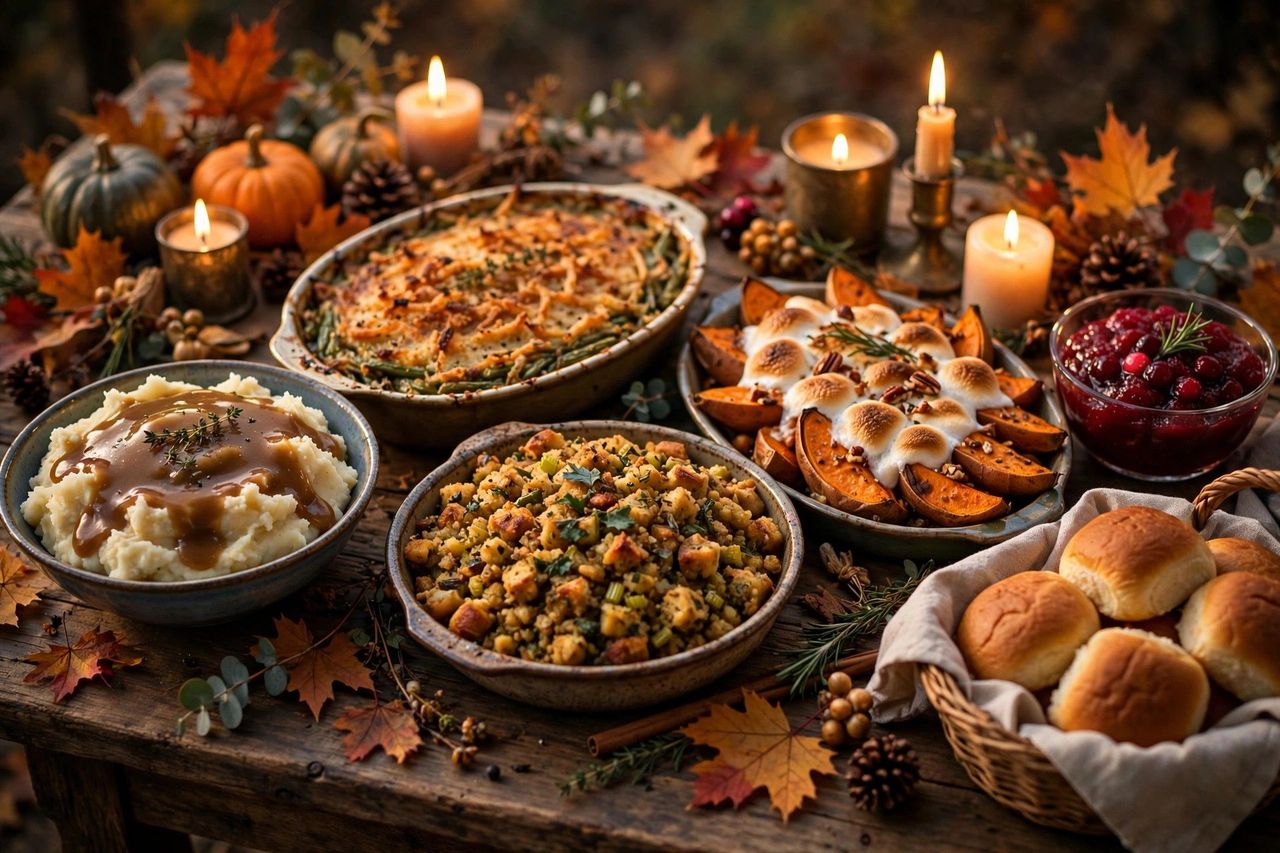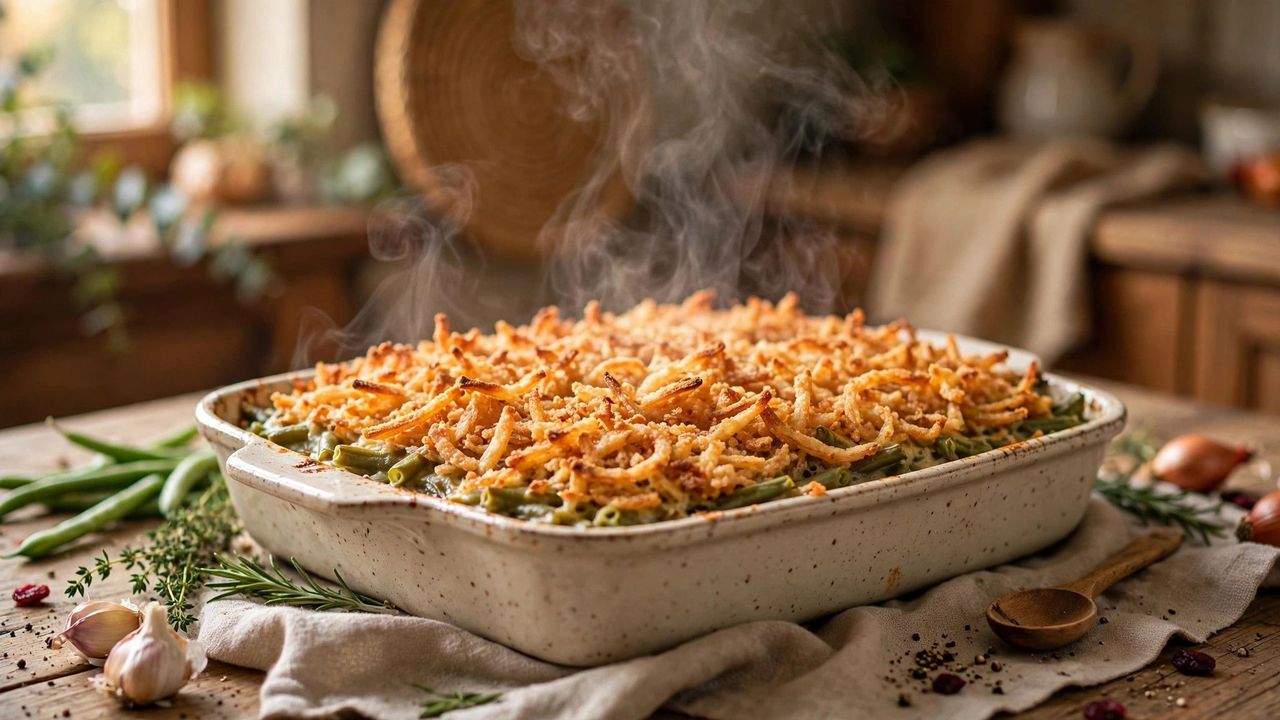
Green bean casserole is the dish Thanksgiving traditionalists defend most fiercely. Creamy, crunchy, nostalgic, it has anchored holiday tables since 1955 and shows no sign of leaving. But there is a wide gap between the soupy canned version and a truly great one. This guide covers the beloved classic, the from-scratch upgrade that converts doubters, and the secrets to the crispiest onion topping you have ever served.
The 1955 Classic
The original recipe was created by Dorcas Reilly in the Campbell's test kitchen in 1955, designed to sell cream of mushroom soup and French's fried onions. It worked spectacularly: an estimated 30 million American households still serve some version every Thanksgiving. The classic formula is just three main ingredients: blanched green beans, condensed cream of mushroom soup thinned with a little milk, and crispy fried onions folded in and scattered on top, baked at 350°F for 25 to 30 minutes.
There is no shame in the classic. It is fast, it is nostalgic, and for many families it simply is Thanksgiving. Two small upgrades elevate it without changing its soul: use frozen green beans instead of canned for better texture, and add a teaspoon of soy sauce and a pinch of black pepper to the soup mixture for depth. Bake in a wide, shallow dish rather than a deep one for a better topping-to-bean ratio.
The From-Scratch Upgrade
If you have ever found the classic a little one-note, the from-scratch version will change your mind. Start with 2 pounds of fresh green beans, trimmed and blanched in salted boiling water for 4 to 5 minutes until bright green and crisp-tender, then shocked in ice water. This keeps them vivid and prevents the gray, overcooked beans that sink the canned version.
For the sauce, saute a pound of sliced cremini mushrooms in butter over high heat until deeply browned; do not crowd the pan. Add diced onion and garlic, then 3 tablespoons of flour to make a roux. Whisk in 2 cups of warm milk or half-and-half and a cup of chicken or vegetable stock, and simmer until thick enough to coat a spoon. Season with fresh thyme, nutmeg, salt, and pepper. Fold in the beans, transfer to a buttered 9x13 dish, and bake at 375°F for 20 minutes before adding the topping.
The Crispiest Onion Topping
The topping makes or breaks the dish, and soggy onions are the most common failure. Whether you use store-bought or homemade, these rules keep them shatteringly crisp:
- Add topping in two stages. Fold half the onions into the bean mixture and scatter the rest on top for crunch in every bite.
- Top at the end. For maximum crispness, bake the casserole 20 minutes, then add the onion topping and bake 10 more minutes.
- Go homemade for the win. Thinly slice 2 onions, soak in buttermilk 30 minutes, dredge in seasoned flour, and fry at 350°F until golden. They beat the canister by a mile.
- Keep them dry. Drain fried onions on a rack, not paper towels, so steam escapes instead of re-softening them.
- Serve promptly. The topping softens as it sits in the creamy sauce, so time the bake to finish 10 minutes before serving.
Make-Ahead and Variations
Assemble the bean-and-sauce mixture up to 2 days ahead and refrigerate; add 10 minutes to the baking time when cooking from cold, and always add the onion topping fresh on baking day. Leftovers keep 3 to 4 days and reheat covered at 350°F, though the topping will never be quite as crisp the second time. A fresh handful of onions revives it considerably.
Popular variations include adding crumbled bacon or pancetta to the mushroom saute, stirring in a cup of grated gruyere or cheddar for a cheesy version, or spiking the sauce with cayenne and smoked paprika for a little heat. A squeeze of lemon juice at the end brightens the whole dish. For a lighter take, swap half the cream sauce for a simple garlic-butter toss and top with toasted almonds instead of fried onions.
Baking to Perfection
The target is bubbling edges, a golden top, and beans that are tender but still have bite. Bake at 350°F for the classic version or 375°F for the from-scratch one, 25 to 35 minutes total. If the top browns before the center bubbles, tent loosely with foil. Let the casserole rest 10 minutes before serving so the sauce thickens slightly and scoops cleanly. Serve it in the baking dish; this is comfort food, and it should look like it.