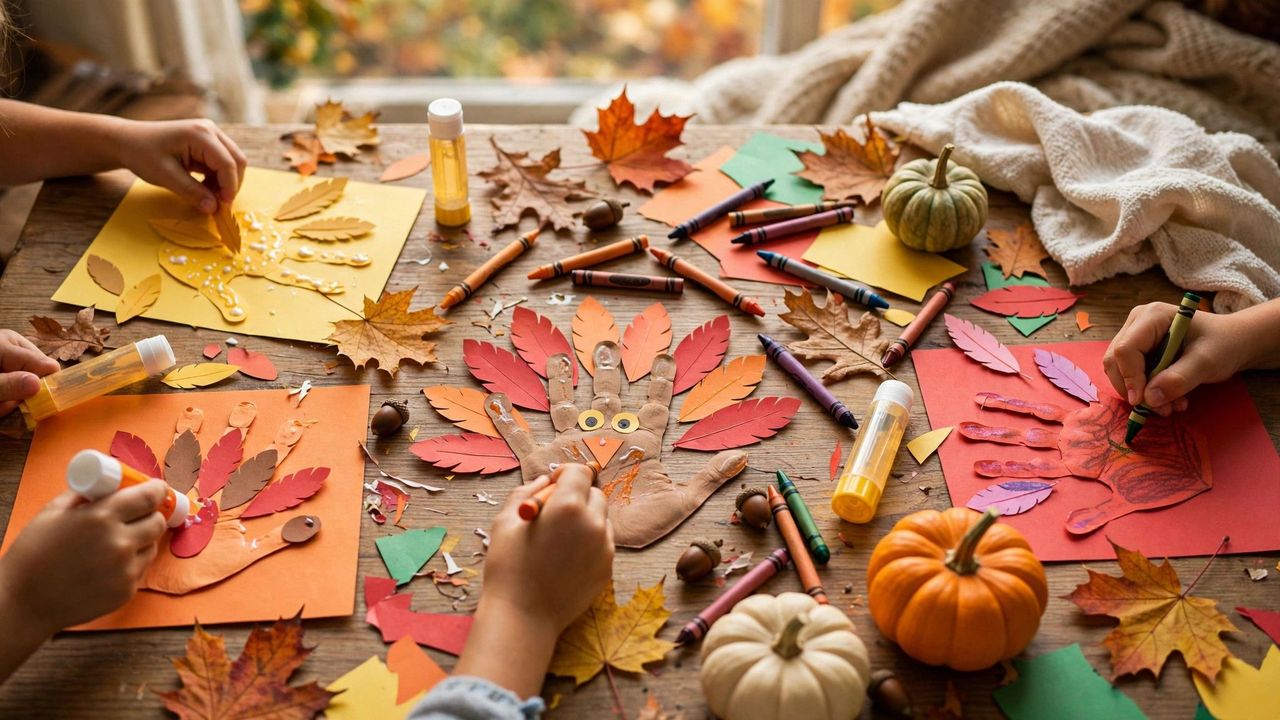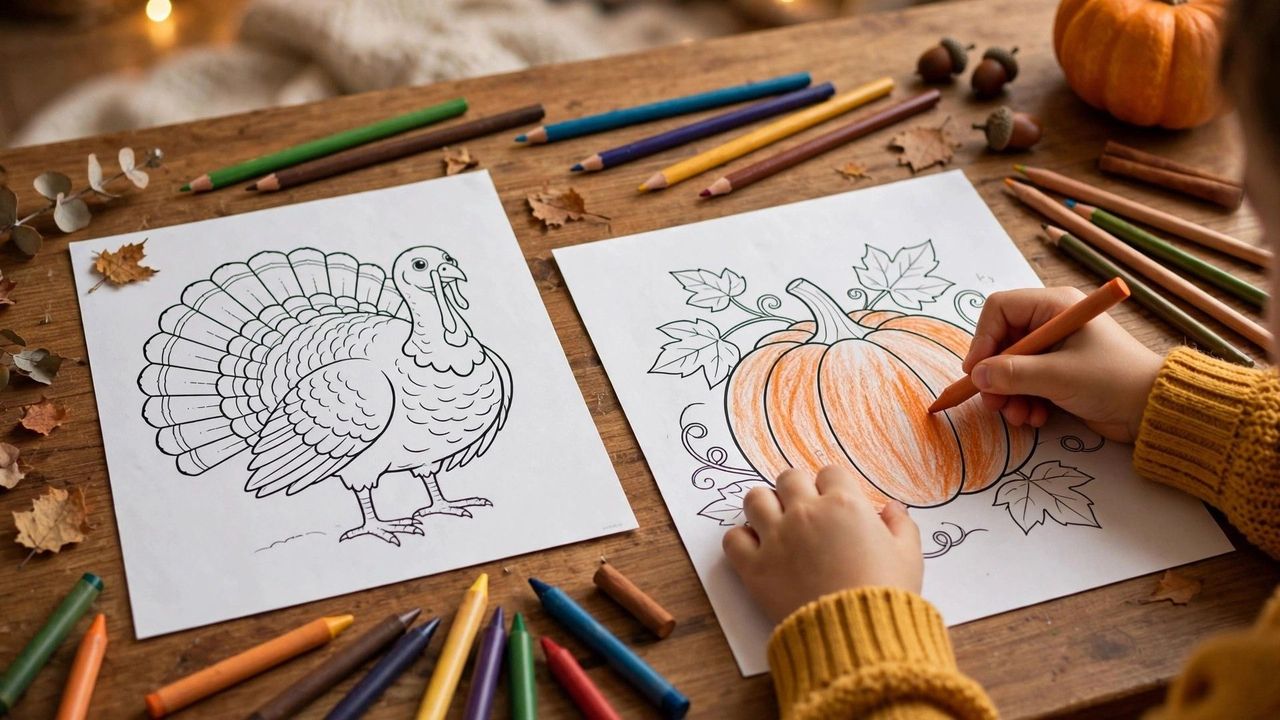
Coloring pages are the unsung hero of Thanksgiving: free, silent, portable, and endlessly occupying. Print a stack before the holiday and you have entertainment for the car ride, the waiting room of dinner prep, and the post-feast lull when the kids are wired and the adults are horizontal. Here is how to pick the right pages for each age and turn coloring into part of the celebration.
The Best Thanksgiving Themes
A good Thanksgiving coloring set mixes the fun stuff with a little gratitude. Look for pages with turkeys (silly and realistic), pumpkins and cornucopias, pilgrim and harvest scenes, fall leaves and acorns, and gratitude-themed designs like "thankful" lettering and cornucopia word art. Variety matters: kids color longer when they can switch subjects.
Difficulty levels matter too. Toddlers need big simple shapes with thick lines — a single large turkey beats a detailed harvest scene they cannot finish. School-age kids love intricate patterns and mandala-style pumpkins. Tweens gravitate toward detailed scenes they can shade with colored pencils.
Printing Tips for Crisp Pages
- Print at actual size on standard letter paper — scaling shrinks the lines kids need to see
- Use regular copy paper for crayons and colored pencils; cardstock if markers are involved, to prevent bleed-through
- Print a few extras of the popular pages — the turkey always runs out first
- Keep a folder of fresh pages for the ride home too; the holiday is not over until the leftovers are packed
Coloring Pages as Table Decor
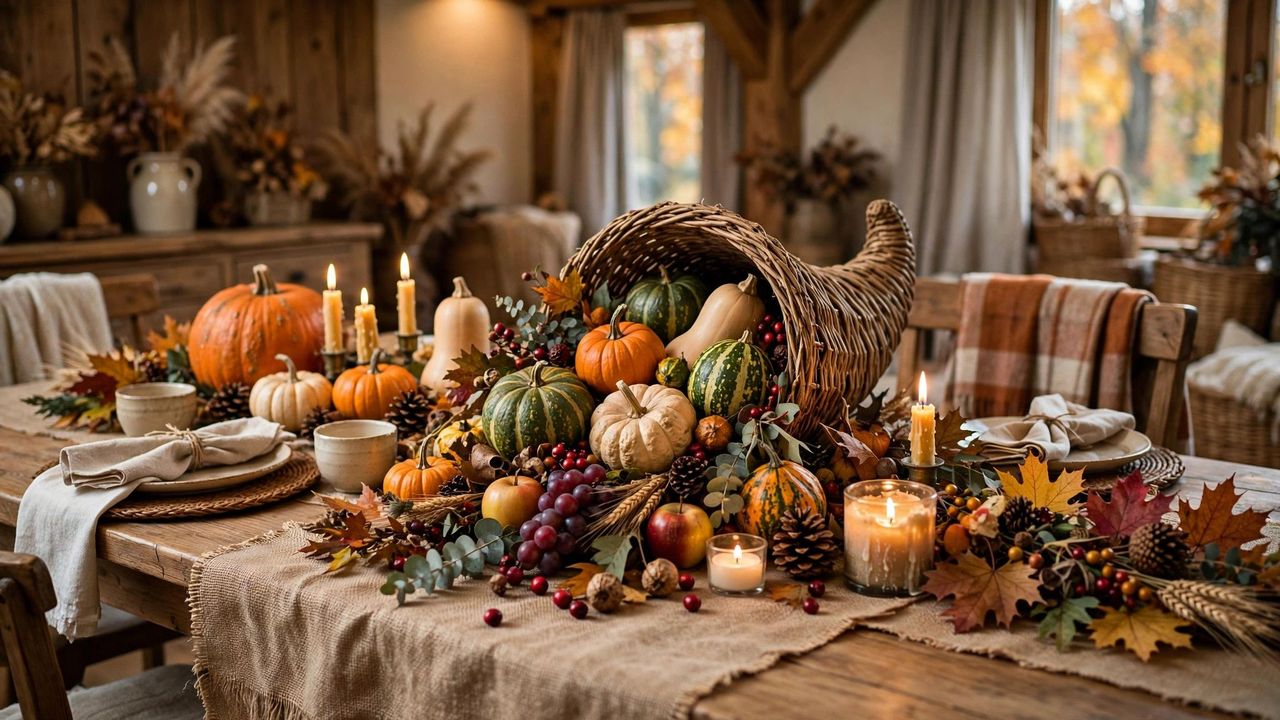
The cleverest use of Thanksgiving coloring pages has nothing to do with keeping kids quiet. Use them as placemats: have each child color their own placemat before dinner, write their name on it, and set the table with them. Guests get a kick out of sitting on artwork, and kids take table-setting very seriously when their art is involved.
Other ideas: string finished pages into a garland across the mantel, tape them into a "thankful gallery" on the fridge or a hallway wall, or fold them into greeting cards for grandparents who could not make it. Art that gets displayed gets valued — and kids notice.
Setting Up the Coloring Station
Set up a dedicated corner so coloring does not colonize the kitchen: a small table or cleared desk, a basket of crayons and colored pencils, a stack of printed pages sorted by difficulty, and a tray for finished work. Add a sign if you like — kids treat a "coloring station" as an event rather than a chore.
Mix in one structured activity: a "color the gratitude turkey" where each feather gets a pattern the child invents, or a collaborative giant turkey poster that every kid colors a section of. Group projects keep cousins who just met busy together.
Printable Activities Beyond Coloring
Coloring pages are just the start. The same free-printable search that finds turkeys also turns up Thanksgiving word searches, mazes, connect-the-dots pilgrim ships, and "I am thankful for" writing prompts for older kids. Print a mixed activity packet — five coloring pages, two puzzles, one writing prompt — and staple it into a booklet with the child's name on the cover.
Packets work brilliantly for travel: a clipboard, a zip bag of crayons and the booklet fit in any car seat pocket. For the dinner table, a word search keeps older kids seated through the long adult conversation stretch between the main course and dessert.
Age-by-Age Guide
- Ages 2–4: one large simple image per page, thick lines, crayons only
- Ages 5–7: medium detail — turkeys with feathers, simple scenes, markers okay
- Ages 8–10: detailed scenes, pattern pumpkins, colored pencils for shading
- Ages 11+: intricate harvest mandalas, lettering designs, fine-tip markers