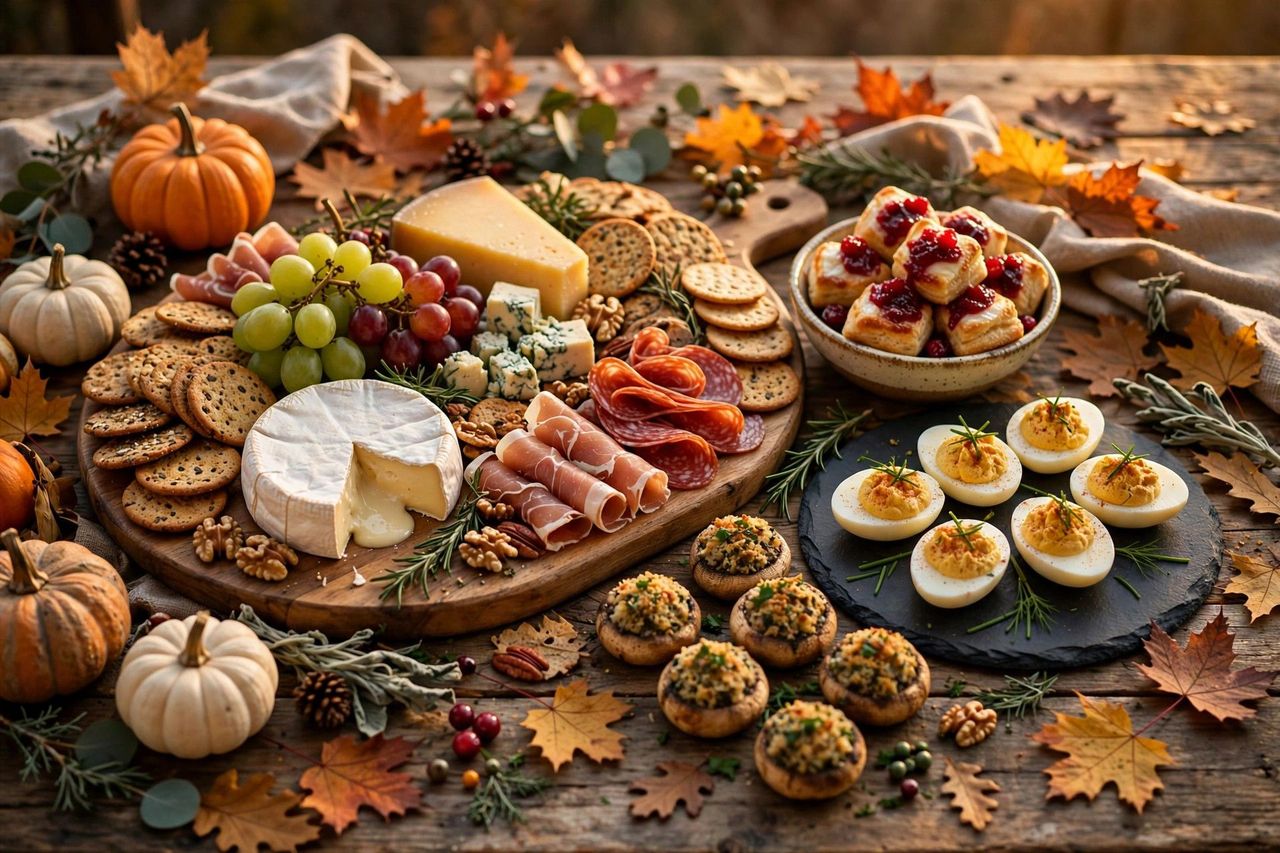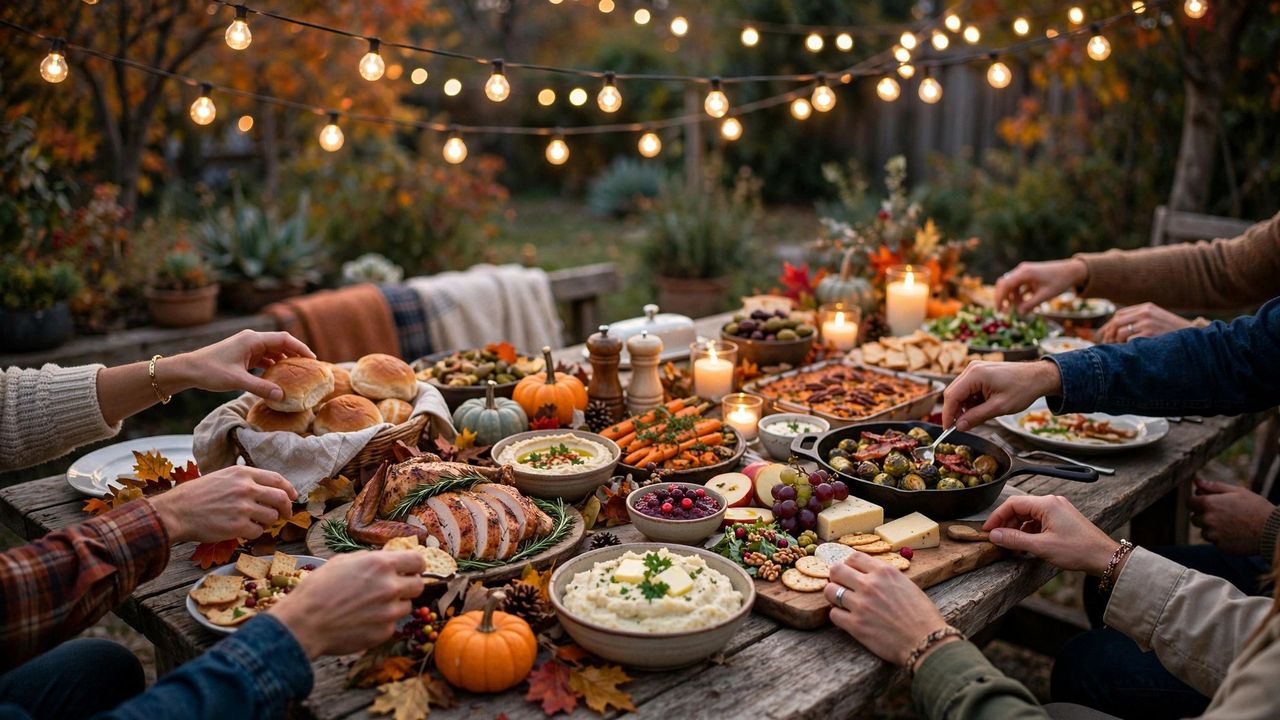
While the turkey roasts on November 26, 2026, your guests need something to graze on, and nothing handles that job better than a Thanksgiving charcuterie board. It keeps hungry arrivals happy, it photographs beautifully, and it requires zero cooking. A great board is not random snacking; it is a composed spread with contrast in flavor, texture, and color. Here is exactly what to buy, how much, and how to arrange it so it looks like a stylist did it.
Choose Your Board and Bowls
Start with a board at least 18 inches long for 8 to 10 guests; for a crowd of 15 or more, use two boards or a sheet of butcher paper laid directly on the table for a grazing-table effect. Wood boards look warm and rustic, marble stays cool for cheese. Set out 2 or 3 small bowls first for anything wet or loose: honey, cornichons, olives, and jam. Placing the bowls before anything else anchors the layout and keeps runny items from touching the crackers.
Take the cheese out of the fridge 30 to 45 minutes before guests arrive. Cold cheese tastes like nothing; room-temperature cheese tastes like itself. Leave hard cheeses whole or in wedges and cut only a few starter slices, which signals to guests how to serve themselves.
The Cheese Lineup: 3 to 5 Varieties
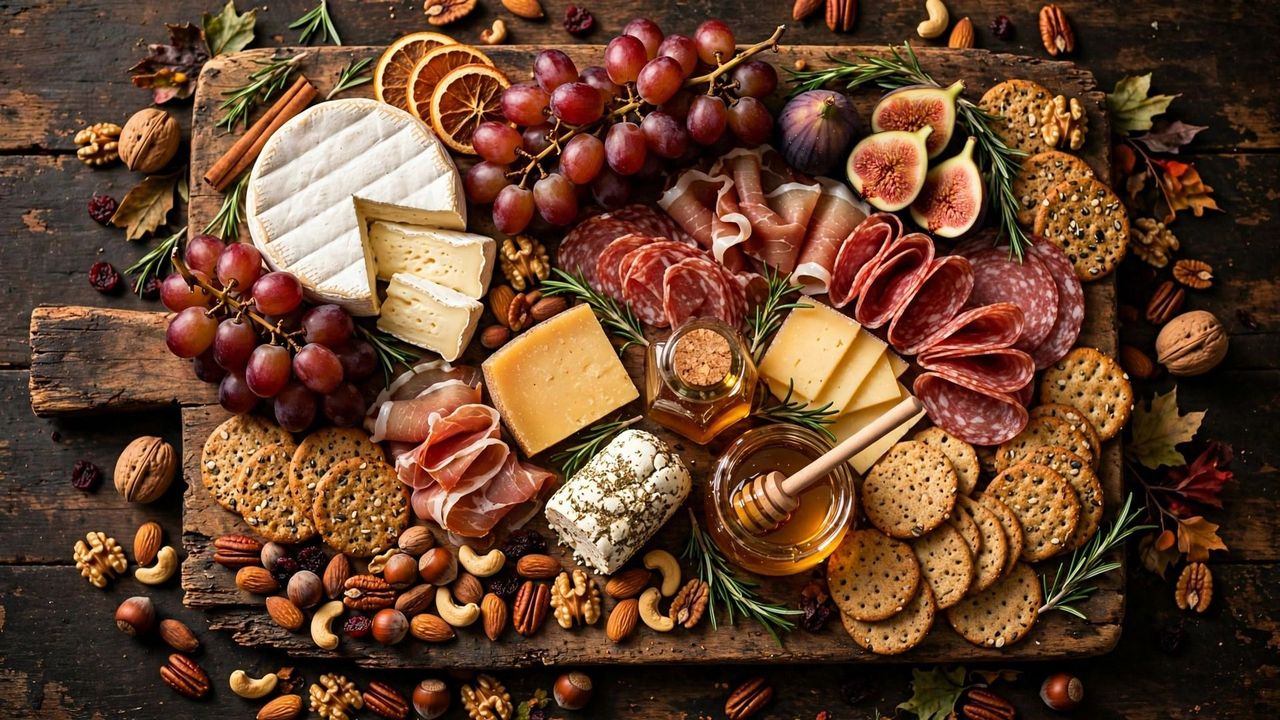
Aim for contrast: one soft, one hard, one blue or funky, one mild crowd-pleaser. A reliable Thanksgiving set is creamy brie, aged white cheddar, smoked gouda, crumbled blue, and a mild havarti for cautious eaters. Plan 3 to 4 ounces of cheese per person if the board is a pre-dinner appetizer, or 5 to 6 ounces if it is doing heavier lifting. Pair each cheese with a partner on the board: brie with fig jam and honey, cheddar with apple slices and grainy mustard, blue with candied walnuts, gouda with dried apricots. These pairings are what make the board taste intentional instead of random.
Meats, Fruits, and Fall Accents
For meats, choose 2 to 3 varieties: prosciutto, Genoa salami, and soppressata cover the bases. Fold prosciutto into loose ribbons and fan salami slices in overlapping rows; volume looks abundant, and flat single layers look sparse. About 2 to 3 ounces of meat per person is plenty before dinner. Then add the fall produce that makes it Thanksgiving: red and green grapes, fresh figs halved, sliced pears, and pomegranate seeds scattered for jewel-like color. Dried fruits like apricots and cranberries add chew, while marcona almonds, candied walnuts, and pistachios add crunch. Fill a small jar with honey and include a drizzle stick; honey over brie is the bite everyone talks about.
Assemble in This Order
Arrangement is a process, not a talent. Work in layers and the board styles itself:
- Place the bowls (honey, olives, jam) first, spaced in a loose triangle.
- Add the cheeses next, spread apart so similar colors do not touch.
- Fan the meats in curves around the cheeses.
- Tuck in crackers and breadsticks in a few upright bundles for height.
- Fill every gap with fruit and nuts; no empty board space should remain.
- Finish with fresh rosemary sprigs and thyme for greenery and aroma.
Step back and look for color balance: if one side is all beige, move some red grapes or figs over. The whole assembly takes 20 minutes once everything is sliced.
Thanksgiving Twists and Portions
Give the board a holiday signature: arrange the items in the shape of a turkey with a pear for the body and fanned crackers for the tail feathers, or set a small pumpkin in the center surrounded by the spread. For a sweet-savory twist, add a few pumpkin-spice roasted nuts and dark chocolate squares at one end. As a rule of thumb for a pre-dinner board, buy 3 ounces of cheese and 2 ounces of meat per guest, plus one baguette, one box of crackers, and two kinds of fruit. Refill once mid-afternoon rather than building a mountain at noon; a refreshed board at 4 p.m. looks better than a picked-over one, and the cheese stays fresher.