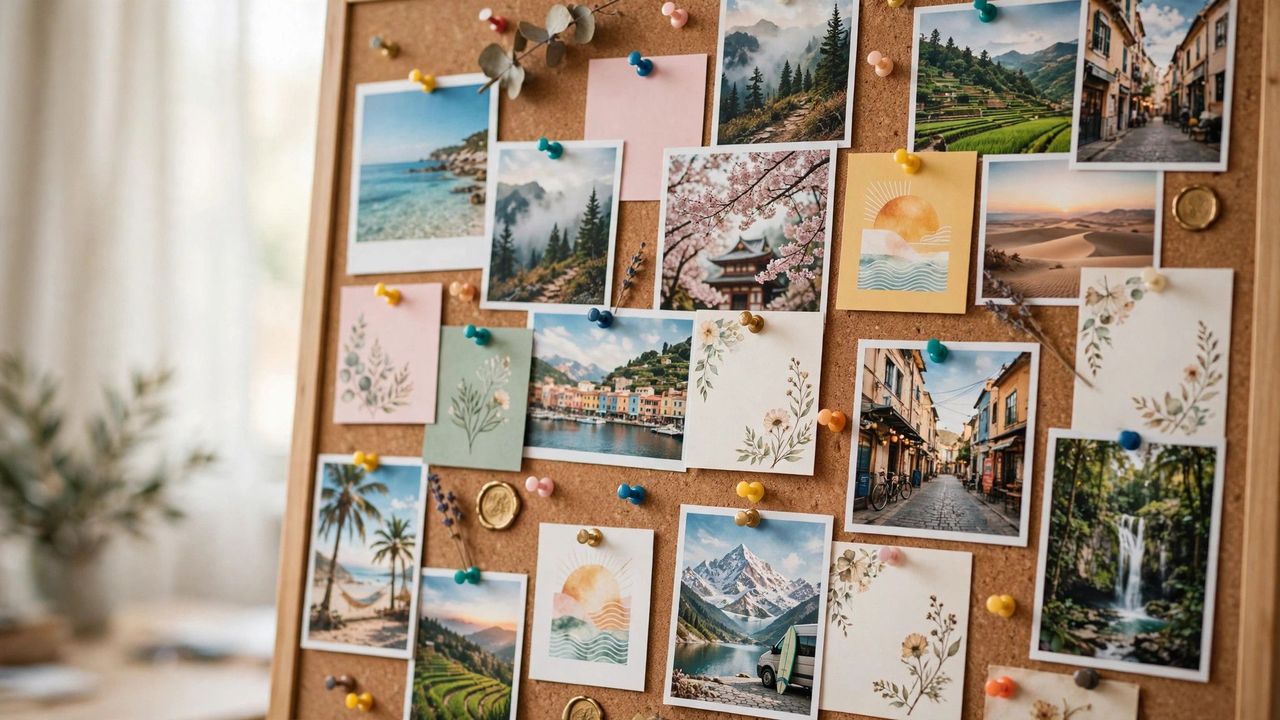
A vision board is not magic, and that is exactly why it works. It is a visual statement of what you want your year to look like, built from images and words that make your goals concrete. Athletes have used visualization for decades; a vision board is the same principle on corkboard. The real power is not in the pictures, it is in the clarity you gain while choosing them. Here is how to make one for 2027 that actually guides your year.
What a Vision Board Actually Does
Strip away the mystique and a vision board does three practical things. First, it forces prioritization: you cannot fit everything on one board, so you must decide what matters most in 2027. Second, it keeps goals visible; a resolution written once in January is forgotten by March, but a board on your wall is a daily reminder. Third, it primes your attention: once you have declared that you want, say, a hiking trip to the mountains, you start noticing opportunities related to it. Psychologists call this selective attention, and it is the least mystical and most useful part of the whole exercise.
Set Your 2027 Intentions First
Do not start cutting pictures until you know what you want. Divide your life into five areas and write two to three intentions for each: career (a promotion, a new skill, a business milestone), health (a fitness goal, better sleep, a sport to try), money (a savings target, debt to kill, an income goal), relationships (time with family, a friendship to nurture, dating intentions), and experiences (places to visit, things to learn, adventures to have). Write them as present-tense statements: "I run a 10K in October" beats "I want to get fit." This list becomes your shopping guide for images.
Gather Your Materials
For a physical board, you need a corkboard or foam board (16x20 inches is a good size), magazines to cut up, printed photos, scissors, pins or glue, and markers for words and dates. Old travel magazines, catalogs, and printouts from the internet are perfect source material. For a digital board, use a free design tool or simply a dedicated phone wallpaper or desktop background; the advantage is that it travels with you everywhere. Physical boards win on presence: you see them every day without opening an app. Digital boards win on convenience. Choose the one you will actually look at.
Build It: Step by Step
Set aside an unhurried hour, put on music, and follow these steps:
- Sort your images into the five life areas before you place anything.
- Place the biggest goal in the center. Your board needs a visual anchor: the one thing 2027 is really about.
- Arrange before you attach. Lay everything out, step back, rearrange. Only glue or pin when it feels right.
- Add words, not just pictures. Quotes, deadlines, numbers: "10K by October," "Emergency fund: $5,000," "Japan, spring." Specific words beat vague inspiration.
- Include how you want to feel. Images of calm mornings, laughter, or open roads belong alongside the goals; the feeling is the point.
- Leave some white space. A crowded board is visual noise. Room to breathe lets each goal stand out.
- Date it. Write "2027" prominently. This is a one-year board, not a someday board.
Use It All Year
A board in a closet is decoration; a board you see daily is a tool. Hang it where your morning starts: the bedroom wall, the bathroom mirror's neighbor, the home office. Glance at it for 30 seconds each morning and let one goal surface as today's priority. Review it quarterly: what is progressing, what needs a new action, what no longer matters. Cross off achieved goals with a gold marker; visible progress is addictive. And at the end of 2027, photograph the board before you retire it. Comparing the board to the actual year is one of the most satisfying rituals you will ever do, and it makes next year's board twice as good.