January 1, 2027 falls on a Friday, and around the world it will be greeted the same way it has been for centuries: with food believed to bring luck, rituals meant to sweep out the old year, and at least a few people jumping into freezing water voluntarily. Whether you want to borrow a tradition or start your own, here is how the world welcomes a new year.
Lucky Foods Around the World
Nearly every culture eats something symbolic on New Year's Day, and the logic is wonderfully consistent: round foods for coins, long foods for long life, greens for money.
Southern United States: Hoppin' John. Black-eyed peas for luck, collard greens for money, and cornbread for gold. The peas are the non-negotiable part; legend traces the tradition to the Civil War era. Eat 365 peas, one for each day of the year, if you are committed.
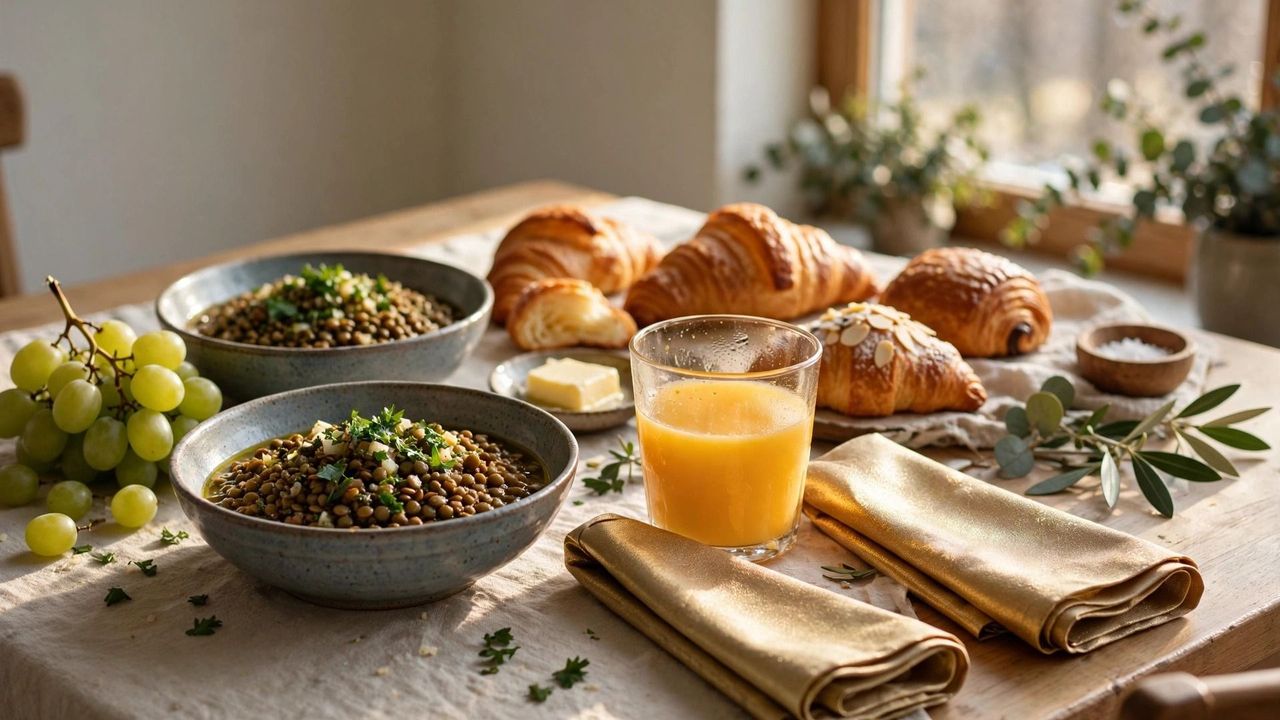
Spain and Latin America: 12 grapes. At each of the 12 strokes of midnight, eat one grape per stroke for luck in each month. It is harder than it sounds, which is half the fun.
Italy: lentils. The tiny round lentils resemble coins, so Italians eat them, often with cotechino sausage, right after midnight for wealth in the new year.
Germany and Austria: marzipan pigs. Pigs symbolize good fortune, so little marzipan pigs are exchanged as lucky gifts.
Japan: toshikoshi soba. Long buckwheat noodles eaten on New Year's Eve symbolize a long life; the noodles' fragility also represents letting go of the year's hardships.
Philippines: round fruits. Tables are covered with 12 round fruits, one for each month, their shape echoing coins and prosperity.
Greece: vasilopita. A cake baked with a coin hidden inside; whoever finds the coin gets a year of good luck.
First-Footing and Other Customs
In Scotland and parts of northern England, the first-foot is the first person to enter a home after midnight, and tradition says a dark-haired man bearing coal, salt, shortbread, or whisky brings the best luck. In Denmark, people stand on chairs and jump off together at midnight, literally leaping into the new year. Ecuadorians build and burn effigies of the old year, often politicians or pop-culture figures, in street bonfires. In Colombia, some people drag an empty suitcase around the block at midnight to guarantee a year full of travel. Pick the one that suits your neighborhood.
The Polar Plunge and Other Bold Starts
From Coney Island's famous Polar Bear swim to plunges across Canada, the Netherlands, and South Korea, thousands of people start January 1 by running into near-freezing water. The appeal is part adrenaline, part symbolism: the shock wipes the slate clean. If you try it, go with an organized event that has safety staff, warm-up tents, and hot drinks waiting. Never plunge alone, and anyone with heart conditions should sit this one out.
Quiet Traditions: The First-Day Reset
Not every tradition is loud. In many cultures, no cleaning or laundry happens on New Year's Day, lest you sweep or wash away the incoming luck. Watching the first sunrise of the year is a beloved ritual in Japan (hatsuhinode) and growing in popularity everywhere: find an east-facing spot, bring coffee, and start the year deliberately. Writing down three intentions for the year before noon, while the day still feels blank, is a modern tradition worth adopting.
How to Start Your Own Family Tradition
Borrowed traditions are lovely, but the ones your family invents are the ones that stick. Keep it simple enough to repeat every year:
- Pick one food ritual: Adopt the 12 grapes or the lentils, or invent your own lucky dish.
- Add one shared activity: A morning walk, a puzzle, a first-day-of-the-year photo in the same spot.
- Include the kids: Let them choose the tradition and they will defend it fiercely for decades.
- Write it down: Keep a one-page New Year's Day log: what you ate, what you did, one hope for the year.
- Keep it repeatable: If it needs three hours of prep, it will not survive year three. Simple wins.
Traditions are just rituals with repetition. Start one this January 1, and by 2030 it will feel like it has always existed.