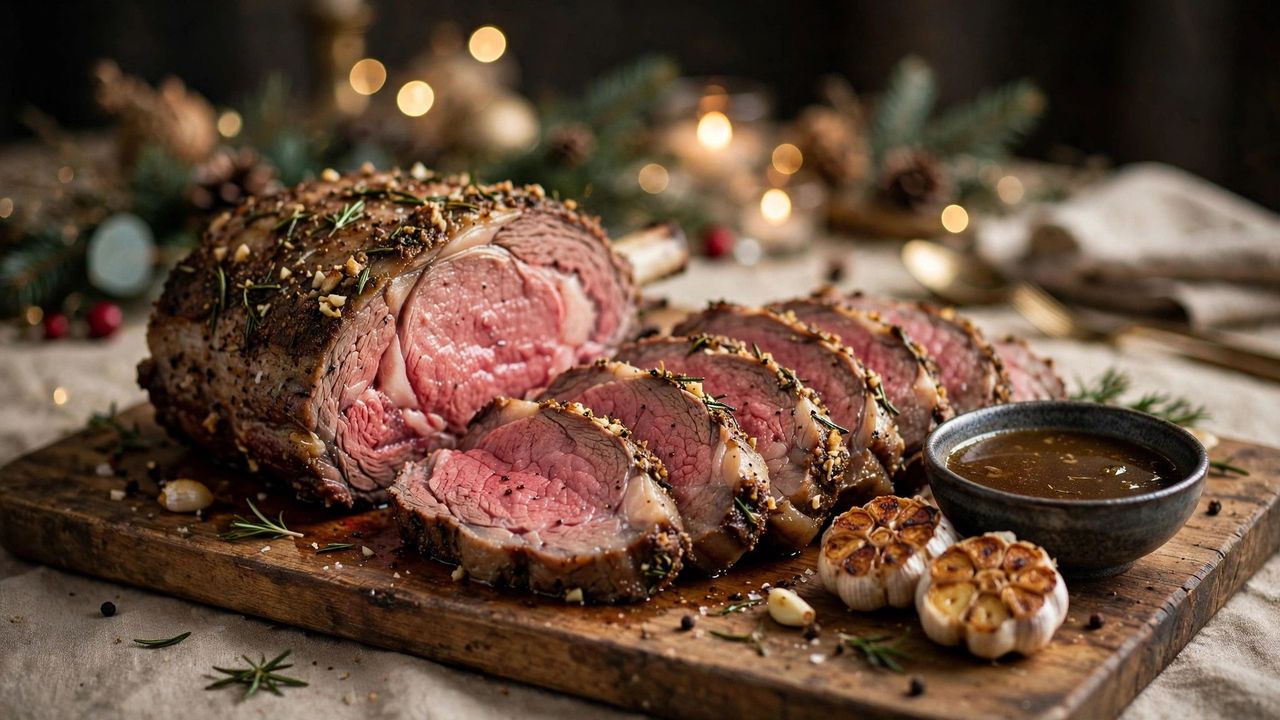
Prime rib is the luxury Christmas roast, and it is far easier than its price tag suggests. There is no brining, no stuffing, no basting every 20 minutes. You season it, roast it low and slow, and let a thermometer do the thinking. The result is a rosy, edge-to-edge medium-rare roast with a crisp herb crust that will make your 2026 Christmas dinner feel like a steakhouse celebration at home.
Choosing Your Prime Rib
Prime rib is a bone-in ribeye roast, cut from ribs 6 through 12. Despite the name, you do not need USDA Prime grade; Choice grade is excellent and much easier on the budget. Ask your butcher for a first-cut (small end) roast if you want leaner slices, or the large end for richer marbling. Order ahead in December, since butchers sell out of roasts by Christmas week.
Plan on 1/2 pound per person for a boneless roast or 3/4 to 1 pound per person for bone-in, since the bones add weight. A 3-bone roast (about 7 to 8 pounds) feeds 8 to 10 guests generously. Bring the roast to room temperature for 2 to 3 hours before cooking so it roasts evenly from edge to center.
Seasoning and the Herb Crust
Prime rib needs bold seasoning because the roast is huge. The night before, pat the roast dry and rub it all over with kosher salt, about 1 teaspoon per pound. Salt it uncovered in the fridge overnight; this dry brine seasons the meat deeply and dries the exterior for a better crust. Before roasting, coat it with a paste of olive oil, minced garlic, fresh rosemary, thyme, cracked black pepper, and a touch of Dijon mustard.
Do not skimp on the garlic and herbs. As the roast cooks, the crust forms a savory, crackling exterior that contrasts beautifully with the tender pink interior. Save the fatty trimmings if your butcher offers them; rendered beef fat makes the best Yorkshire puddings.
The Foolproof Reverse-Sear Method
The reverse sear is the most reliable way to nail prime rib. Instead of blasting it hot first, you roast low and slow, then finish with a quick high-heat sear. This gives you even pinkness from edge to edge with no gray overcooked band. Here is the exact process:
- Low roast: Place the roast bone-side down on a rack in a roasting pan. Roast at 250°F until the center reads 120°F for rare or 125°F for medium-rare. A 7 pound roast takes about 3 to 3.5 hours.
- Rest: Tent with foil and rest 30 to 45 minutes. The temperature will rise about 5 degrees during the rest.
- Sear: Crank the oven to 500°F and return the roast for 8 to 10 minutes until the crust is deep brown and crisp.
- Slice: Carve against the grain into 1/2-inch slices right before serving.
Use a leave-in probe thermometer so you never have to guess. Prime rib is expensive; a $20 thermometer is cheap insurance. Pull the roast 5 to 10 degrees below your target, since carryover cooking does the rest.
Au Jus and Horseradish Cream
Prime rib demands its two classic partners. For au jus, deglaze the roasting pan with 1 cup of beef stock and 1/2 cup of red wine, scraping up the browned bits, then simmer 10 minutes and strain. For horseradish cream, stir 1/2 cup of sour cream with 2 to 3 tablespoons of prepared horseradish, a squeeze of lemon, and a pinch of salt. Make the horseradish cream a day ahead so the flavors meld.
Serve both warm at the table. The rich beef juices cut through the fat, and the sharp horseradish wakes up every bite. Yorkshire puddings, roasted potatoes, and creamed spinach are the classic sides that turn the roast into a full feast.
Storing and Reheating Leftovers
Leftover prime rib is precious, so treat it well. Slice only what you need and store the rest in one piece, tightly wrapped, for up to 4 days in the fridge. To reheat without overcooking, warm slices gently in a 250°F oven just until heated through, or serve thin slices cold on sandwiches with horseradish cream. The bones make a phenomenal beef stock.