A glazed Christmas ham is the most forgiving holiday centerpiece you can make. Store-bought hams arrive fully cooked, so your real job is just warming it through and building a glossy, caramelized glaze that makes guests gasp when it hits the table. With the right glaze and a few technique tricks, a humble ham becomes the sweet and savory star of your 2026 Christmas dinner.
Choosing the Right Ham
You have two main options at the store. Spiral-sliced hams are pre-cut, easy to serve, and drink up glaze between the slices, which makes them the crowd-pleasing choice for 2026. Bone-in shank or butt hams have deeper flavor and give you a soup bone afterward, but you will carve them yourself. Either way, buy a fully cooked, cured ham, not a fresh pork leg, which needs a completely different recipe.
Plan on 3/4 to 1 pound per person for bone-in ham, or 1/2 pound per person for boneless. An 8 to 10 pound ham feeds 10 to 12 guests with leftovers, which are half the fun. Let the ham sit at room temperature for about an hour before it goes in the oven so it warms evenly.
Classic Brown Sugar and Honey Glaze
This is the glaze most people picture when they think of Christmas ham, and it takes five minutes. Simmer 1 cup of packed brown sugar with 1/2 cup of honey, 2 tablespoons of Dijon mustard, and a splash of apple cider until it turns syrupy, about 5 minutes. Brush it over the ham during the last 30 minutes of warming, in two or three coats, so it builds a lacquered crust instead of burning.
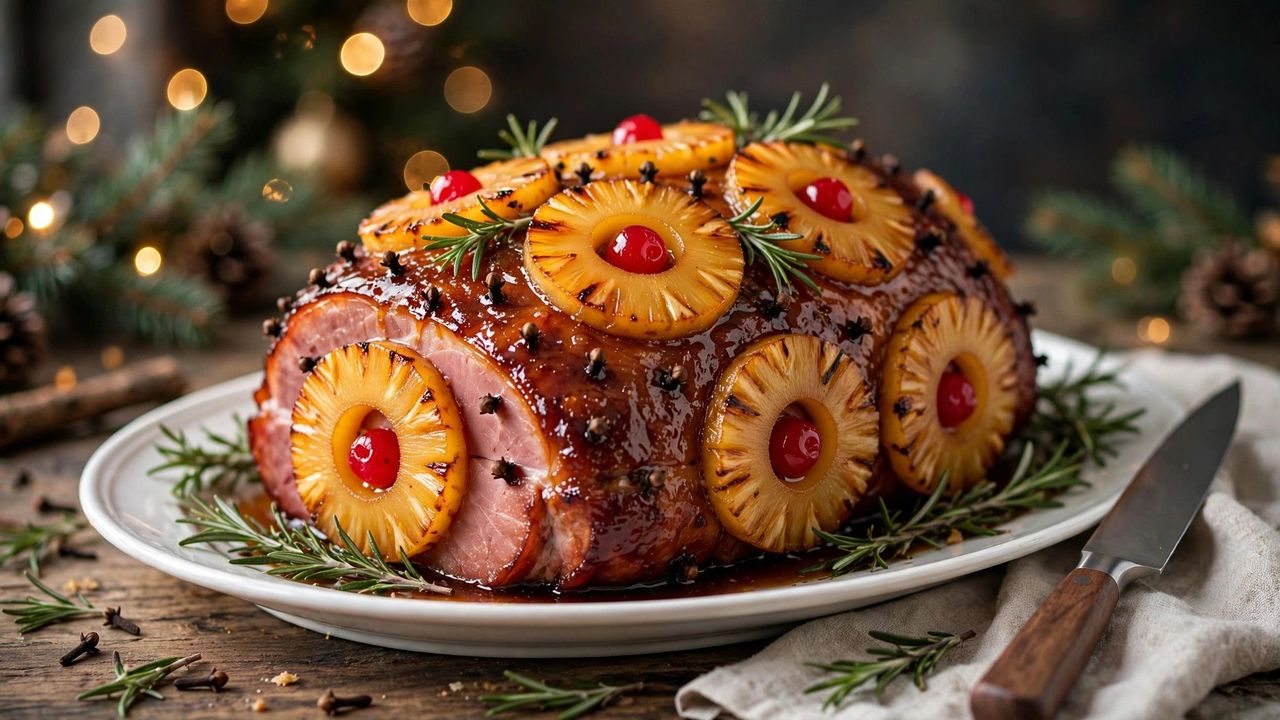
For the classic look, score the fat in a diamond pattern before baking and press a whole clove into the center of each diamond. Tuck pineapple rings and maraschino cherries onto the surface with toothpicks for the last 20 minutes; they caramelize into the glaze and look beautifully retro.
Savory Mustard and Herb Glaze
If your family prefers savory over sweet, skip the sugar bomb. Whisk 1/2 cup Dijon mustard with 1/4 cup whole-grain mustard, 2 tablespoons olive oil, minced rosemary, thyme, and black pepper, plus a spoonful of honey just to round the edges. This glaze turns golden and crisp in the oven and pairs wonderfully with roasted potatoes.
Add a splash of bourbon or dark beer to the glaze for depth. The alcohol cooks off, leaving behind caramel and malt notes that make the ham taste like it took far more effort than it did.
Step-by-Step: Warming and Glazing
The technique matters more than the recipe. Follow these steps for a ham that is juicy, not dry:
- Low and slow warming: Bake at 325°F in a roasting pan with 1 cup of water or cider in the bottom, tented with foil. A 10 pound ham needs about 1.5 to 2 hours to reach 140°F internally.
- Glaze late: Uncover the ham for the final 30 minutes only, and brush on the glaze in layers. Sugar glazes burn fast under high heat.
- Broil with caution: For an extra-crispy crust, broil 2 to 3 minutes at the very end, watching constantly. Sugar goes from golden to bitter in seconds.
- Rest before carving: Let the ham rest 15 to 20 minutes tented in foil so the juices redistribute. Slice against the grain for tender pieces.
The number one mistake is overcooking. Since the ham is already cooked, you are only reheating it to 140°F. Anything beyond that dries out the meat, especially the pre-sliced spiral edges.
Leftover Ham Ideas
Leftover Christmas ham is a gift that keeps giving. Dice it into a split pea or bean soup with the bone for the richest stock you will make all year. Fold it into scalloped potatoes, toss it with fried rice and peas, or pile it on Hawaiian rolls with Swiss cheese and mustard for next-day sliders. Properly wrapped, ham keeps 4 to 5 days in the fridge or 2 to 3 months in the freezer.