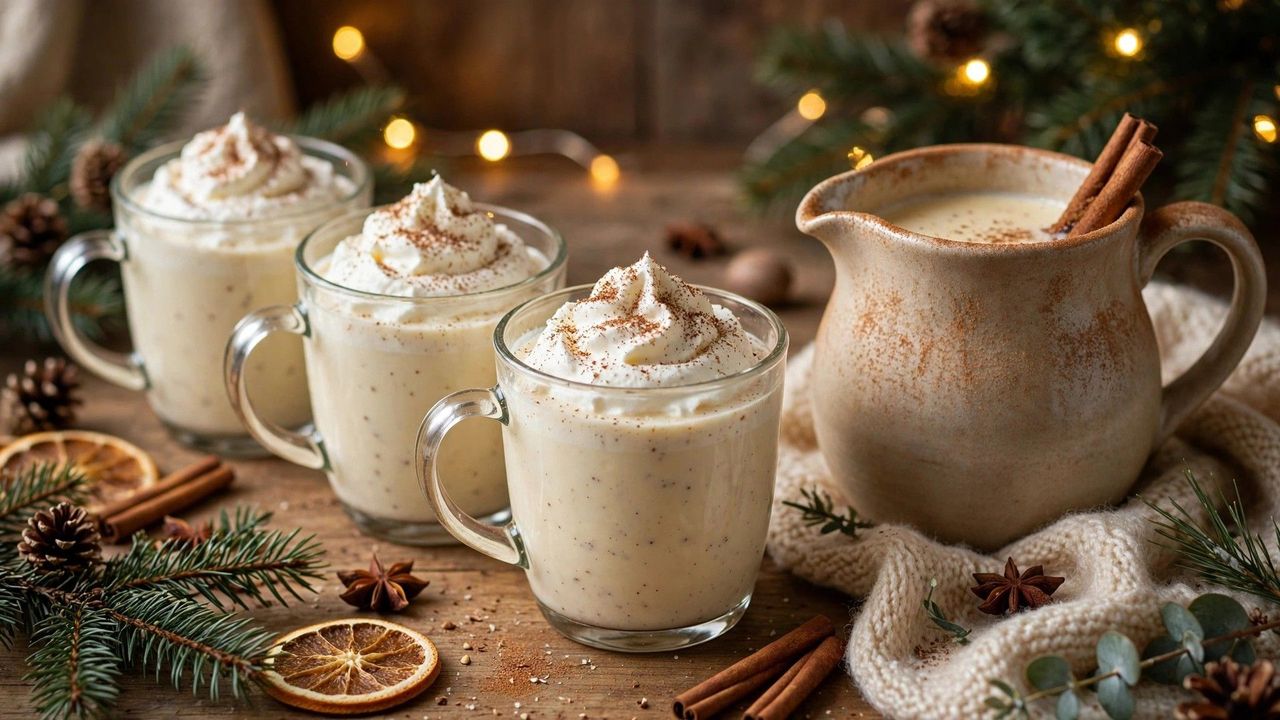
Store-bought eggnog is convenient, but it is a pale imitation of the real thing. Homemade eggnog is rich, custardy, and infinitely better than anything from a carton, and once you taste the difference you will never go back. The classic cooked version below is completely safe to serve, takes about 25 minutes, and tastes like Christmas in a glass. We will also cover boozy variations for the grown-up crowd and dairy-free versions so nobody misses out.
Classic Cooked Eggnog Recipe
This cooked-custard method gently heats the eggs to a safe temperature while building that thick, silky texture. Whisk 6 egg yolks with 3/4 cup sugar until pale and thick. In a saucepan, warm 3 cups whole milk and 1 cup heavy cream with 1 teaspoon vanilla extract and 1/2 teaspoon ground nutmeg until steaming, not boiling. Slowly drizzle the hot milk into the yolks while whisking constantly, then pour everything back into the pan. Cook over low heat, stirring, until the mixture coats the back of a spoon and reaches 160°F (71°C) on a thermometer. Strain into a pitcher, chill at least 4 hours or overnight, and serve with a fresh dusting of nutmeg. Makes about 8 cups. The flavor deepens beautifully after a night in the fridge, so make it a day ahead if you can.
Boozy Holiday Eggnog Variations
A splash of spirits turns classic eggnog into an after-dinner showpiece. Add alcohol to the chilled base, not during cooking, so the flavor stays smooth:
- Classic rum and brandy: 1/2 cup dark rum plus 1/4 cup brandy per 4 cups of eggnog is the traditional ratio, balanced and warming.
- Bourbon eggnog: 3/4 cup bourbon per 4 cups adds caramel and vanilla notes that pair perfectly with the custard.
- Eggnog latte: Replace 1 cup of the milk with strong chilled espresso or cold brew for a coffee-shop twist guests will love.
- Amaretto eggnog: 1/3 cup amaretto per 4 cups brings a subtle almond sweetness, lovely for dessert pairing.
- Spiked and spiced: Stir in a pinch of cinnamon and a dash of allspice with the alcohol for an extra-warm holiday profile.
Label spiked batches clearly if kids are at the party, and always keep a separate non-alcoholic pitcher on the table.
Dairy-Free and Lighter Versions
Everyone deserves eggnog. For a dairy-free version, replace the whole milk with full-fat coconut milk or cashew milk and use coconut cream in place of heavy cream; the custard method works exactly the same and the coconut flavor is subtle beneath the nutmeg. For a lighter version, use 2% milk instead of whole, skip the cream, and whisk 2 egg whites into soft peaks to fold in at the end for a frothy, airy texture with less richness. Sweeten with maple syrup instead of sugar for a deeper, more complex flavor. Both versions benefit from an overnight rest just like the classic.
Eggnog Safety and Storage Tips
Because eggnog contains eggs and dairy, a few habits keep it perfectly safe and delicious:
- Use the cooked method: Heating the custard to 160°F (71°C) eliminates any food safety concerns. Use a thermometer rather than guessing.
- Chill fast and keep cold: Get the finished eggnog into the fridge within 2 hours of making it, and never leave it at room temperature longer than 2 hours when serving.
- Refrigerate up to 3 days: Homemade eggnog keeps for 2 to 3 days in a sealed pitcher. Give it a stir before serving, as it thickens in the fridge.
- Do not freeze it: Freezing breaks the custard emulsion and the thawed texture is grainy. Make a fresh batch instead.
- Fresh nutmeg matters: Grate nutmeg fresh over each glass rather than mixing it all in advance; the aroma is dramatically better.