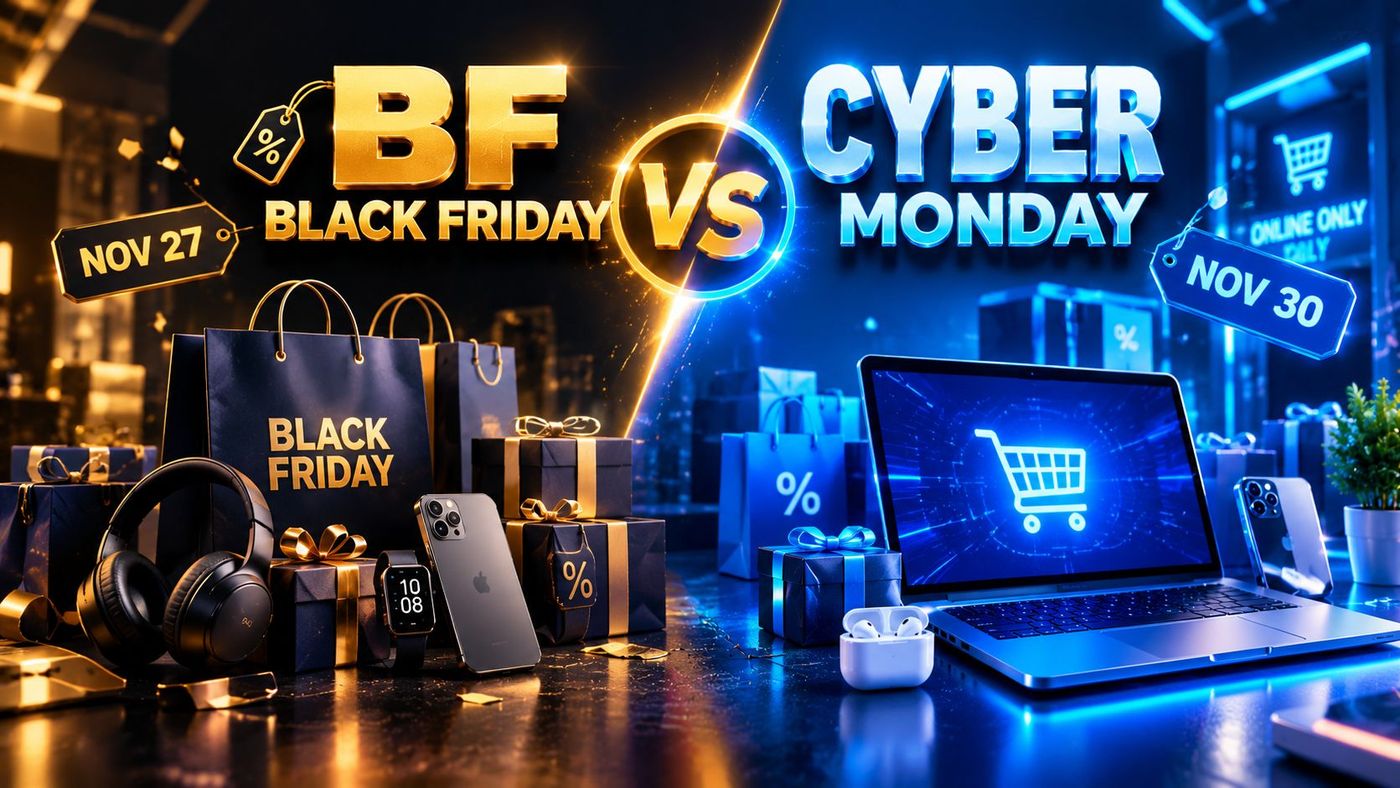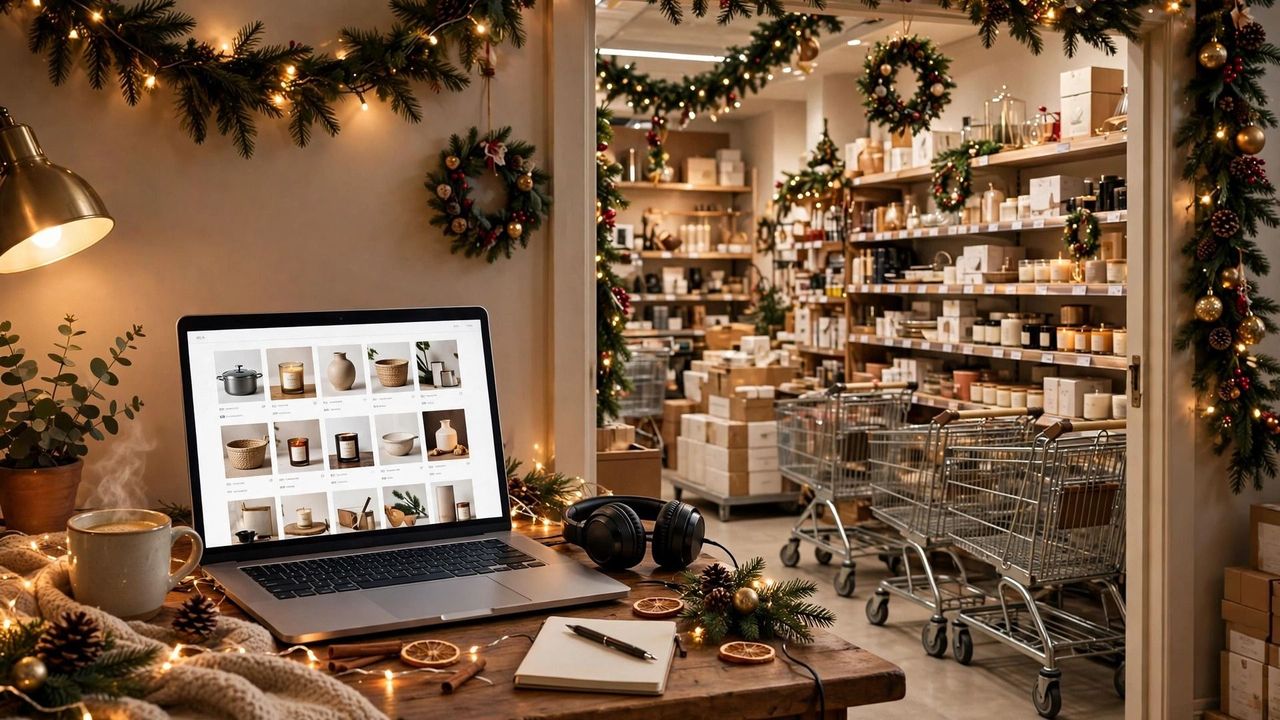
Every Black Friday, shoppers face the same question: brave the stores or shop from the couch? In 2026, the answer is less obvious than ever. Online and in-store Black Friday have converged, with most major retailers matching prices across both channels, yet each still has distinct advantages depending on what you are buying. Here is an honest comparison to help you decide where your money goes furthest this November 27.
The Case for Shopping Online
Online is now the default Black Friday channel for most shoppers, and for good reasons. Prices are typically identical to in-store, and online-exclusive lightning deals and app-only discounts often beat the shelf price. Comparison shopping takes seconds rather than a drive across town, and price trackers let you verify a deal's history instantly. There are no lines, no crowds, and no 5 AM alarms; many online deals go live at midnight or even days early. Shipping has also improved: most major retailers offer free shipping with low minimums, and buy-online-pickup-in-store gives you the online price with same-day gratification. The downsides are real but manageable: popular items sell out in minutes, websites crash under load, and you cannot inspect quality before buying. For electronics, toys with known model numbers, and anything you have already researched, online wins outright.
The Case for Shopping In-Store
Stores still hold three aces. First, true doorbusters: the most extreme limited-quantity deals are often in-store only, or at least easiest to secure in person when websites buckle. Second, instant ownership: you walk out with the TV today, no shipping delays, no porch pirates, no damaged-box roulette. Third, the human factor: floor staff can check back stock, price-match a competitor on the spot, and point you to open-box or clearance items the website never lists. In-store also lets you see and touch big purchases like TVs, mattresses and furniture before committing. The costs are time, crowds and temptation: the average in-store shopper spends significantly more on unplanned items than the online shopper. If your list includes doorbuster TVs, furniture, or anything you must see first, the store earns its trip.
Head-to-Head Comparison
- Prices: Usually identical at major retailers; online occasionally wins with exclusive codes and cashback stacking.
- Stock depth: Online warehouses hold more total units, but in-store stock cannot "sell out" to the whole country in seconds.
- Doorbusters: In-store has the edge for the most limited items, though most now have online twins.
- Convenience: Online wins by a mile: no driving, no lines, shop at midnight in pajamas.
- Returns: In-store returns are instant; online returns mean repackaging and waiting, though many retailers now accept online returns at their stores.
- Impulse spending: Online wins for discipline; stores are engineered to make you browse and add.
- Price matching: Easier in-store with a phone in hand; online chat support can do it but takes longer.
The Hybrid Strategy That Beats Both
The smartest 2026 approach is not either-or, it is both, sequenced. Start online in early November: track prices, build wishlists, and buy anything that hits your target price with free shipping. On Thanksgiving evening, check online doorbuster waves from the couch; many match the next morning's in-store prices. On Black Friday morning itself, go in-store only for your one or two true doorbuster targets, items you must see, or things that sold out online. Use buy-online-pickup-in-store as the bridge: lock the online price, skip the shipping wait, and grab it on your way past. This hybrid play captures the best of both channels while keeping you out of the worst crowds.
Category-by-Category Verdict
For TVs, laptops and headphones, go online first; prices match and comparison is easier. For video game consoles and hot toys, try online at midnight, then in-store as backup. For small appliances and smart home gear, online wins on price-stacking with coupons. For furniture and mattresses, visit the store to test comfort, then ask them to match the online price. For fashion and beauty, online dominates with exclusive sets and easier returns. For groceries-adjacent gifts like holiday food baskets, in-store avoids shipping costs entirely. Match the channel to the category and you will rarely overpay.